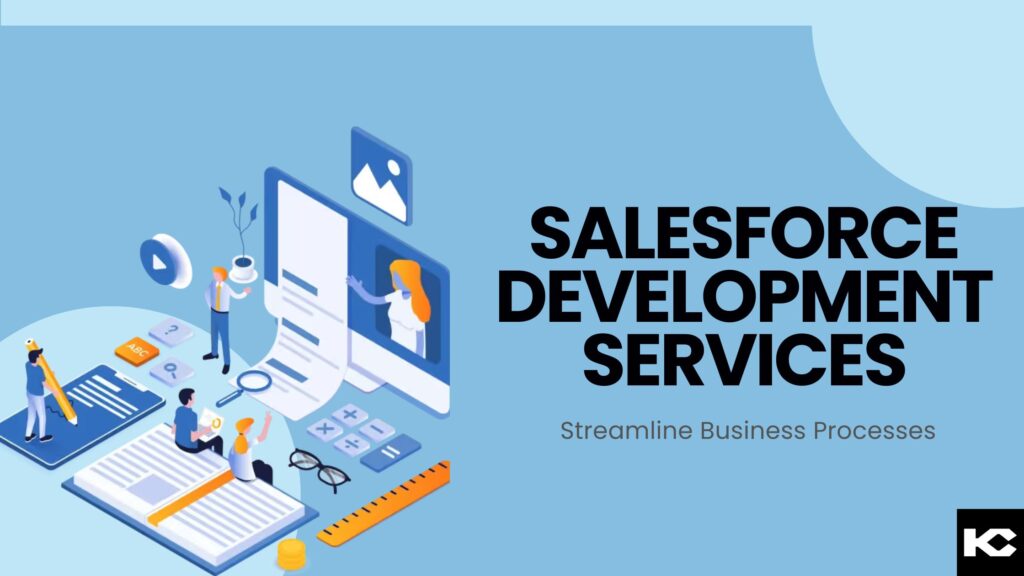
Salesforce Development Services: Transform Your CRM Investment Into Business Value
⏱ 4 min read
SALESFORCE DEVELOPMENT • CONSULTING • AI SOLUTIONS
Contents
hide
1
Salesforce Development Services: Transform Your CRM Investment Into Business Value
Salesforce Development Services: Transform Your CRM Investment Into Business Value
Salesforce should do more than store customer information. With the right development strategy, it can become the foundation for connected workflows, intelligent automation, actionable insights and better customer experiences. Kizzy Consulting helps businesses extend Salesforce through custom development, implementation, integrations, managed services and AI-powered solutions designed around real business requirements.
Custom Salesforce Development
Integration & Automation
Agentforce & Enterprise AI
Integration & Automation
Agentforce & Enterprise AI
By Sanjeet Mahajan · Kizzy Consulting
What Are Salesforce Development Services?
Salesforce development services help businesses customize, extend, integrate and optimize Salesforce to support their specific operational requirements. These services can include Apex development, Lightning Web Components, CRM implementation, API integrations, workflow automation, data migration, application development and Agentforce implementation. The goal is to align Salesforce functionality with business processes while maintaining security, scalability and long-term maintainability.
Why Businesses Invest in Salesforce Development
Salesforce provides a flexible CRM platform, but standard functionality does not always match the complexity of an organization’s sales processes, customer service workflows, data architecture or integration requirements.
Salesforce development bridges this gap by adapting the platform to how your business operates.
With a well-planned implementation and development strategy, organizations can:
- Automate repetitive processes: Reduce manual data entry, repetitive follow-ups and unnecessary administrative work.
- Improve customer experiences: Give teams better visibility into customer interactions and service history.
- Connect business systems: Integrate Salesforce with ERP, marketing, finance and other enterprise applications.
- Improve decision-making: Make relevant CRM data available for reporting, analytics and operational planning.
- Scale business operations: Build maintainable solutions that can evolve with changing business requirements.
- Enable AI-powered workflows: Introduce Agentforce and other AI capabilities where they provide measurable business value.
The value comes from solving the right business problems, not simply adding more custom functionality.
Our Salesforce Development Services
Kizzy Consulting supports organizations across the Salesforce lifecycle, from initial architecture and implementation to custom engineering, integration, ongoing optimization and AI adoption.
Salesforce Consulting
Align your Salesforce roadmap with business objectives, technical requirements, existing systems and future growth plans. Consulting can include architecture reviews, requirements discovery, solution design and implementation planning.
Custom Salesforce Development
Extend Salesforce using Apex, Lightning Web Components, custom objects, tailored interfaces, business logic and reusable components. Build functionality around requirements that standard configuration cannot fully address.
Salesforce Implementation
Implement Salesforce around your business workflows, with appropriate configuration, data migration, testing, deployment planning and user enablement.
Salesforce Integration
Connect Salesforce with ERP platforms, databases, marketing applications and other enterprise systems through APIs, middleware and appropriate integration patterns.
Salesforce Managed Services
Maintain and improve your Salesforce environment through ongoing enhancements, troubleshooting, release support, performance reviews and administration assistance.
Salesforce AI and Agentforce
Evaluate and implement AI-powered agents, workflow automation and enterprise integrations with appropriate data access, permissions, testing and governance.
Our Salesforce Platform Expertise
Salesforce Sales Cloud
Improve visibility across leads, accounts, opportunities and sales pipelines. Custom configurations and automation can support lead assignment, sales activity tracking, forecasting and reporting.
Salesforce Service Cloud
Support customer service teams with case management, escalation workflows, service automation, routing, knowledge access and reporting. Integrations can help teams work with relevant customer information across systems.
Salesforce Experience Cloud
Develop portals for customers, partners and employees with access to relevant information, self-service capabilities and connected business processes.
Salesforce Data Cloud
Help unify supported customer data sources and make relevant information available for segmentation, analytics and AI use cases. Data architecture, identity resolution and governance should be considered during implementation.
Salesforce Agentforce
Develop AI agent use cases for customer service, sales assistance and internal workflows. Successful implementations require clear boundaries, reliable data, suitable permissions, evaluation and monitoring.
Related resource: Salesforce AI and Integration Solutions.
Custom Applications and AppExchange Development
Build applications and extensions that address specific business requirements. Depending on the solution, development may include reusable components, custom interfaces, integrations, packaging and preparation for distribution through Salesforce’s ecosystem.
How to Build a Successful Salesforce Development Strategy
A Salesforce development strategy should connect business priorities with a practical technical roadmap. The following steps help reduce unnecessary complexity and support sustainable delivery.
01
Identify Business Requirements
Document the current workflow, user needs, system limitations, data dependencies and desired business outcomes before selecting a technical solution.
02
Define the Architecture and Roadmap
Identify the required Salesforce products, data model, integrations, security controls, delivery phases and success metrics.
03
Develop and Integrate
Configure the platform and develop custom functionality where necessary. Validate integration contracts, error handling, access controls and data quality.
04
Test and Deploy
Test business scenarios, permissions, integrations, exceptions and performance. Plan deployment, rollback procedures and user communication before releasing changes.
05
Monitor and Optimize
Review adoption, automation failures, data quality, support requests and agreed business KPIs. Use these findings to prioritize the next round of improvements.
Customizing Salesforce Around Your Business Needs
Customization is useful when standard Salesforce functionality cannot adequately support a business requirement. The right solution depends on complexity, maintainability, platform limits and long-term ownership.
- Custom objects and fields: Represent business-specific records and relationships within the Salesforce data model.
- Apex development: Implement server-side business logic when declarative configuration is insufficient.
- Lightning Web Components: Create responsive user interfaces and reusable components for Salesforce applications.
- Flow automation: Automate supported business processes using declarative tools where appropriate.
- API integrations: Exchange data with external applications using suitable authentication, monitoring and error-handling patterns.
- Testing and deployment: Use appropriate test coverage, version control, environment management and release practices.
Custom code is not always the best starting point. A good Salesforce development partner evaluates configuration-first options before introducing complexity that could increase maintenance costs.
Streamlining Business Processes With Salesforce
Salesforce development can improve business operations by connecting data, automating repeatable work and making information available to the teams that need it.
Automating Lead Management
Configure lead assignment, qualification workflows, notifications and follow-up processes. Where appropriate, integrate AI-enabled lead qualification or communication workflows to help sales teams prioritize opportunities.
Improving Sales Operations
Connect sales activities, opportunity stages, account information and reporting. Consistent processes can help managers identify bottlenecks and give sales representatives better visibility into their pipelines.
Enhancing Customer Service
Use case workflows, routing, knowledge access and connected customer information to help service teams handle requests more consistently.
Connecting Enterprise Applications
Integrate Salesforce with other systems to reduce disconnected data and duplicate work. Design integrations around data ownership, synchronization frequency, failure recovery and security.
Introducing AI-Assisted Workflows
Evaluate AI for summarization, knowledge retrieval, service assistance and other appropriate workflows. Begin with a defined use case and measurable success criteria before expanding the deployment.
Related reading: AI Agent Implementation Guide.
Salesforce Development Across Industries
Financial Services and Insurance
Support customer onboarding, relationship management, case workflows and integrations with financial or policy administration systems. Design for appropriate access controls and applicable regulatory requirements.
Healthcare and Life Sciences
Connect service processes, authorized data sources and operational workflows while considering privacy, security and applicable compliance obligations.
Retail and E-commerce
Connect customer engagement, sales, service and relevant order information to support more consistent customer experiences across channels.
Real Estate
Support lead qualification, property inquiries, follow-ups, appointment scheduling and CRM automation. Explore AI voice agent solutions for relevant communication workflows.
Manufacturing and Logistics
Connect sales, customer service and appropriate ERP or supply-chain systems to improve visibility across business processes.
Technology and SaaS
Build connected sales and service operations, product-related workflows, customer lifecycle automation and integrations with business applications.
Why Choose Kizzy Consulting for Salesforce Development?
Salesforce development requires more than technical implementation. It involves understanding business processes, designing reliable architecture, connecting systems and supporting adoption after launch.
Kizzy Consulting brings Salesforce consulting and engineering together with enterprise integration and AI capabilities.
Salesforce Expertise
Consulting, implementation, custom development and platform optimization aligned with business requirements.
Connected Systems
Integration architecture designed around data flows, system capabilities, security and operational needs.
Enterprise AI
Agentforce and AI implementation supported by use-case definition, data readiness and governance.
Long-Term Optimization
A focus on maintainability, adoption, monitoring and continuous improvement after deployment.
Explore our Forward Deployed Engineer services for projects that require close collaboration between engineering teams and business stakeholders.
Planning a Salesforce or AI Project?
Identify the right starting point for your business with a structured assessment of your workflows, data, integrations and AI opportunities.
Recommended Salesforce Resources
Explore these related Kizzy Consulting resources to learn more about implementation, integration, AI adoption and ongoing Salesforce optimization.
Salesforce Implementation
Understand implementation planning, configuration and deployment.
Salesforce Integration
Explore approaches to connecting Salesforce with enterprise systems.
AI Agent Implementation Guide
Review the considerations involved in planning and implementing AI agents.
Salesforce Managed Services
Learn about ongoing Salesforce maintenance and optimization.
Salesforce AI Solutions
Explore the intersection of Salesforce, AI and enterprise workflows.
Salesforce Development Services: Frequently Asked Questions
What are Salesforce development services?
Salesforce development services involve customizing, extending, integrating and maintaining Salesforce to support business requirements. Common services include Apex, Lightning Web Components, automation, API integrations, custom applications and AI-enabled workflows.
What is the difference between Salesforce implementation and development?
Implementation focuses on configuring and deploying Salesforce to meet business requirements. Development extends the platform with custom logic, interfaces, integrations and other functionality when standard configuration is insufficient. Many projects require both.
Can Salesforce integrate with ERP and third-party applications?
Yes. Salesforce can integrate with supported enterprise systems through APIs, middleware, event-driven architectures and other integration patterns. The appropriate approach depends on data volume, security, latency, system capabilities and operational requirements.
Can Salesforce development include AI and Agentforce?
Yes. Salesforce development can include Agentforce implementation, AI-enabled workflows, custom actions and integrations with enterprise systems. Effective deployments require appropriate permissions, reliable data, testing, evaluation and governance.
How much do Salesforce development services cost?
Costs depend on scope, technical complexity, integrations, data migration, security requirements, delivery timelines and ongoing support. A discovery session can help establish requirements and prepare a more realistic estimate.
How do I choose a Salesforce development partner?
Evaluate Salesforce expertise, architecture and integration capabilities, security practices, delivery processes, communication and experience with similar requirements. Ask how the partner will measure outcomes and support the solution after deployment.
How can I get started with Kizzy Consulting?
Visit the Kizzy Consulting contact page or email [email protected] to discuss your Salesforce development requirements.
Turn Your Salesforce Investment Into Business Value
Salesforce development is most effective when it connects technology decisions with real operational needs. The right combination of configuration, custom engineering, integrations and automation can help organizations improve workflows, connect business data and build a more adaptable CRM environment.
For organizations exploring AI, Salesforce development can also provide the integration and workflow foundation needed to introduce Agentforce responsibly.
Kizzy Consulting helps businesses evaluate, implement and improve Salesforce solutions based on their technical environment and business objectives.
Let’s Build a Better Salesforce Solution
Tell us about your Salesforce environment, development requirements, integration challenges or AI goals. Our team can help you identify practical next steps for your project.
Talk to Our Salesforce Experts →
Or send your inquiry to [email protected].