Salesforce for the Freight and Logistics Industry (2026)
⏱ 2 min read
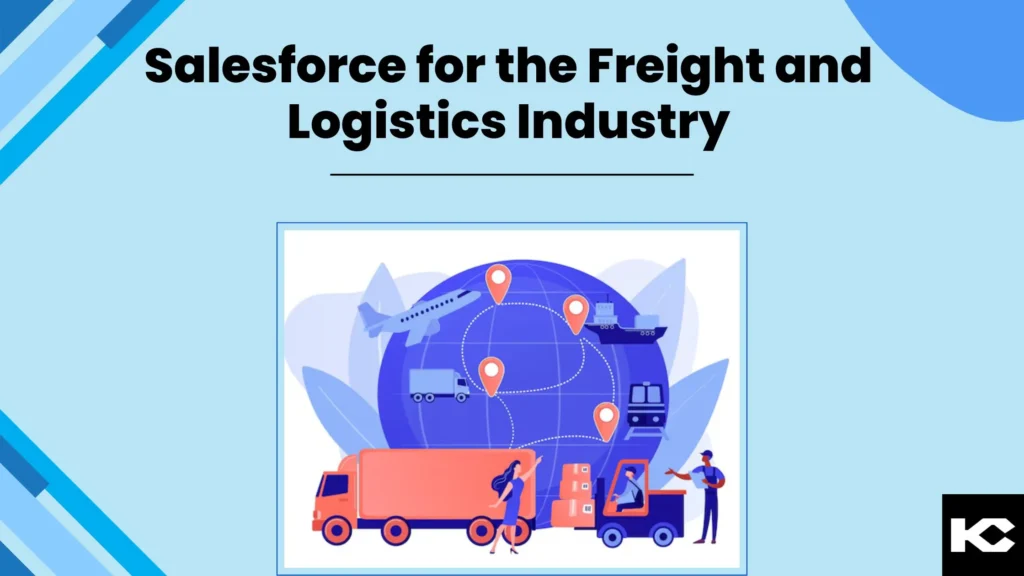
Salesforce for the Freight and Logistics Industry is helping shippers, carriers, brokers, and 3PLs replace fragmented tracking spreadsheets and siloed systems with a single, AI-powered platform. Here’s how Salesforce CRM addresses the core operational challenges in logistics, what capabilities it unlocks, and how to evaluate a Salesforce-native transportation management approach for your business.
What does Salesforce do for the freight and logistics industry?
Salesforce gives freight and logistics companies a unified CRM platform that connects shipment tracking, customer service, carrier and partner collaboration, and AI-driven analytics in one place – replacing disconnected systems with real-time visibility across the supply chain.
Global commerce keeps raising the bar on what “good service” means in freight and logistics – faster delivery windows, proactive updates, and zero tolerance for lost visibility. Salesforce for the Freight and Logistics Industry gives companies a cloud-based CRM and AI analytics layer purpose-built to meet that bar, without forcing teams to rebuild their operations around a rigid, logistics-only tool.
Common Logistics Pain Points
- ✗ Shipments, drivers, warehouses, and suppliers tracked in disconnected systems
- ✗ No real-time visibility into shipment status or disruptions
- ✗ Customer expectations for speed and updates outpacing manual processes
- ✗ Data scattered across sources, hard to turn into decisions
With Salesforce CRM
- ✓ One platform for accounts, shipments, partners, and support
- ✓ Real-time tracking and proactive shipment updates
- ✓ Self-service customer portals and automated case management
- ✓ AI-driven forecasting and fleet/resource optimization
Why Freight and Logistics Companies Are Moving to Salesforce
Logistics providers generate enormous volumes of operational and customer data every day, but that data is only useful if it’s connected. Salesforce CRM brings shipment, partner, and customer data into a single unified platform, automates the workflows around it, and layers AI-driven insight on top. Key benefits include:
- Streamlined Operations: Automate workflows, manage shipments, and track inventory in real time, reducing bottlenecks and manual handoffs between teams.
- Enhanced Customer Service: Use Salesforce Service Cloud to deliver real-time shipment updates, proactive issue resolution, and self-service portals where customers can track orders and pull documents themselves.
- Data-Driven Decision Making: Pair Salesforce with Tableau to forecast demand, optimize fleet utilization, and flag potential disruptions before they affect delivery.
- Supply Chain Collaboration: Coordinate with carriers, suppliers, and partners in real time using Partner Relationship Management and Slack integration.
- Scalability: Grow shipment volume, headcount, and customer base without the platform becoming a bottleneck.
Want to Know More About Salesforce for Logistics?
Explore how Salesforce can help logistics and transportation businesses streamline operations, improve visibility, and connect sales, service, and customer data in one platform.
Core Salesforce Capabilities Logistics Companies Rely On
| Capability | What It Solves |
|---|---|
| Service Cloud | Real-time shipment updates, case management, and self-service customer portals |
| Tableau | Demand forecasting, fleet utilization analysis, and disruption prediction |
| Partner Relationship Management | Real-time collaboration with carriers, suppliers, and logistics partners |
| AppExchange TMS Add-Ons | Native transportation management (multi-carrier booking, route planning, customs/compliance) layered directly on Salesforce |
Expert Perspective
“Logistics companies don’t need another standalone tracking tool – they need their shipment data, customer data, and partner data living in the same system their sales and service teams already use. That’s what makes Salesforce different for this industry.”
– Sanjeet Mahajan, Founder & CEO, Kizzy Consulting
Ready to Streamline Your Logistics Operations?
From CRM rollout to full transportation management integration, we help freight and logistics companies implement Salesforce the right way.
The Road Ahead: AI-Driven Logistics on Salesforce
As customer expectations keep rising and supply chains keep getting more complex, the logistics companies that win will be the ones that can see disruptions coming, not just react to them. Salesforce’s AI layer – paired with the right governance over how that AI is used in customer-facing and operational workflows – is what makes that possible. If you’re layering AI into logistics operations, our AI Ops & Governance service is built exactly for that.
Frequently Asked Questions About Salesforce for Freight and Logistics
What is Salesforce used for in logistics?
Salesforce is used to unify shipment tracking, customer service, and partner collaboration in one CRM platform, replacing the disconnected systems that typically slow down freight and logistics operations.
Does Salesforce offer transportation management (TMS) functionality?
Salesforce itself is a CRM, not a TMS, but AppExchange offers native transportation management applications that add multi-carrier booking, route planning, and customs/compliance capabilities directly inside Salesforce.
How does Salesforce improve customer service for shippers?
Salesforce Service Cloud lets logistics providers send real-time shipment updates, resolve issues proactively, and offer self-service portals where customers can track orders and access documents without contacting support.
Can Salesforce scale with a growing logistics business?
Yes. Salesforce’s cloud-based platform scales to accommodate growing shipment volumes, data, and customer bases without requiring companies to re-architect their systems.
Which logistics companies benefit most from Salesforce CRM?
Freight brokers, shippers, carriers, 3PLs, and terminals managing high shipment volumes and multiple partners benefit most, since Salesforce replaces fragmented tracking tools with one connected system.
Looking for a Salesforce Solution for Freight and Logistics?
Kizzy Consulting is a Salesforce Consulting Partner serving the US, India, and Australia, and has implemented 100+ Salesforce projects across Financial Services, Insurance, Retail, Manufacturing, Real Estate, Logistics, and Healthcare.
Contact our Salesforce experts to plan your logistics implementation.