Quickbooks to Salesforce Integration 2026
⏱ 3 min read
QuickBooks to Salesforce Integration brings financial data and customer relationship management together in one connected workflow. By integrating Intuit QuickBooks Online with Salesforce CRM, businesses can reduce manual data entry, synchronize financial information, automate accounting workflows, and give sales and finance teams a more complete view of customer activity.
Quick Answer
QuickBooks Salesforce Integration connects accounting and CRM data so businesses can automate customer synchronization, invoice workflows, payment tracking, and financial reporting. A secure API-based integration using OAuth 2.0, Salesforce Named Credentials, Apex, and QuickBooks APIs can create reliable data flows between both platforms.
QuickBooks Salesforce Integration at a Glance
70%
Potential Reduction in Manual Data Entry
3x
Faster Invoice Processing Potential
360°
Customer & Financial Visibility
Business Outcomes of QuickBooks Salesforce Integration
The value of integration goes beyond simply moving data between two systems. When QuickBooks and Salesforce work together, sales, finance, and operations teams can work from more consistent and accessible information.
Reduce Manual Work
Automate repetitive customer, invoice, payment, and financial data updates between Salesforce and QuickBooks.
Improve Data Visibility
Give sales and finance teams access to relevant CRM and accounting information without switching between systems.
Accelerate Cash Flow
Improve visibility into invoices, payment status, and customer accounts so teams can respond faster.
Support Better Decisions
Combine CRM and financial information to create more useful reporting and business insights.
For organizations connecting Salesforce with multiple business applications,
Salesforce Integration Services
can help design secure, scalable data flows across CRM, finance, ERP, APIs, and other enterprise systems.
What Is QuickBooks?
QuickBooks, developed by Intuit, is accounting software widely used by small and medium-sized businesses. It supports financial activities such as invoicing, payroll processing, expense tracking, tax preparation, bank reconciliation, inventory management, and financial reporting.
- Automated invoicing & billing
- Payroll & tax management
- Expense tracking & reporting
- Inventory management
- Cloud and mobile accessibility
Benefits of QuickBooks Salesforce Integration
Automated Workflows
Trigger invoices and financial workflows in QuickBooks from Salesforce events.
Time & Cost Savings
Reduce repetitive data entry and lower operational overhead.
Better Reporting
Combine CRM and financial information for more complete reporting.
Improved Accuracy
Reduce human errors caused by duplicate or inconsistent data entry.
QuickBooks API Integration with Salesforce
A secure API-based architecture allows Salesforce to communicate with QuickBooks programmatically. The following implementation flow uses the QuickBooks API, Salesforce Auth Provider, Named Credentials, OAuth 2.0, and Apex callouts.
Step 1: Create a QuickBooks Developer Account
Create or access your QuickBooks developer account through the Intuit Developer Portal.
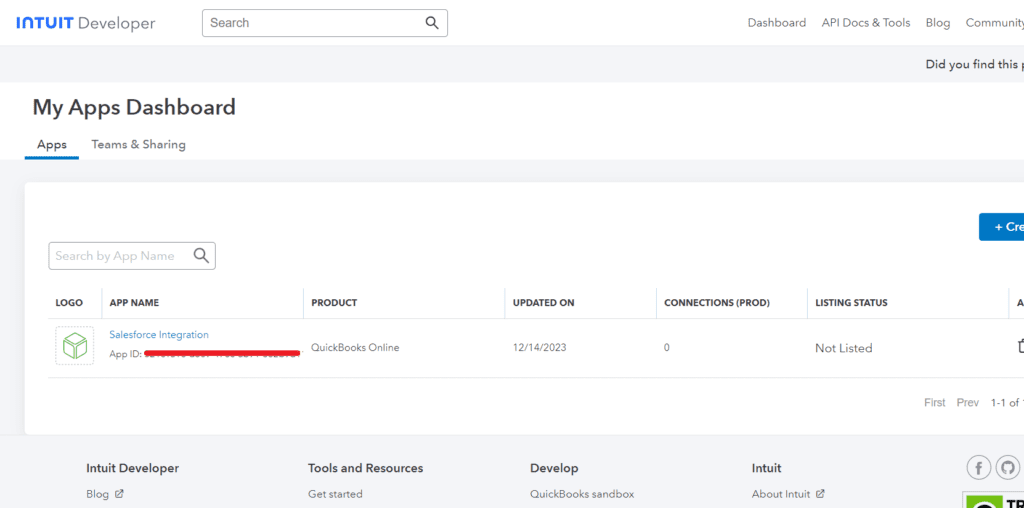
Step 2: Create an App in the Intuit Developer Portal
Create your application and configure the required API access.
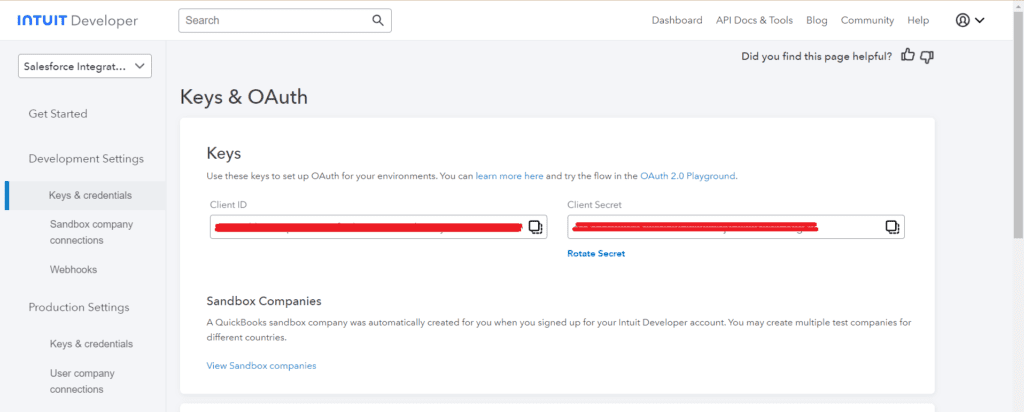
Step 3: Copy the Client ID and Client Secret
Step 4: Configure Salesforce Auth Provider
Log in to Salesforce, open Setup, and search for Auth Providers.
Step 5: Add QuickBooks Client Credentials
Add the Client ID and Client Secret obtained from the QuickBooks application.
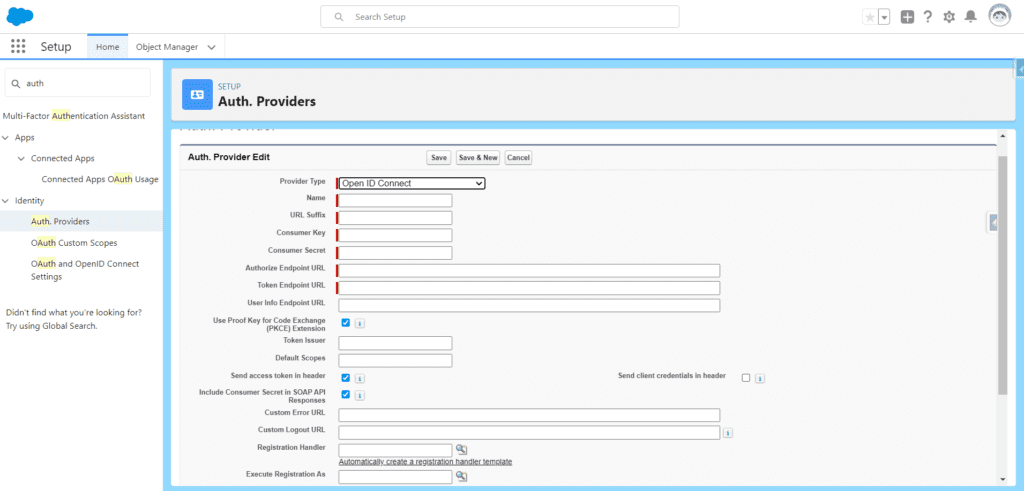
Step 6: Configure the Redirect URI
After creating the Auth Provider, Salesforce generates a callback or endpoint URL. Copy this URL and add it as the appropriate redirect URI in the QuickBooks application configuration.
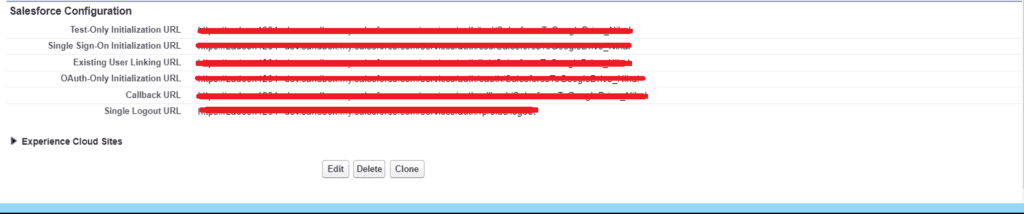
Step 7: Add the Callback URL to QuickBooks

Step 8: Create a Salesforce Named Credential
From Salesforce Setup, navigate to Named Credentials and configure the connection.
- Add the endpoint URL.
- Select Named Principal as the identity type.
- Select OAuth 2.0 as the authentication protocol.
- Select the Auth Provider created in the previous step.
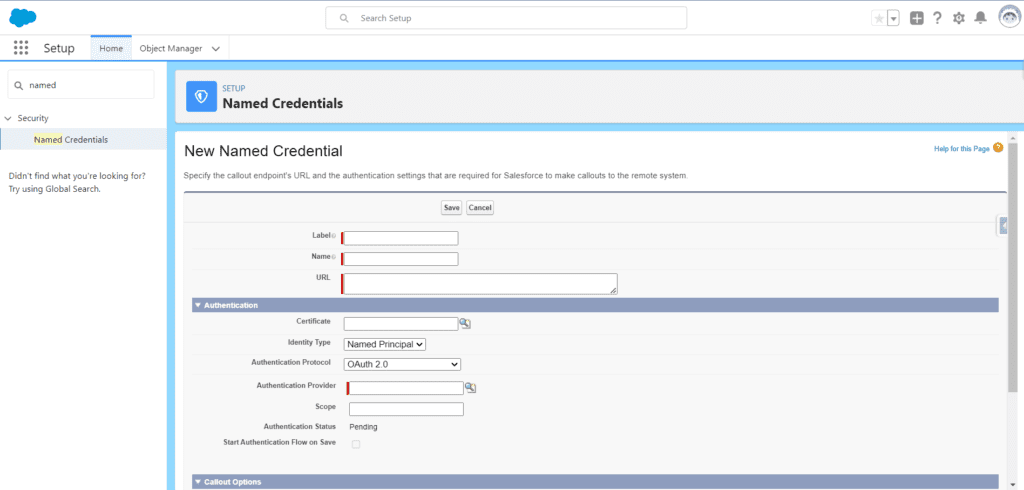
Step 9: Verify Authentication and Configure Metadata
After creating the Named Credential, verify that the authentication status is successfully authenticated. You can then create custom metadata to store configuration values such as endpoint information.
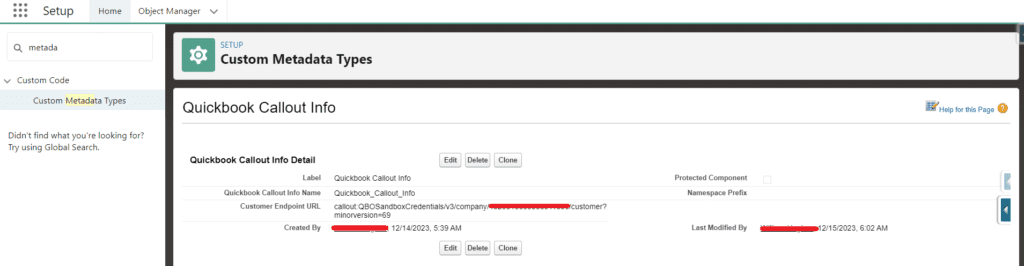
Retrieving the Company ID
- Open your QuickBooks sandbox.
- Select the Gear icon and choose Additional Info.
- Use the company ID where required in your QuickBooks API configuration.
Step 10: Create the Apex Integration
Use Apex to make authenticated callouts from Salesforce to the QuickBooks API.
- Endpoint: callout:{Named_Credential}/v3/company/{Company_Id}/invoice
- Header: Content-Type → application/json
- Header: Accept → application/json
- Method: POST
Apex Integration Code Example
public class IntegrationWithQuickbook {

    public static void createCustomer() {

        String requestBody = '{"DisplayName":"Test ABC"}';

        HttpRequest req = new HttpRequest();
        req.setEndpoint('callout:QB_NAMED_CRED/v3/company/ID/customer');
        req.setMethod('POST');
        req.setHeader('Content-Type','application/json');
        req.setBody(requestBody);

        Http http = new Http();
        HttpResponse res = http.send(req);

        System.debug(res.getBody());
    }
}
Postman Testing Flow
1. Set Up OAuth 2.0 Authentication
Obtain the required OAuth 2.0 credentials from your QuickBooks application.
2. Configure the Postman Environment
Create a Postman environment and add variables such as:
- baseUrl: QuickBooks API base URL.
- clientId: Your QuickBooks application Client ID.
- clientSecret: Your QuickBooks application Client Secret.
- accessToken: OAuth 2.0 access token.
- refreshToken: OAuth 2.0 refresh token.
- realmId: QuickBooks company identifier.
3. Obtain an Access Token
Send the appropriate POST request to the QuickBooks OAuth 2.0 token endpoint using your authorization flow.
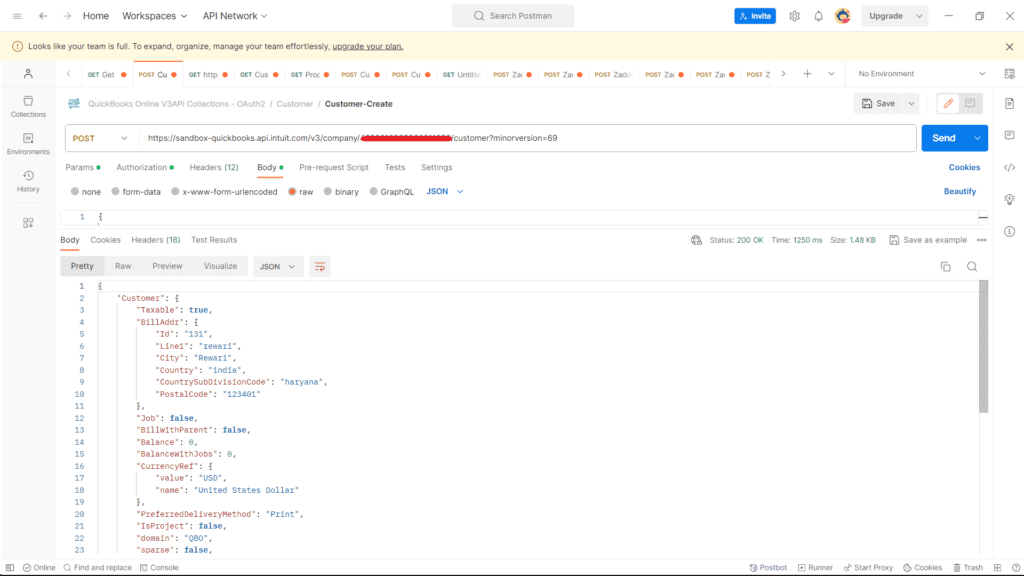
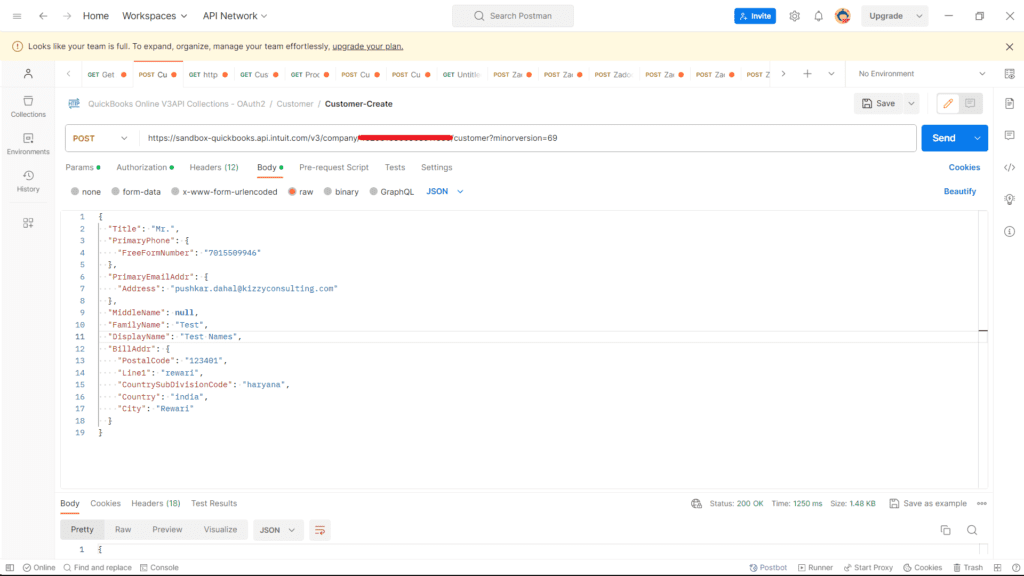
4. Create a Customer
Use the access token to send a POST request to the QuickBooks customer endpoint.
5. Handle the API Response
Validate the response and confirm that the customer or other requested record was successfully created or updated.
Top QuickBooks Salesforce Integration Use Cases
Automated Invoice Creation
Create QuickBooks invoices based on Salesforce Opportunities or other CRM events.
Bidirectional Customer Sync
Keep customer information synchronized between Salesforce and QuickBooks.
Payment Status Tracking
Surface relevant payment and invoice information inside Salesforce.
Revenue Reporting
Combine CRM and financial information for more complete business reporting.
Need a Broader Salesforce Integration Strategy?
QuickBooks is often only one part of a larger business technology ecosystem. Kizzy Consulting helps businesses connect Salesforce with accounting platforms, ERP systems, APIs, data platforms, and other enterprise applications.
Explore our Salesforce Integration Services to learn how secure integrations can streamline your wider technology stack.
Conclusion
QuickBooks Salesforce Integration can improve operational efficiency by reducing manual data entry, connecting financial and customer information, and creating more consistent workflows between sales and finance teams.
With a secure API-driven architecture using OAuth 2.0, Salesforce Named Credentials, and Apex, businesses can build scalable integrations that support automated invoicing, customer synchronization, payment visibility, and financial reporting.
Need Help with QuickBooks Salesforce Integration?
Kizzy Consulting builds secure, scalable Salesforce integrations that connect CRM data with financial systems and business applications. From API architecture and OAuth 2.0 to Apex development and ongoing optimization, our team can help you build an integration aligned with your business workflows.
Kizzy Consulting helps businesses maximize Salesforce through implementation, integration, consulting, and managed services. If you are planning a Salesforce + QuickBooks integration,
contact our Salesforce experts or email [email protected].