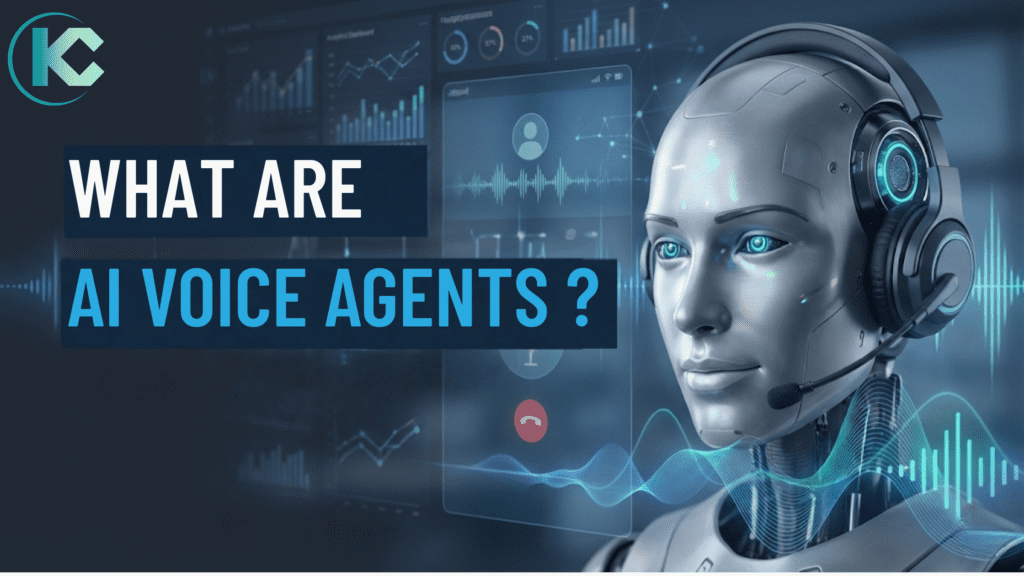
What Are AI Voice Agents?
⏱ 3 min read
AI voice agents are conversational software systems powered by advanced speech recognition, large language models (LLMs), and intelligent workflow automation. They don’t just answer calls – they listen, comprehend intent, reason, and execute real-time actions. Unlike traditional rigid IVRs or scripted chatbots, modern conversational AI voice agents understand context, handle interruptions naturally, and seamlessly trigger operations like updating CRMs, scheduling appointments, or routing complex requests.
Think of them as autonomous digital team members capable of speaking, reasoning, and executing tasks across your business ecosystem without human intervention.
What You’ll Learn: What AI voice agents are, how they work, their benefits, real-world industry applications, and how businesses are using AI phone answering services to improve customer experience and operational efficiency.
AI Voice Agents vs. Voice Bots vs. Traditional IVR
To understand why conversational AI is transforming business communication, see how modern voice AI compares to traditional telephone systems and basic bots.
Why Are AI Voice Agents Important?
Modern consumers expect immediate responses, personalized experiences, and 24/7 availability. Businesses that fail to respond quickly often lose opportunities to competitors.
- Answer every inbound call instantly.
- Handle large call volumes without delays.
- Capture leads after business hours.
- Reduce customer wait times.
- Support teams without increasing headcount.
For organizations focused on growth, customer experience, and operational efficiency, AI phone answering services provide one of the fastest paths to measurable ROI.
The AI voice agent architecture diagram below illustrates the complete lifecycle of an automated call. It begins with speech-to-text converting the caller’s spoken words into data, followed by intent detection to understand the core request. Finally, the system executes backend actions like CRM updates before using text-to-speech to respond naturally.
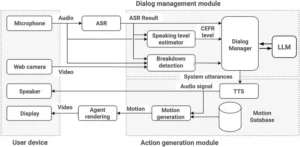
Figure: How an AI voice agent processes a call – from speech recognition to CRM update
Key Insight: Modern AI voice agents combine speech recognition, natural language processing, workflow automation, and business system integrations to create intelligent customer interactions at scale.
The Numbers: Why Voice AI Matters
The shift toward automated conversational systems isn’t just a trend; it’s backed by measurable impact across customer preferences and enterprise ROI:
- Market Growth: According to Grand View Research, the global conversational AI market is projected to expand at a compound annual growth rate (CAGR) of 23.6%, reflecting massive enterprise adoption of voice-driven solutions.
- Customer Preference: Despite the rise of chat, studies indicate that roughly 70% of consumers still prefer phone support for complex or urgent issues, requiring businesses to find scalable voice solutions.
- Cost Reduction: Gartner research indicates that organizations deploying conversational automation and generative AI in their contact centers can reduce operational costs and increase productivity by up to 30%.
What Are the Benefits of AI Voice Agents?
AI voice agents offer measurable business benefits that extend beyond basic customer support automation.
Zero Wait Times
Handle thousands of calls simultaneously without customer queues.
24/7 Availability
Capture leads and answer questions around the clock.
CRM Automation
Automatically log and update customer interactions.
Lower Costs
Reduce repetitive workloads and operational expenses.
- Continuous Availability: Never miss an opportunity outside business hours.
- Reduced Operational Costs: Automate repetitive conversations.
- Instant CRM Updates: Keep customer records accurate automatically.
- Scalable Infrastructure: Grow without increasing support overhead.
- Improved Productivity: Allow employees to focus on high-value work.
How Do AI Voice Agents Work?
Every conversational AI voice agent follows a structured workflow to understand requests and execute actions.
1. Speech-to-Text (STT)
Converts spoken language into machine-readable text.
Converts spoken language into machine-readable text.
2. Intent Detection
Determines what the caller wants to accomplish.
Determines what the caller wants to accomplish.
3. Natural Language Processing
Analyzes meaning, context, and conversational flow.
Analyzes meaning, context, and conversational flow.
4. Decision Logic
Selects the most appropriate workflow path.
Selects the most appropriate workflow path.
5. System Integrations
Connects with CRMs, calendars, databases, and business applications.
Connects with CRMs, calendars, databases, and business applications.
6. Action Execution
Books appointments, updates records, transfers calls, or completes tasks.
Books appointments, updates records, transfers calls, or completes tasks.
Top AI Voice Agent Use Cases for Businesses
- Customer support automation
- Lead qualification and routing
- Appointment booking and reminders
- Outbound follow-up campaigns
- Payment reminders and collections
- Order tracking and status updates
- AI phone answering service operations
Industries Using AI Voice Agents in 2026
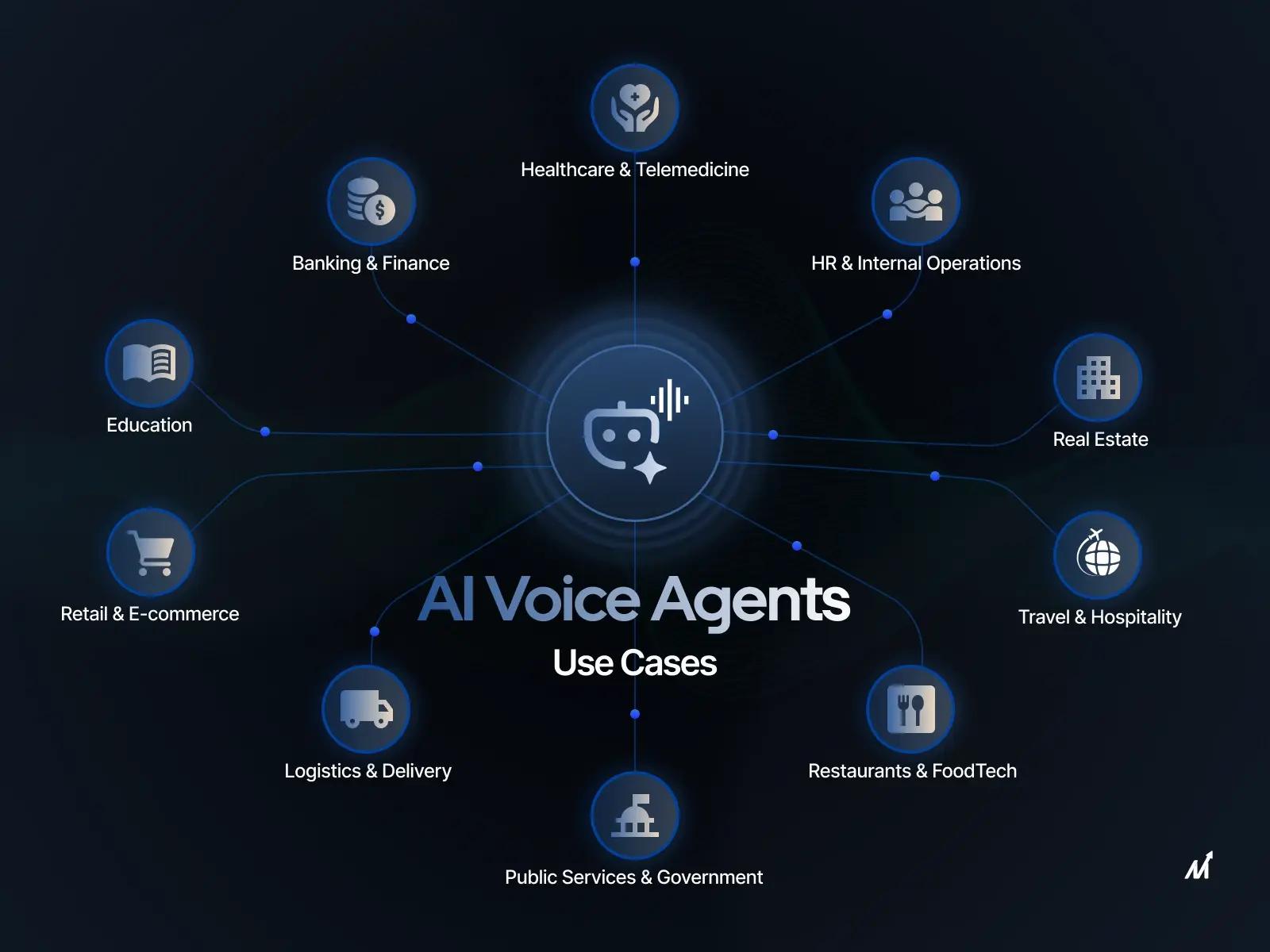
Organizations across industries are adopting AI voice technology to improve responsiveness, scalability, and customer satisfaction.
Real Estate
- Capture inbound property leads instantly.
- Qualify buyers and sellers.
- Schedule property showings.
- Answer listing-related questions.
AI voice agents for real estate help agencies respond faster and convert more opportunities.
Nonprofits (NGOs & NPOs)
- Handle donor inquiries.
- Register volunteers.
- Provide event information.
- Automate donation follow-ups.
Nonprofits use conversational AI voice agents to improve outreach while minimizing operational costs.
24/7 Support
Always available to customers.
Always available to customers.
Instant Responses
Engage prospects immediately.
Engage prospects immediately.
Reduced Costs
Automate repetitive workflows.
Automate repetitive workflows.
Scalable Operations
Handle growing demand effortlessly.
Handle growing demand effortlessly.
AI & Technology Services
- Technical support automation.
- Demo scheduling.
- Lead qualification.
- Customer onboarding assistance.
Healthcare
- Appointment scheduling.
- Patient reminders.
- Post-discharge follow-ups.
- Administrative support automation.
Sales & Customer Support
- FAQ automation.
- Lead qualification.
- Order status updates.
- Customer engagement campaigns.
Transform Your Customer Experience with Voice Automation
AI voice agents help businesses scale customer communications, improve availability, and provide consistent experiences across every interaction.
Whether functioning as an AI phone answering service, lead qualification assistant, or customer support representative, they help organizations improve efficiency while reducing costs.
The Future of AI Voice Agents and Conversational Automation
Voice automation is becoming a foundational layer of modern customer engagement. As AI models continue to advance, future voice agents will understand deeper context, execute increasingly complex workflows, and integrate seamlessly with enterprise technology ecosystems.
Organizations that embrace AI voice technology today position themselves to deliver faster, smarter, and more personalized customer experiences tomorrow.
Key Things to Consider Before Deploying Voice Automation
- Define your primary business use case.
- Identify required CRM and software integrations.
- Review security and compliance requirements.
- Create clear human escalation paths.
- Forecast expected call volumes.
- Establish success metrics and KPIs.
Ready to Scale Your Communications?
If your business relies on phone conversations to generate revenue, schedule appointments, or support customers, AI voice agents can eliminate growth bottlenecks while improving customer satisfaction.
Why Businesses Are Investing in AI Voice Agents
Organizations across healthcare, real estate, nonprofits, SaaS, and customer support are increasingly adopting AI voice agents to improve customer experience, reduce operational costs, and provide always-on communication. As conversational AI continues to evolve, voice automation is becoming a core component of modern customer engagement strategies.
AI Voice Agent Frequently Asked Questions (FAQs)
What is an AI voice agent?
An AI voice agent is an autonomous conversational system powered by large language models (LLMs) and advanced speech recognition. Unlike traditional phone systems, it can listen, comprehend human intent, reason through complex queries, and execute real-time actions. They act as digital team members capable of handling thousands of calls simultaneously without human intervention.
How do AI voice agents work?
AI voice agents use a multi-step workflow happening in milliseconds. First, Speech-to-Text (STT) transcribes the caller’s audio. Next, Natural Language Processing (NLP) detects the intent and context of the request. Finally, the agent interfaces with backend tools (like a CRM) to execute actions before replying naturally using Text-to-Speech (TTS).
What’s the difference between an AI voice agent and a chatbot?
While both use artificial intelligence, traditional chatbots primarily operate through text and are often constrained by rigid decision trees. AI voice agents are specifically designed for real-time spoken conversations. They handle the complexities of audio, such as speech patterns, natural interruptions, regional accents, and non-linear dialogue, while actively executing backend business logic.
What’s the difference between an AI voice agent and an IVR system?
Traditional Interactive Voice Response (IVR) systems force callers into rigid, pre-recorded menus (“Press 1 for Sales”). They have no contextual awareness and only offer basic call routing. AI voice agents understand natural conversational language, maintain context throughout the call, and can actually resolve the customer’s issue rather than just transferring them.
Are AI voice agents secure and compliant?
Yes. When implemented with enterprise-grade architecture, AI voice agents are highly secure. Providers design these systems to support strict compliance requirements, including GDPR for data privacy, HIPAA for healthcare information, and PCI-DSS for payment processing, ensuring sensitive caller data is protected and encrypted.