What Are AI Voice Agents?
⏱ 4 min read
Quick answer
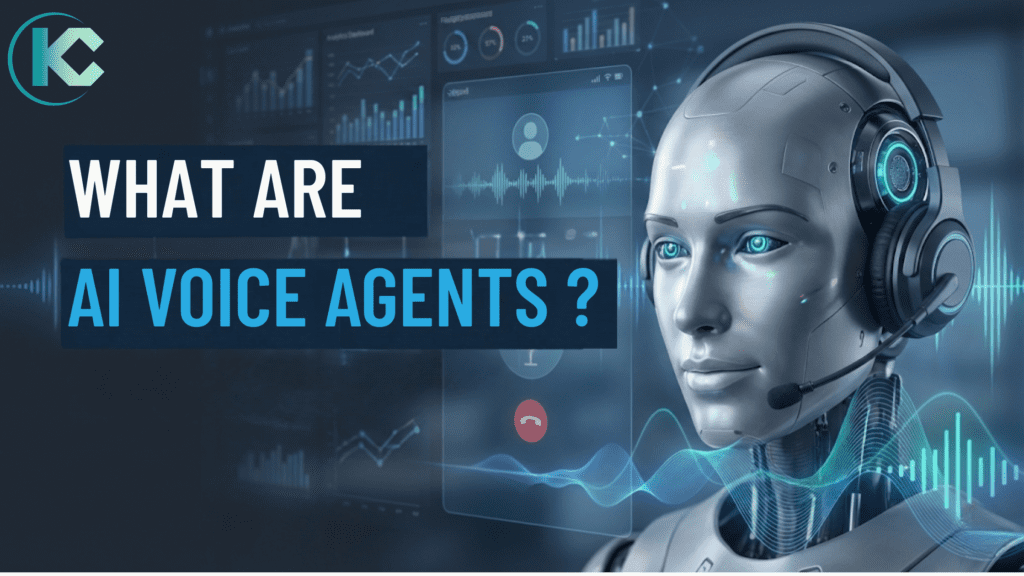
An AI voice agent is software that answers and places phone calls in natural speech. It understands what the caller wants, then completes the task: qualifying a lead, booking an appointment, answering a policy question or updating your CRM. It runs 24/7, handles many calls at once and passes complex conversations to your team with full context.
AI voice agents are conversational software systems powered by advanced speech recognition, large language models (LLMs), and intelligent workflow automation. They don’t just answer calls; they listen, comprehend intent, reason, and take live actions. Unlike traditional rigid IVRs or scripted chatbots, modern conversational AI voice agents understand context, handle interruptions naturally, and seamlessly trigger operations like updating CRMs, scheduling appointments, or routing complex requests.
Think of them as autonomous digital team members capable of speaking, reasoning, and executing tasks across your business ecosystem without human intervention.
What You’ll Learn: What AI voice agents are, how they work, their benefits, real-world industry applications, and how businesses are using AI phone answering services to improve customer experience and operational efficiency.
AI Voice Agents vs. Voice Bots vs. Traditional IVR
To understand why conversational AI is transforming business communication, see how modern voice AI compares to traditional telephone systems and basic bots.
For the text-based side, see AI agents vs chatbots.
Why Are AI Voice Agents Important?
Modern consumers expect immediate responses, personalized experiences, and 24/7 availability. Businesses that fail to respond quickly often lose opportunities to competitors.
- Answer every inbound call instantly.
- Handle large call volumes without delays.
- Capture leads after business hours.
- Reduce customer wait times.
- Support teams without increasing headcount.
For organizations focused on growth, customer experience, and operational efficiency, AI phone answering services provide a way to handle more customer conversations without adding friction to the customer journey.
The AI voice agent architecture diagram below illustrates the complete lifecycle of an automated call, from speech recognition and intent detection to backend actions and a natural spoken response.
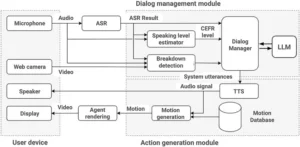
Figure: How an AI voice agent processes a call, from speech recognition to CRM update.
Key Insight: Modern AI voice agents combine speech recognition, natural language processing, workflow automation, and business system integrations to create intelligent customer interactions at scale.
What Are the Benefits of AI Voice Agents?
AI voice agents can manage routine conversations, retrieve approved information, and execute tasks across connected business systems. Their benefits depend on how well the agent is configured, integrated, and monitored.
Instant Answers
Every call is answered on the first ring, without hold queues.
24/7 Coverage
Leads and questions are captured around the clock, including after hours and at weekends.
CRM Automation
Every call is logged with a transcript, summary and next step.
Consistent, Grounded Answers
Retrieval from approved knowledge keeps every caller’s answer accurate and on-brand.
Scale on Demand
Many conversations run in parallel during peaks.
More Time for High-Value Work
Your team focuses on the conversations that need human judgement.
How Do AI Voice Agents Work?
Every production voice agent runs the same five-stage loop, repeated many times in a single call.
1. Call Connection (Telephony)
The call arrives through a SIP/VoIP connection from a carrier such as Twilio or your existing PBX, or through Salesforce Service Cloud Voice.
2. Speech-to-Text
Streaming speech recognition turns the caller’s audio into text as they speak.
3. Reasoning (LLM)
A large language model interprets intent, decides what information is missing and chooses the next step. Retrieval-augmented generation (RAG) grounds its answers in your approved content, such as policies, product sheets or listing data.
4. Action (Tools and APIs)
The agent calls your systems: it creates or updates a CRM record, checks calendar availability, opens a case or sends an SMS confirmation.
5. Text-to-Speech
The reply is synthesised into a natural voice. Good agents let callers interrupt mid-sentence and pick up the thread without restarting.
Around that loop sit the enterprise layers: guardrails, handoff rules, recordings and transcripts, analytics and monitoring. Response latency decides whether a call feels natural, so streaming models, regional hosting and lean tool calls are core design choices. For the full component list, read The AI Agent Tech Stack.
Top AI Voice Agent Use Cases for Businesses
AI voice agents can support both inbound and outbound communications. The right workflow depends on the caller’s needs, the systems available to the agent, and the actions it is authorised to perform.
Inbound Support and Virtual Receptionist
Answers on the first ring, resolves routine questions and routes the rest with a summary.
Lead Qualification
Asks qualifying questions, scores the lead and writes it to the CRM.
Appointment Setting
Checks calendar availability, books, reschedules and sends reminders during the call.
Outbound Follow-Up
Calls back new leads, follows up on quotes and confirms appointments.
Order and Payment Updates
Handles order tracking, status updates and payment reminders.
Planning a deployment? Explore our AI voice agent services for businesses.
Industries Using AI Voice Agents in 2026
Organizations across industries are adopting AI voice technology to improve responsiveness, manage customer communications, and support business workflows.
Property and Leasing
AI voice agents help property firms respond to enquiries, qualify prospective tenants and buyers, and coordinate viewings.
- Capture inbound property leads.
- Qualify buyers, sellers and tenants.
- Schedule property showings and viewings.
- Answer listing-related questions using approved property information.
- Record conversations and follow-up tasks in the CRM.
See AI voice agents for property firms and explore the real estate voice agent solution.
Nonprofits (NGOs and NPOs)
Nonprofits can use voice agents to handle routine enquiries and donor communications while freeing staff for donor relationships.
- Handle donor inquiries.
- Register volunteers and answer event questions.
- Provide information about programmes and events.
- Support donation follow-ups and outreach campaigns.
24/7 Support
Always available to customers and supporters.
Instant Responses
Engage prospects and callers promptly.
Consistent Answers
Approved information on every call.
Scalable Operations
Handle growing demand with connected workflows.
Explore AI Agents for Nonprofits to learn how AI can support donor engagement, volunteer coordination and administrative workflows.
AI and Technology Services
Technology businesses can use voice agents to handle repetitive enquiries and coordinate customer-facing workflows.
- Technical support automation for routine requests.
- Product demo scheduling.
- Lead qualification and routing.
- Customer onboarding assistance.
Healthcare
Healthcare organisations can use voice agents for administrative communication, appointment coordination and routine patient enquiries. Implementations should follow appropriate privacy, clinical safety and escalation requirements.
- Appointment scheduling and rescheduling.
- Patient reminders.
- Post-discharge follow-ups using approved workflows.
- Administrative support automation.
Explore AI Agents for Healthcare for examples of patient scheduling, patient engagement and healthcare workflow automation.
Sales and Customer Support
Sales and service teams can use voice agents to handle predictable enquiries and make sure follow-up actions are recorded.
- Frequently asked questions and routine enquiries.
- Lead qualification and follow-up.
- Order status updates.
- Customer engagement and appointment confirmation campaigns.
AI Voice Agents and Salesforce
On Salesforce, voice agents run in two ways. Agentforce Voice lets Agentforce agents handle phone conversations natively, working with Service Cloud Voice and escalating to human reps through Omni-Channel. Custom voice agents connect to Salesforce through APIs to read account history and write leads, activities and transcripts during the call.
Setup details are in our Agentforce Voice setup guide and Service Cloud Voice implementation guide.
Transform Your Customer Experience with Voice Automation
AI voice agents help businesses scale customer communications, improve availability, and provide consistent experiences across every interaction.
Whether functioning as an AI phone answering service, lead qualification assistant, or customer support representative, they help organizations respond faster and convert more conversations.
The Future of AI Voice Agents and Conversational Automation
Voice automation is becoming a foundational layer of modern customer engagement. As AI models continue to advance, future voice agents will understand deeper context, execute increasingly complex workflows, and integrate seamlessly with enterprise technology ecosystems.
Organizations that embrace AI voice technology today can build more responsive and personalised customer experiences while creating a foundation for increasingly sophisticated automated workflows.
Key Things to Consider Before Deploying Voice Automation
- Define your primary business use case.
- Identify required CRM and software integrations.
- Review security and compliance requirements.
- Create clear human escalation paths.
- Forecast expected call volumes.
- Establish success metrics and KPIs.
Ready to Scale Your Communications?
If your business relies on phone conversations to generate revenue, schedule appointments, or support customers, AI voice agents can help remove communication bottlenecks while improving customer experience.
Kizzy designs, builds and runs AI voice agents. Explore our AI voice agent services or Agent Calling.
AI Voice Agent Frequently Asked Questions (FAQs)
What is an AI voice agent?
An AI voice agent is software that answers and places phone calls in natural speech. It uses speech recognition and a large language model to understand what the caller wants, then completes the task, such as answering a question, qualifying a lead, booking an appointment or updating a CRM, and hands complex calls to a person.
How do AI voice agents work?
An AI voice agent connects to your phone line, converts the caller’s speech to text, uses a large language model to understand intent and decide the next step, calls your systems through APIs to take action, and replies in a natural synthesised voice. It repeats this loop throughout the call and hands off to a human when needed.
What are the benefits of AI voice agents?
AI voice agents answer every call instantly, work 24/7, handle many conversations at once, give consistent answers from approved knowledge, and log every call to the CRM with a transcript and summary. Teams get more qualified conversations and more time for work that needs human judgement.
What’s the difference between an AI voice agent and a chatbot?
Chatbots mainly work through text and often follow predefined flows. AI voice agents are built for spoken conversations: they handle speech patterns, interruptions, accents and non-linear dialogue in live calls while executing backend actions such as CRM updates and bookings.
What’s the difference between an AI voice agent and an IVR system?
IVR systems route callers through fixed menus such as “Press 1 for Sales” and have little context. AI voice agents understand natural language, keep context through the call, resolve the request by acting in your systems, and transfer complex conversations to a person with the full history.
Are AI voice agents secure and compliant?
AI voice agents can be implemented with enterprise security and compliance controls. Depending on the use case and architecture, organizations can apply data protection, encryption, access controls, PII masking, auditability, human escalation and applicable requirements such as GDPR, HIPAA or PCI-DSS.