Salesforce Financial Services Cloud [2026]
⏱ 4 min read
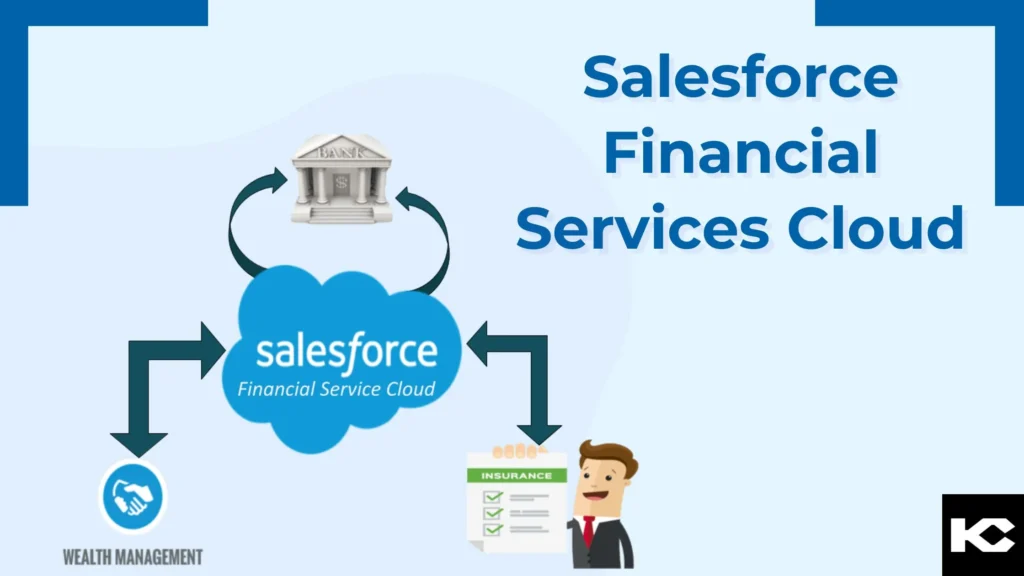
Salesforce Financial Services Cloud (FSC) is a purpose-built Salesforce platform for banking, wealth management, insurance, and other financial services organizations. It helps financial institutions unify customer data, manage client relationships, streamline operations, improve personalization, strengthen compliance processes, and deliver connected customer experiences.
What is Salesforce Financial Services Cloud?
Salesforce Financial Services Cloud is an industry-focused CRM platform built on Salesforce Customer 360. It provides financial institutions with tools for client and household management, wealth management, banking, insurance, financial planning, analytics, workflow automation, and secure customer engagement.
Salesforce Financial Services Cloud: Transforming Financial Services
The financial services industry is evolving rapidly due to digital transformation, changing customer expectations, increasingly complex regulatory requirements, and the growing demand for personalized financial experiences.
Banks, wealth management firms, insurance companies, lenders, and other financial institutions need technology that can connect customer information, simplify processes, improve employee productivity, and support secure digital experiences.
Salesforce Financial Services Cloud addresses these requirements by bringing financial services data, customer relationships, workflows, and engagement capabilities together within the Salesforce ecosystem.
Salesforce CPQ Services
For financial institutions managing complex products, pricing, quotes, and approval processes, Salesforce CPQ can complement Financial Services Cloud by helping automate configuration, pricing, quoting, and downstream revenue workflows.
Explore Salesforce CPQ Services to learn more about Salesforce CPQ implementation, configuration, and automation.
What is Salesforce Financial Services Cloud?
Salesforce Financial Services Cloud is a specialized CRM solution designed to address the requirements of financial institutions. Built on the broader Salesforce Customer 360 platform, FSC helps organizations create a connected view of clients, households, financial relationships, interactions, and business processes.
Unlike a generic CRM implementation, Salesforce FSC provides industry-specific capabilities that can support wealth management, banking, insurance, lending, financial planning, and client relationship management.
Financial institutions can use FSC to connect customer information with sales, service, financial planning, analytics, and automation processes while maintaining the governance and security requirements expected in the financial sector.
Key Salesforce Financial Services Cloud Features and Benefits
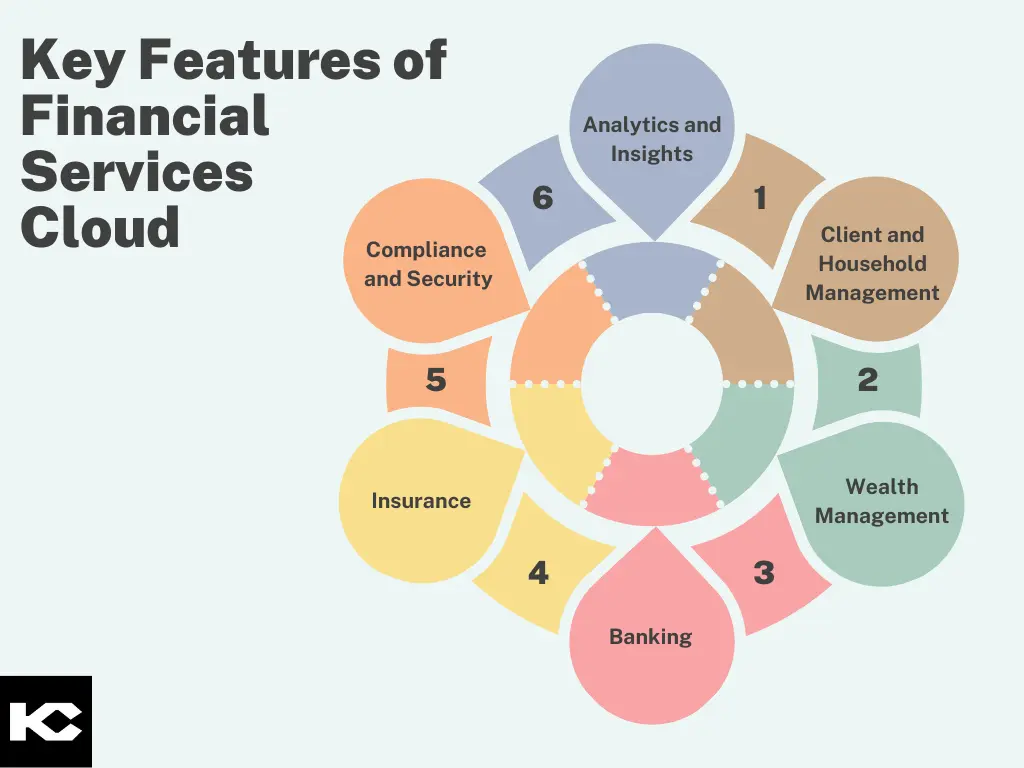
Salesforce Financial Services Cloud brings together several capabilities designed specifically for financial services organizations. These capabilities help financial advisors, relationship managers, banking teams, insurance professionals, and operations teams work from more connected customer information.
1. Client and Household Management
Financial institutions need to understand not only individual customers but also the relationships between households, businesses, advisors, accounts, and other stakeholders.
- Unified Client View: Bring relevant customer information together for a more complete 360-degree view.
- Relationship Mapping: Understand household structures and complex client relationships to support more personalized service.
2. Salesforce Wealth Management Capabilities
- Client Onboarding: Simplify onboarding using automated workflows, tasks, and checklists.
- Financial Goals Tracking: Help advisors and clients monitor financial goals and planning activities.
- Advisor Productivity: Automate repetitive tasks and provide advisors with relevant client information and insights.
3. Salesforce Banking and Lending Capabilities
- Loan and Mortgage Management: Support loan-related processes and reduce manual administrative work.
- Customer Engagement: Use customer information to provide more personalized interactions and proactive service.
- Branch Management: Improve visibility into branch activity and performance using connected data and analytics.
4. Salesforce Insurance Capabilities
- Policy Management: Support policy-related workflows and customer interactions.
- Insurance Agent Productivity: Give agents connected customer information to support faster service.
- Risk Management: Use analytics and reporting to identify trends and potential risks.
5. Financial Services Compliance and Security
- Regulatory Processes: Build workflows and controls around the compliance requirements of financial operations.
- Data Security: Protect sensitive customer and financial information through Salesforce security and governance capabilities.
6. Salesforce Financial Services Analytics and Insights
- Advanced Analytics: Analyze customer and operational information to identify trends and opportunities.
- Custom Dashboards: Create dashboards around business KPIs, client activity, sales performance, service operations, and other metrics.
Salesforce Financial Services Cloud Use Cases
Salesforce FSC can support a range of financial services use cases across banking, wealth management, insurance, lending, and client relationship management.
Personalized Client Engagement
Wealth managers and advisors can use connected client information to understand needs and provide more relevant advice and communication.
Banking Process Automation
Banks can automate routine workflows around customer requests, loan processes, onboarding, and service activities.
Insurance Customer Management
Insurance organizations can connect customer information and workflows to improve policy-related service and agent productivity.
Financial Planning
Advisors can use connected data and planning workflows to help clients monitor financial objectives and maintain long-term relationships.
See Salesforce in Action for Financial Institutions
Explore our Salesforce for Financial Institution Case Study to see how Salesforce can support financial services organizations with connected processes and customer management.
Salesforce Financial Services Cloud Integration
Financial institutions rarely operate from a single technology platform. Core banking systems, payment platforms, portfolio management applications, data warehouses, credit systems, and other enterprise applications often need to exchange information with Salesforce.
Salesforce integration for financial services can help create a connected technology ecosystem where relevant information moves between Salesforce and external systems.
Common Financial Services Integration Areas
- Core banking systems
- Payment and transaction platforms
- Wealth and portfolio management systems
- Credit and risk systems
- Enterprise resource planning platforms
- Data warehouses and analytics platforms
Learn more about Salesforce Integration Services for connecting Salesforce with enterprise applications, APIs, ERP systems, legacy platforms, and other business systems.
Salesforce Data and AI for Financial Services
As financial institutions move toward AI-powered customer experiences, data quality, governance, security, and accessibility become increasingly important.
A strong data foundation can help financial services organizations connect fragmented information, establish consistent customer profiles, and prepare trusted data for analytics and AI-powered workflows.
Why Data Foundation Matters in Financial Services
Financial services organizations work with highly sensitive and often fragmented data. Data quality, identity resolution, governance, security, and controlled activation are therefore important when building analytics and AI capabilities.
Salesforce Financial Services Cloud Pricing
Salesforce Financial Services Cloud pricing can vary based on the edition, products, number of users, functionality, implementation requirements, integrations, and organization-specific requirements.
Because Salesforce pricing and packaging can change, organizations should review the current Salesforce pricing information when planning an FSC implementation.
Why Choose Salesforce Financial Services Cloud?
Scalability
Salesforce can support organizations as their customer base, teams, processes, and technology requirements evolve.
Flexibility
FSC can be configured and integrated to support different financial services business models and workflows.
Customer 360
Connect relevant customer information to provide employees with better context across client interactions.
Continuous Innovation
Organizations can benefit from the broader Salesforce platform ecosystem and its evolving automation, analytics, data, and AI capabilities.
Salesforce Financial Services Cloud FAQs
1. What is Salesforce Financial Services Cloud used for?
Salesforce Financial Services Cloud is used by banks, wealth managers, insurers, lenders, and other financial institutions to manage client relationships, financial workflows, customer data, engagement, analytics, and industry-specific processes.
2. What are the benefits of Salesforce Financial Services Cloud?
Key benefits include a unified client view, household management, financial services automation, personalized engagement, advisor productivity, analytics, integration, scalability, and support for industry-specific workflows.
3. How does Salesforce FSC help banks?
Salesforce FSC can help banks connect customer information, automate workflows, improve customer engagement, support loan and mortgage processes, and provide employees with a more complete view of customer relationships.
4. How does Salesforce Financial Services Cloud support wealth management?
FSC can support wealth management teams with client onboarding, household and relationship management, financial goals, advisor workflows, customer information, and personalized client engagement.
5. Can Salesforce Financial Services Cloud be used for insurance?
Yes. Salesforce provides financial services capabilities that can support insurance organizations with customer relationship management, policy-related workflows, agent productivity, analytics, and connected customer experiences.
6. How does Salesforce FSC improve financial services customer experience?
FSC can bring relevant customer and household information into a connected view, helping advisors, service teams, and relationship managers provide more contextual and personalized interactions.
7. Can Salesforce Financial Services Cloud integrate with core banking systems?
Salesforce can integrate with external enterprise systems through APIs, middleware, connectors, and other integration architectures. The exact approach depends on the institution’s technology landscape, security requirements, and data flows.
8. How does Salesforce FSC support financial services compliance?
FSC implementations can incorporate Salesforce security, access controls, governance, auditability, data protection, and workflow controls. Compliance requirements should be addressed based on the institution’s specific regulatory environment and implementation architecture.
9. How much does Salesforce Financial Services Cloud cost?
Salesforce Financial Services Cloud pricing depends on the applicable Salesforce edition, products, user requirements, features, implementation scope, and integrations. Organizations should check Salesforce’s current pricing directly for the latest commercial information.
10. Why work with a Salesforce Financial Services Cloud implementation partner?
A specialized implementation partner can help financial institutions plan FSC architecture, configure industry workflows, integrate external systems, establish data governance, support migration, and align the Salesforce platform with business and regulatory requirements.
Related Salesforce Financial Services Resources
Conclusion: Salesforce Financial Services Cloud for Digital Transformation
Salesforce Financial Services Cloud is more than a traditional CRM. It provides financial institutions with an industry-focused platform for managing client relationships, connecting customer information, automating workflows, improving advisor productivity, and creating more personalized financial experiences.
From banking and wealth management to insurance and lending, FSC can help organizations build a more connected Salesforce environment while integrating with the systems that support their core operations.
As financial services organizations continue adopting data, automation, analytics, and AI, a well-designed Salesforce Financial Services Cloud implementation can provide an important foundation for ongoing digital transformation.
Ready to Transform Financial Services with Salesforce?
Kizzy Consulting helps financial services organizations design, implement, integrate, and optimize Salesforce solutions across CRM, data, automation, and AI.
Salesforce Consulting Partner serving financial services and other regulated industries globally.