Salesforce Education Cloud Use Cases: Transforming the Student Lifecycle
⏱ 4 min read
SALESFORCE EDUCATION CLOUD
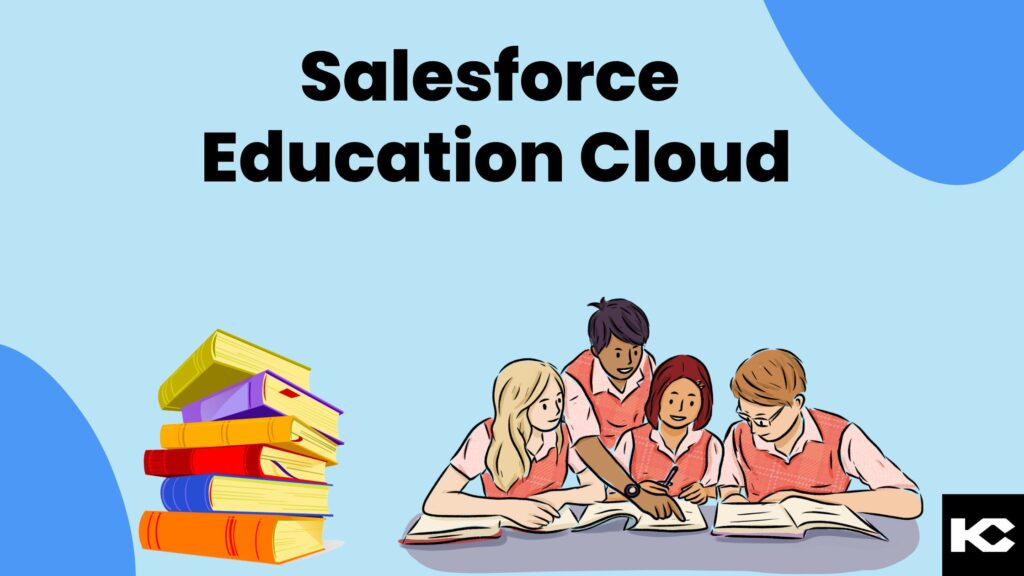
Explore how Salesforce Education Cloud can help schools, colleges, universities, and other education organizations connect student data, streamline operations, personalize engagement, and support learners throughout the education lifecycle.
Quick Answer
Salesforce Education Cloud is a purpose-built education platform that uses Salesforce’s CRM foundation and education-specific data model to support the learner lifecycle. Its capabilities span recruitment and admissions, academic operations, student success, mentoring, alumni relations, fundraising, analytics, automation, and AI-powered experiences.
What Is Salesforce Education Cloud?
Salesforce Education Cloud is a specialized Salesforce platform designed to help educational institutions manage and connect the different stages of the learner journey.
Instead of treating recruitment, admissions, academic operations, student support, and alumni engagement as disconnected processes, Education Cloud provides a learner-centric data foundation that can connect these experiences across departments.
Salesforce describes Education Cloud as supporting the entire learning experience, with purpose-built capabilities for recruitment and admissions, academic operations, student success, mentoring, alumni relations, and fundraising.
The platform can help institutions create a more complete view of prospective students, current learners, and alumni while giving faculty and staff tools to automate processes, collaborate across departments, and make decisions using connected data.
How Education Cloud Supports the Learner Journey
Education Cloud is built around an education-specific data model and Salesforce platform capabilities. The architecture can bring together information from areas such as recruitment, admissions, academic operations, student success, and advancement.
Prospective Student
Applicant
Enrolled Learner
Graduate
Alumni
This connected approach can help institutions move from fragmented departmental processes toward a more unified view of the learner and their relationship with the institution.
Top Salesforce Education Cloud Use Cases
Education Cloud can support a broad range of institutional processes. The following use cases illustrate where education organizations can apply Salesforce to improve engagement, operational efficiency, and learner outcomes.
1. Student Recruitment and Admissions
Recruitment and admissions are often among the most data-intensive processes within an educational institution. Education Cloud provides tools for managing recruitment and admissions activities and supporting the journey from application through enrollment.
- Track prospective student interactions
- Manage applications and admissions workflows
- Coordinate recruitment activities
- Personalize prospective student communications
- Monitor applicant progress
- Connect admissions data with broader student records
Current Salesforce capabilities also include Agentforce-powered student recruitment experiences designed to answer prospective student questions, capture academic interests, register campus tours, and help initiate applications.
2. Student Success and Advising
Student success depends on institutions identifying learner needs early and coordinating the right support. Education Cloud provides capabilities for tracking learner progress, managing support programs, and creating alerts related to learner performance.
- Monitor student progress
- Coordinate academic advising
- Manage student support programs
- Create alerts around learner performance
- Track intervention activities
- Connect students with relevant resources
This can help advisors move from reactive support toward more proactive student engagement.
3. Academic Operations and Curriculum Management
Education Cloud’s Academic Operations capabilities support the creation and management of courses, programs, learning offerings, program plans, schedules, prerequisites, corequisites, and learning outcomes.
- Create and manage courses and programs
- Define learning outcomes
- Build academic program plans
- Manage academic schedules
- Define prerequisites and corequisites
- Support course and program planning
4. Alumni Relations and Fundraising
The relationship between an institution and its learners does not end at graduation. Education Cloud includes capabilities for alumni relations and fundraising, helping institutions maintain relationships and coordinate advancement activities.
- Maintain centralized alumni information
- Track alumni interactions
- Coordinate alumni engagement
- Manage fundraising activities
- Support donor engagement
- Use data to inform advancement strategies
5. Campus Community Engagement
Educational institutions bring together students, faculty, advisors, administrators, families, alumni, and other stakeholders. A connected Salesforce environment can help teams coordinate interactions and deliver more consistent experiences.
- Centralize constituent information
- Coordinate cross-department interactions
- Provide self-service experiences
- Manage communications
- Support community engagement programs
- Create personalized experiences based on learner context
6. Career Services and Job Placement
Career services can use connected learner information to support students and alumni as they explore careers, develop skills, and transition into employment.
- Track career goals
- Manage career advising interactions
- Connect students with opportunities
- Track competencies and skill development
- Support alumni career engagement
- Coordinate employer and institutional relationships
Salesforce’s current Education Cloud capabilities also include tools focused on student goals, career readiness, and competency development.
7. Institutional Research and Analytics
Connected data can help education leaders understand enrollment, learner progress, engagement, institutional performance, and other key indicators.
- Create reports and dashboards
- Analyze student and institutional data
- Monitor enrollment trends
- Identify potential student support needs
- Analyze program performance
- Support data-driven institutional planning
Education Cloud includes analytics capabilities and can activate data across academic, wellbeing, LMS engagement, and other learner-related sources.
8. Compliance, Governance, and Accreditation
Education organizations manage sensitive information and operate within institutional, regulatory, and accreditation requirements. Salesforce can provide centralized processes, role-based access, reporting, and workflow automation to support governance activities.
- Centralize relevant documentation
- Track compliance-related activities
- Standardize workflows
- Manage access to sensitive information
- Create audit-oriented reporting
- Support institutional governance processes
Specific compliance requirements should always be mapped to the institution’s applicable regulations, policies, and data governance framework.
9. Digital Student Services and Self-Service
Education Cloud can support digital experiences that allow learners and other constituents to access information and services through connected portals and applications.
- Provide online learner portals
- Support self-service workflows
- Access relevant student information
- Submit requests and applications
- Connect learners with support teams
- Provide personalized digital experiences
Salesforce provides an Experience Cloud Education Portal template that institutions can configure for applicants, students, alumni, and learners with overlapping roles.
10. Continuing Education and Lifelong Learning
Modern education organizations increasingly serve learners beyond traditional degree programs. Education Cloud’s learner-centric model can support different types of learning programs and ongoing relationships with learners.
- Manage continuing education programs
- Support professional development initiatives
- Track learner progress
- Manage certificates and learning outcomes
- Engage returning learners
- Build lifelong learner relationships
Education Cloud is designed around a broader lifelong-learning journey, extending from prospective learner through student and into alumni relationships.
Agentforce Education and AI-Powered Student Experiences
Salesforce’s current education strategy increasingly combines Education Cloud with Agentforce capabilities. Salesforce describes Agentforce Education as an education-focused platform combining CRM, education data, next-generation SIS capabilities, AI agents, and analytics.
AI-powered education use cases can include:
Student Recruitment
Answer prospective student questions and support the application journey.
Advising Support
Generate student summaries and help advisors identify relevant resources.
Course Guidance
Help learners discover courses aligned with their goals and requirements.
Student Goals
Support academic, career, and life goals with personalized guidance.
These capabilities can help institutions provide more responsive support while allowing staff to focus on complex, high-value interactions.
Education Cloud as a Connected Data Foundation
One of the biggest opportunities with Education Cloud is connecting information that may otherwise remain distributed across admissions systems, academic platforms, learning management systems, marketing tools, and departmental applications.
Salesforce describes Education Cloud as using an education-specific data foundation to unify institutional information and provide a holistic view of learners.
Connected Education Data Can Support
- 360-degree learner profiles
- Cross-department visibility
- More consistent reporting
- Personalized student engagement
- Workflow automation
- AI-powered insights and experiences
- More proactive student support
Planning an Education Cloud Strategy?
Explore how Salesforce can connect education data, automate institutional processes, and create a more unified learner experience.
Benefits of Salesforce Education Cloud
Connected Data
Bring learner and institutional information into a more connected data environment.
Personalized Experiences
Use learner context to create more relevant interactions across the student lifecycle.
Workflow Automation
Automate repetitive processes and standardize operational workflows.
Student Success
Help teams identify needs and coordinate proactive learner support.
Operational Efficiency
Give faculty and staff tools to reduce repetitive administrative work.
AI-Ready Education
Create a foundation for education-focused AI agents and intelligent workflows.
What to Consider Before Education Cloud Implementation
Education Cloud implementation should begin with institutional processes and data requirements rather than simply enabling individual features.
- Define the learner journeys that need to be improved.
- Map current recruitment, admissions, academic, and student-success workflows.
- Identify data sources and integration requirements.
- Establish data governance and access requirements.
- Determine which processes should be automated.
- Define reporting and analytics requirements.
- Identify opportunities for AI and Agentforce experiences.
- Plan user adoption, training, and change management.
A phased implementation can help institutions prioritize high-impact workflows while establishing a scalable foundation for future capabilities.
Need Help With Salesforce Education Cloud Implementation?
Kizzy Consulting can help education organizations plan their Salesforce architecture, connect education data, automate workflows, and build learner-focused experiences.
Related Salesforce Education Resource
Learn more about how Salesforce can support education organizations across recruitment, student engagement, academic operations, and other institutional processes.
Frequently Asked Questions
What is Salesforce Education Cloud?
Salesforce Education Cloud is a purpose-built Salesforce platform for educational institutions. It provides education-specific data and capabilities across recruitment and admissions, academic operations, student success, mentoring, alumni relations, fundraising, analytics, and automation.
What are the main Salesforce Education Cloud use cases?
Major use cases include student recruitment and admissions, academic operations, student success and advising, mentoring, alumni relations, fundraising, digital student services, analytics, career services, and continuing education.
How does Education Cloud improve student success?
Education Cloud provides tools for tracking learner progress, managing support programs, creating alerts, coordinating advising, and connecting students with relevant resources.
Can Salesforce Education Cloud support admissions?
Yes. Education Cloud includes Recruitment and Admissions capabilities designed to support processes from recruitment and application through enrollment. Salesforce also offers Agentforce-powered student recruitment capabilities for answering prospective student questions and supporting parts of the application journey.
Can Education Cloud automate academic operations?
Yes. Academic Operations supports course and program management, learning outcomes, program plans, academic schedules, prerequisites, corequisites, and other learning-related processes.
What is Agentforce Education?
Salesforce currently uses the Agentforce Education terminology for its education-focused platform and AI capabilities. It combines CRM, education data, next-generation SIS capabilities, agentic AI, and analytics to support learner and institutional outcomes.
Can Education Cloud integrate with existing education systems?
Education Cloud is designed to connect institutional data and can be integrated into broader technology environments. Implementation should evaluate existing SIS, LMS, marketing, analytics, identity, and other systems to determine appropriate integration and data-governance requirements.
Why should educational institutions consider Salesforce Education Cloud?
Education Cloud can provide a connected foundation for learner data, institutional workflows, personalized engagement, automation, analytics, and AI-powered experiences across the education lifecycle.
Ready to Transform Your Education Operations?
Build a connected education ecosystem with Salesforce Education Cloud, intelligent automation, unified learner data, and AI-powered experiences.
Or email [email protected]
Conclusion
Salesforce Education Cloud can provide educational institutions with a connected foundation for managing learner relationships, academic operations, student support, advancement, and other institutional processes.
Its value extends beyond CRM functionality. By connecting education-specific data, workflows, automation, analytics, and AI capabilities, institutions can create more personalized experiences while giving faculty and staff better tools to manage complex processes.
From recruitment and admissions through academic operations, student success, career development, alumni engagement, and lifelong learning, Education Cloud can support a broader view of the learner lifecycle. Salesforce is also expanding Education Cloud toward next-generation SIS capabilities and Agentforce-powered experiences.
The most effective Education Cloud strategy starts with the institution’s specific goals, data architecture, learner journeys, and operational requirements. With the right implementation approach, Salesforce can become a foundation for more connected, data-driven, and learner-focused education experiences.
Kizzy Consulting
Kizzy Consulting helps educational institutions design, implement, integrate, and optimize Salesforce solutions across CRM, Education Cloud, data, automation, and AI. Connect with our team at [email protected] or contact us.