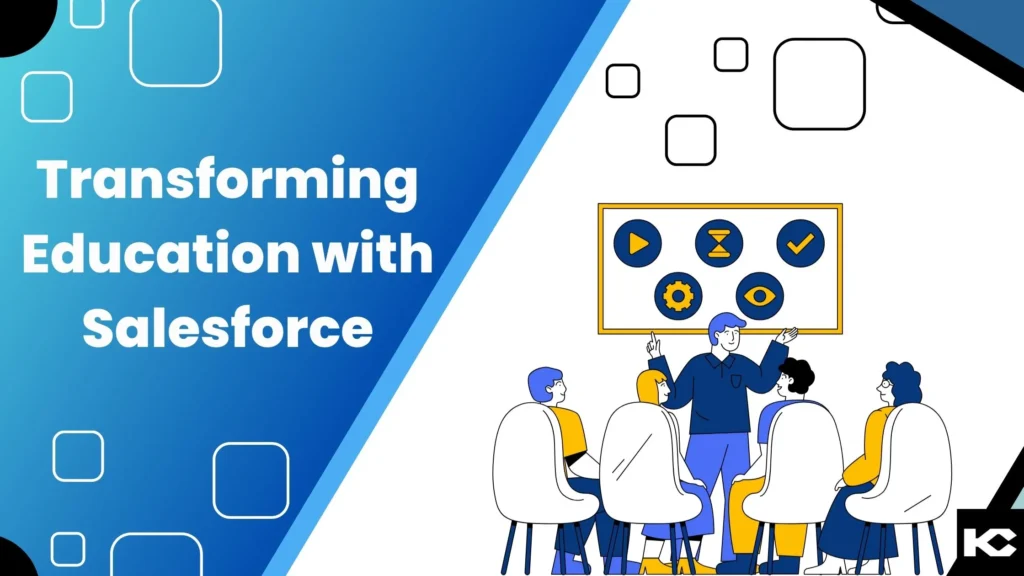
Salesforce for Education: Transforming Student Engagement and Institutional Operations
⏱ 3 min read
SALESFORCE FOR EDUCATION
Salesforce helps educational institutions connect student data, streamline operations, personalize engagement, and support students throughout the entire education lifecycle.
Quick Answer: What Is Salesforce for Education?
Salesforce for education uses Salesforce CRM and Education Cloud capabilities to help schools, colleges, universities, and other educational organizations manage student relationships, recruitment, enrollment, advising, communication, alumni engagement, and institutional data from a more connected platform.
How Salesforce Is Changing Education
Educational institutions manage complex relationships across prospective students, current students, faculty, advisors, staff, alumni, and other stakeholders. At the same time, student information is often distributed across admissions, academic, financial, communication, and student-service systems.
Salesforce provides a CRM foundation that can help institutions bring these interactions and processes together. Salesforce Education Cloud is designed specifically around education use cases, including recruitment and enrollment, student success and advising, alumni relations, career services, institutional analytics, and continuing education.
The result is a more connected approach to managing the student lifecycle, improving operational visibility, and delivering more personalized experiences.

1. Personalized Student Engagement
Student engagement is not limited to classroom interactions. Institutions communicate with students throughout recruitment, enrollment, academic advising, support services, graduation, and alumni engagement.
Salesforce can help institutions maintain a connected view of student interactions so teams can deliver more relevant communication and support. Education Cloud use cases include recruitment and enrollment management, student advising, progress tracking, intervention management, and alumni engagement.
Student 360° View
Bring relevant student information and interactions together for better visibility across teams.
Personalized Communication
Support targeted communication based on student status, needs, activities, and lifecycle stage.
Student Success
Give advisors better information for progress tracking, intervention, and ongoing support.
Explore Salesforce Education Cloud Use Cases
See how Education Cloud can support recruitment, student success, alumni engagement, career services, analytics, and lifelong learning.
2. Streamlining Administrative Processes
Administrative teams often work across multiple systems and manually move information between departments. This can create duplicated work, inconsistent records, and delays in responding to students.
Salesforce can help centralize processes and automate repetitive activities across areas such as enrollment, student services, communication, case management, and reporting.
Common Areas for Automation
- Student recruitment and enrollment workflows
- Student service requests and case management
- Automated reminders and notifications
- Advisor follow-ups and intervention workflows
- Data collection and reporting
- Communication across the student lifecycle
3. Data-Driven Decision Making
Educational institutions generate significant amounts of data across admissions, academic progress, student services, engagement, and institutional operations. The challenge is turning that information into useful insight.
Salesforce can provide a foundation for connecting operational data with reporting and analytics. Education Cloud use cases include institutional research and analytics, helping organizations analyze student performance and institutional effectiveness to support decision-making.
Student Insights
Analyze engagement, progress, and support requirements.
Operational Reporting
Give administrators clearer visibility into institutional processes.
Trend Identification
Use connected data to identify patterns and areas that may require attention.
4. Improving Collaboration and Communication
Education depends on collaboration between students, faculty, advisors, administrators, and support teams. Salesforce can connect these stakeholders through shared processes, centralized information, automated communication, and digital experiences.
Depending on the institution’s architecture, Salesforce Experience Cloud can also support secure portals and communities that provide stakeholders with access to relevant information and services.
This can reduce information silos while giving teams greater visibility into interactions and outstanding requests.
5. Supporting Lifelong Learning and Alumni Engagement
The relationship between an educational institution and its students does not necessarily end at graduation. Alumni can remain connected through career services, continuing education, events, fundraising, mentoring, and community programs.
Salesforce Education Cloud supports alumni relations and fundraising as well as continuing education and professional development use cases. This allows institutions to think about engagement as a long-term relationship rather than a single academic journey.
Salesforce for Education: Key Use Cases
Salesforce Education Cloud can support a wide range of institutional workflows. Common use cases include:
Student Recruitment
Track prospective students and enrollment interactions.
Student Advising
Support academic progress, interventions, and student success.
Alumni Relations
Build stronger relationships with alumni and supporters.
Career Services
Connect students and alumni with career and job opportunities.
Institutional Analytics
Use institutional data to support planning and decision-making.
Continuing Education
Support professional development and lifelong learning programs.
Planning a Salesforce Education Cloud Implementation?
A successful Salesforce implementation starts with the right architecture, data model, integrations, automation, security, and adoption strategy.
Why Education Cloud Matters for Modern Institutions
The value of Salesforce in education goes beyond replacing spreadsheets or individual administrative tools. The broader objective is to create a connected technology foundation where student information, engagement, workflows, and institutional processes can work together.
Kizzy Consulting’s current Salesforce work includes Education Cloud implementations and education-focused Agentforce use cases. Its education AI example, EduBot – Student Support, is designed to answer course questions, guide students through enrollment, track academic progress, and escalate complex cases to advisors.
Frequently Asked Questions About Salesforce for Education
What is Salesforce for education?
Salesforce for education refers to using Salesforce CRM and Education Cloud capabilities to manage student relationships, recruitment, enrollment, advising, communication, alumni engagement, analytics, and other education-related processes.
What is Salesforce Education Cloud used for?
Education Cloud can support use cases such as student recruitment, enrollment management, student success and advising, alumni relations, career services, institutional analytics, compliance, and continuing education.
Can Salesforce improve student engagement?
Yes. By connecting student information and interactions, institutions can create more consistent communication, give advisors better context, and support personalized student experiences throughout the lifecycle.
Can Salesforce automate education processes?
Salesforce can automate many repetitive workflows, including notifications, task assignments, follow-ups, case management, and other institution-specific processes, depending on the organization’s configuration and requirements.
How can educational institutions get started with Salesforce?
Institutions can begin with a discovery and architecture assessment to identify priority workflows, data sources, integrations, security requirements, and student-facing use cases before defining an implementation roadmap.
Need Help Implementing Salesforce for Education?
Whether you are evaluating Education Cloud, modernizing an existing Salesforce org, or exploring AI-powered student support, Kizzy Consulting can help you plan and implement the right Salesforce architecture.
Start a conversation with our Salesforce consulting team.
Email [email protected] or use the consultation form below.
Conclusion
Salesforce is helping educational institutions move toward more connected, data-driven, and personalized experiences. From recruitment and enrollment to student advising, alumni engagement, analytics, and continuing education, Salesforce Education Cloud can provide a foundation for managing the broader student lifecycle.
The key is not simply implementing another CRM. It is designing a Salesforce environment around the institution’s processes, data, people, and long-term goals.
For institutions planning their next stage of digital transformation, Salesforce can serve as a foundation for connecting operations today while creating room for automation and AI-enabled experiences tomorrow.