Sustainable IT Practices: 8 Initiatives for Greener Technology Operations
⏱ 3 min read
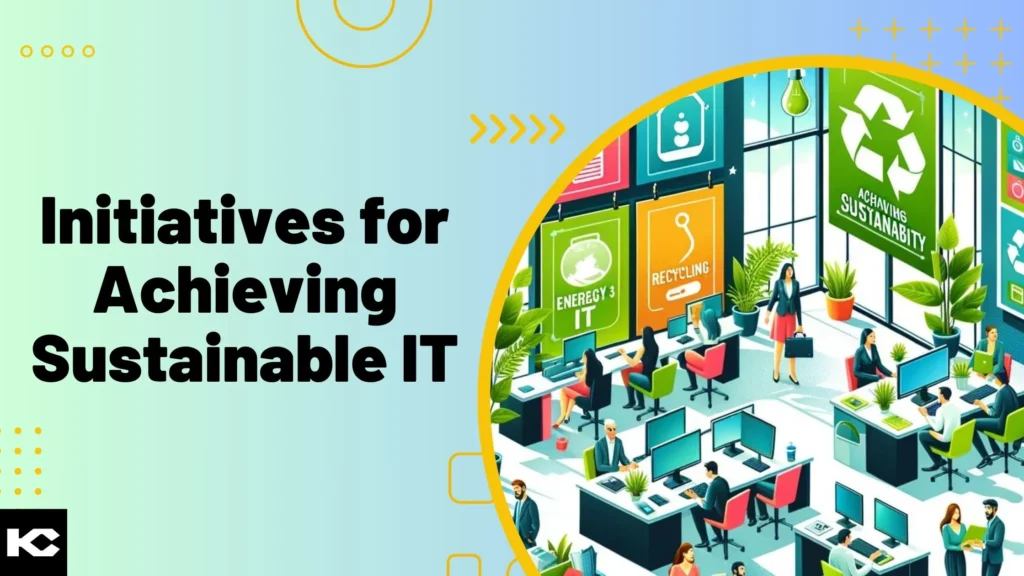
As technology becomes increasingly embedded in everyday business operations, the environmental impact of IT infrastructure has become an important consideration. Energy consumption, electronic waste, hardware manufacturing, and resource utilization can all contribute to an organization’s environmental footprint.
Sustainable IT practices can help organizations use technology more efficiently while reducing unnecessary resource consumption. From energy-efficient hardware and cloud computing to responsible e-waste management and employee awareness, businesses can take practical steps toward more sustainable technology operations.
Sustainable IT: Quick Answer
Sustainable IT involves managing technology infrastructure in ways that reduce energy consumption, electronic waste, unnecessary resource usage, and environmental impact. Organizations can improve IT sustainability through energy-efficient technology, virtualization, cloud services, sustainable procurement, e-waste recycling, energy monitoring, employee education, and regular environmental assessments.
1. Invest in Energy-Efficient IT Technology
Choosing energy-efficient computers, monitors, networking equipment, servers, and other IT hardware is one of the most direct ways to reduce technology-related energy consumption.
When purchasing new equipment, organizations can consider recognized efficiency and environmental standards such as ENERGY STAR and EPEAT, where applicable. Replacing outdated hardware with more efficient equipment can also reduce power consumption and improve operational performance.
CONNECTED IT INFRASTRUCTURE
Building a More Connected Technology Environment?
See how Salesforce integration can connect CRM, ERP, legacy systems, and business applications through a more unified architecture.
2. Use Virtualization and Cloud Services for Sustainable IT
Virtualization allows multiple virtual workloads to operate on fewer physical servers. By improving hardware utilization, organizations can potentially reduce the amount of physical infrastructure required for certain workloads.
Cloud computing can provide another path toward more efficient resource utilization by allowing businesses to scale computing resources according to demand. However, sustainability depends on workload design, utilization, data storage practices, provider infrastructure, and how efficiently cloud resources are managed.
3. Establish a Sustainable IT Procurement Policy
Sustainability should be considered when selecting IT hardware, software, infrastructure, and technology vendors. A sustainable procurement policy can establish environmental criteria that purchasing teams evaluate alongside cost, performance, security, and functionality.
- Energy efficiency and product lifecycle considerations
- Use of recycled or recyclable materials
- Manufacturer equipment take-back programs
- Product repairability and expected lifespan
- Vendor environmental and sustainability commitments
4. Implement Responsible E-Waste Management
Electronic waste is an important sustainability challenge because discarded devices can contain valuable materials as well as substances that require responsible handling. Organizations should establish clear procedures for retiring computers, servers, mobile devices, networking equipment, batteries, and other electronics.
Where possible, equipment can be reused, refurbished, donated, or returned through manufacturer take-back programs before recycling becomes the final option. Sensitive business data should also be securely removed before devices leave organizational control.
DATA + SUSTAINABILITY
Better Technology Starts With Better Data
Learn how a governed data foundation can help organizations create cleaner, more connected, and AI-ready technology environments.
5. Use IT Energy Management and Monitoring Tools
Energy monitoring tools can help organizations understand where and when technology infrastructure consumes power. Monitoring servers, data center equipment, office devices, and other infrastructure can reveal opportunities to reduce unnecessary consumption.
Organizations can use these insights to optimize workloads, identify underutilized infrastructure, adjust device settings, and improve capacity planning. Measurement is particularly important because sustainability improvements are easier to manage when organizations have a baseline against which progress can be evaluated.
6. Educate Employees About Sustainable IT Practices
Technology sustainability is not only an infrastructure issue. Everyday employee behavior can also influence energy consumption and resource usage.
Reduce Idle Power
Encourage employees to use sleep and power-saving settings and switch off equipment when appropriate.
Reduce Printing
Use digital documents and collaboration tools where practical to reduce unnecessary paper and printing.
Extend Device Lifecycles
Promote responsible device use, maintenance, repair, and reuse where security and performance requirements allow.
7. Conduct Regular IT Sustainability Audits
Regular environmental and IT infrastructure assessments can help organizations understand whether sustainability initiatives are producing measurable improvements.
An IT sustainability audit can examine areas such as energy consumption, hardware utilization, equipment lifecycles, e-waste processes, cloud resource usage, procurement practices, and employee behavior. Organizations can then use the findings to prioritize improvements and establish measurable sustainability objectives.
INCLUSIVE WORKPLACE
Creating a More Inclusive & Accessible Workplace?
Explore practical strategies for building a workplace where accessibility, inclusion, and equal opportunities are part of everyday business.
8. Promote Environmental Responsibility in the Technology Sector
Sustainable IT becomes more impactful when organizations share practical lessons and encourage responsible technology practices across their networks. Businesses can document sustainability initiatives, establish internal targets, and collaborate with technology providers and industry communities on environmental goals.
Sharing measurable outcomes can also help organizations identify which initiatives deliver meaningful improvements and where further investment may be required.
Benefits of Sustainable IT Practices
Lower Energy Consumption
Efficient infrastructure and better resource utilization can help reduce unnecessary energy use.
Reduced E-Waste
Reuse, repair, refurbishment, and responsible recycling can help reduce the environmental impact of discarded electronics.
Operational Efficiency
Monitoring and optimizing IT resources can identify underused infrastructure and unnecessary technology expenditure.
Long-Term Sustainability
A structured approach helps organizations incorporate environmental considerations into technology planning and procurement.
Need Help Modernizing Your IT Operations?
Kizzy Consulting helps organizations modernize technology processes, integrate business systems, and build scalable digital operations with Salesforce, automation, and AI.
Sustainable IT Practices FAQs
What are sustainable IT practices?
Sustainable IT practices are approaches to managing technology that aim to reduce energy consumption, electronic waste, resource usage, and environmental impact throughout the IT lifecycle.
How can businesses reduce IT energy consumption?
Businesses can reduce IT energy consumption by using efficient hardware, improving server utilization, applying virtualization, optimizing cloud resources, monitoring power usage, and enabling appropriate power-management settings.
How does cloud computing support sustainable IT?
Cloud computing can support more flexible resource utilization by allowing organizations to scale resources according to workload requirements. The sustainability impact depends on factors such as workload efficiency, utilization, architecture, storage practices, and the provider’s infrastructure.
Why is e-waste management important for IT sustainability?
Responsible e-waste management helps organizations prevent electronics from being handled improperly while supporting reuse, refurbishment, material recovery, and appropriate recycling of retired equipment.
What is sustainable IT procurement?
Sustainable IT procurement incorporates environmental considerations into technology purchasing decisions, including energy efficiency, product lifecycle, repairability, materials, recycling options, and vendor sustainability practices.
How can employees contribute to sustainable IT?
Employees can contribute by using power-saving settings, shutting down or sleeping devices when appropriate, reducing unnecessary printing, extending device lifecycles, and following organizational procedures for equipment reuse and recycling.
How often should businesses conduct an IT sustainability audit?
The appropriate frequency depends on the organization’s infrastructure, sustainability objectives, regulatory environment, and rate of technology change. Periodic assessments can help track progress and identify new opportunities for improvement.
Conclusion
Sustainable IT is an ongoing approach rather than a single technology initiative. By investing in energy-efficient infrastructure, optimizing cloud and computing resources, establishing responsible procurement policies, managing e-waste, monitoring energy usage, and educating employees, organizations can make their technology operations more environmentally responsible.
These practices can also support more efficient technology management and better resource utilization. A structured IT sustainability strategy allows organizations to balance environmental considerations with operational, financial, security, and business requirements.
Kizzy Consulting
Kizzy Consulting is a Salesforce Consulting Partner based in Panchkula, India, helping organizations modernize technology operations through Salesforce consulting, implementation, integration, automation, and AI solutions.
Kizzy Consulting supports organizations across industries including Financial Services, Insurance, Retail, Manufacturing, Real Estate, Logistics, and Healthcare, with technology projects spanning markets including the US, Europe, Germany, and Australia.