AI Solution for Home Care Reporting
⏱ 3 min read
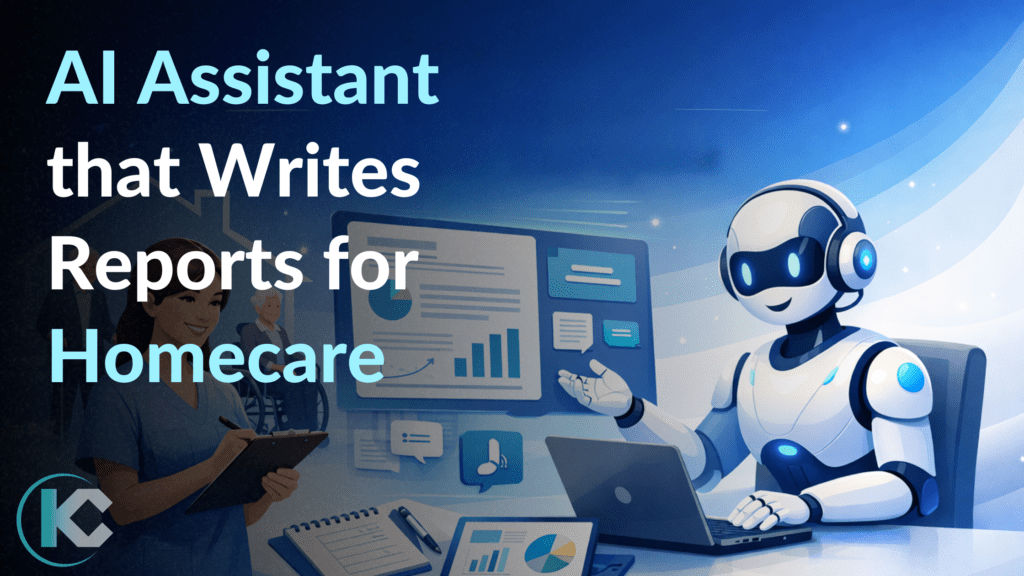
Quick Answer: An AI solution for home care reporting can combine speech-to-text, natural language processing, compliance tracking, Salesforce, and workflow automation to capture therapy sessions and generate structured, insurance-ready documentation. In this case study, the automated reporting workflow reduced report preparation from 13–14 hours to approximately 5 minutes, while helping therapists spend less time on documentation and more time on patient care.
Home care providers often face a difficult balance: therapists need to focus on delivering quality patient care, while extensive documentation must be completed accurately and on time for compliance and insurance requirements.
Traditional documentation can involve reviewing session notes, checking required questions, preparing structured reports, validating information, and submitting documentation manually. When these activities consume hours after every session, administrative work can become a significant operational bottleneck.
This case study shows how Kizzy Consulting built an AI-powered Session Assistant and Automated Report System using Salesforce, speech-to-text, natural language processing, and automation to streamline the process.
The Situation
Managing documentation in home care is often slow and overwhelming. Therapists not only provide care but may also spend significant time creating detailed reports required for insurance claims and regulatory processes.
Each session can require structured documentation in a specific format. The process may involve reviewing notes, checking compliance questions, validating information, and preparing reports manually.
The result is a repetitive administrative process that can take attention away from patient care and create delays in downstream insurance and operational workflows.
The Challenge
Home care providers were struggling with several documentation and workflow challenges:
- Report creation taking 13–14 hours per session
- Missed compliance questions during live sessions
- High levels of manual documentation errors
- Delays in insurance claim submissions
- Heavy administrative workload for therapists
- Limited time available for direct patient care
These challenges made documentation more than an administrative inconvenience. They affected operational efficiency, compliance workflows, claim processing, and the amount of time clinicians could spend with patients.
This is where healthcare organizations can benefit from combining Salesforce healthcare capabilities with AI and workflow automation.
Our Approach
To address the documentation bottleneck, we built an AI-powered Session Assistant + Automated Report System using Salesforce and speech-to-text technology.
The solution works during the therapy session and continues processing automatically after the session ends. Instead of requiring therapists to manually reconstruct every part of the encounter, the system captures relevant information as the session happens and uses AI to support the documentation workflow.
The approach follows a broader principle used in AI integration and implementation: connect AI to the systems and workflows where the business data already lives rather than treating AI as a standalone tool.
How the New Flow Works
1. Session Start & Recording
The therapist starts recording with one tap. The AI begins capturing the conversation and relevant session information.
2. Real-Time Transcription
Speech is converted into text in real time, while natural language processing helps interpret the conversation.
3. Live Compliance Tracking
The AI checks whether required questions and documentation elements have been addressed. If information is missing, the system can alert the therapist during the session.
4. Session End & Automation
Once recording stops, the system automatically processes the captured session information and prepares it for report generation.
5. Report Generation
A structured, insurance-ready report is generated in approximately 5 minutes in the case-study workflow.
6. Review & Submission
The therapist reviews and approves the generated documentation before submission, keeping human oversight in the final workflow.
Related case study: See how Agentforce is simplifying home care through AI-powered Salesforce workflows.
AI Capabilities Added
Real-Time Speech-to-Text
Converts session conversations into structured text.
NLP Conversation Understanding
Helps interpret relevant information from the conversation.
Automated Compliance Tracking
Monitors required documentation elements.
Live Missing-Question Prompts
Alerts therapists when required information may be missing.
Automated Report Generation
Creates structured documentation after the session.
Government-Format Documentation
Supports the required structured reporting format.
Error Detection & Validation
Helps identify documentation issues before submission.
Salesforce & API Integrations
Connects the AI workflow with business systems and downstream processes.
Metric Comparison: Before vs. After AI Case Management
| Metric | Before AI | After AI |
|---|---|---|
| Report generation time | 13–14 hours | ~5 minutes |
| Process efficiency | 25–30% | 97% |
| Manual errors | High | Near zero in the case study |
| Compliance coverage | Inconsistent | 100% reported coverage |
| Claim rejections | High | Significantly reduced |
| Administrative workload | Very high | Minimal |
Note: The figures above represent outcomes reported for this specific AI case-management workflow. Actual results can vary depending on documentation requirements, workflow design, data quality, integrations, and implementation scope.
The Outcome
For Therapists
Less administrative work, fewer documentation issues, and more time available for patient care.
For Providers
Faster report generation, stronger documentation workflows, and quicker movement toward insurance claim submission.
For Operations
A more streamlined documentation process with AI supporting transcription, compliance checks, validation, and report creation.
Overall, the workflow moved documentation from a highly manual process toward an automated, AI-assisted operating model.
Why It Matters
Documentation is one of the areas where healthcare organizations can lose significant amounts of staff time without directly improving the patient experience.
By combining AI with existing business systems, organizations can automate the repetitive parts of documentation while keeping humans involved in review, approval, and clinical decision-making.
- Reduces manual documentation work
- Supports more consistent compliance workflows
- Accelerates report preparation
- Can help reduce downstream claim delays
- Gives healthcare staff more time for patient-facing work
For organizations exploring broader AI adoption, this is the same principle behind building an enterprise-ready data foundation for AI: reliable data, connected systems, governed workflows, and AI capabilities working together.
Frequently Asked Questions about AI Solution for Home Care Reporting
What is an AI solution for home care reporting?
An AI solution for home care reporting uses speech-to-text, natural language processing, compliance tracking, and automation to capture therapy sessions and generate structured, insurance-ready documentation.
How does AI automate home care documentation?
The AI records and transcribes the session in real time, tracks required compliance questions, alerts therapists when information is missing, and automatically generates the final report after the session.
How quickly can AI generate a home care report?
The automated system described in this case study generates a structured insurance-ready report in approximately 5 minutes after the session.
Can AI track compliance questions during a therapy session?
Yes. The AI can monitor the conversation in real time and alert the therapist when required compliance questions have not been addressed.
Can the home care reporting solution integrate with Salesforce?
Yes. The solution uses Salesforce and API integrations to support automated workflows and streamlined documentation and reporting.
What are the benefits of AI-powered home care reporting?
AI-powered reporting can reduce administrative work, improve documentation accuracy and compliance, speed up insurance claim submissions, and give therapists more time to focus on patient care.
Related Kizzy Consulting Insights
If you are exploring AI for healthcare workflows, Salesforce automation, or Agentforce, these related Kizzy Consulting resources can help:
- How Agentforce Is Simplifying Home Care — See how Agentforce can support home care workflows.
- AI Agent Implementation Guide 2026 — Understand the considerations involved in taking AI agents into production.
- Is Your Salesforce Org Ready for Agentforce? — Evaluate Salesforce readiness before deploying AI agents.
- Salesforce x AI — Explore how Salesforce and AI technologies can work together.
- AI Integration & Implementation — Connect AI capabilities with Salesforce and existing enterprise systems.
- Data Foundation for AI — Build the data and integration foundation needed for reliable enterprise AI.
See AI in Action for Your Home Care Organization
Want to automate home care documentation, compliance tracking, reporting, and Salesforce workflows? Talk with Kizzy Consulting about designing an AI solution around your existing healthcare processes.