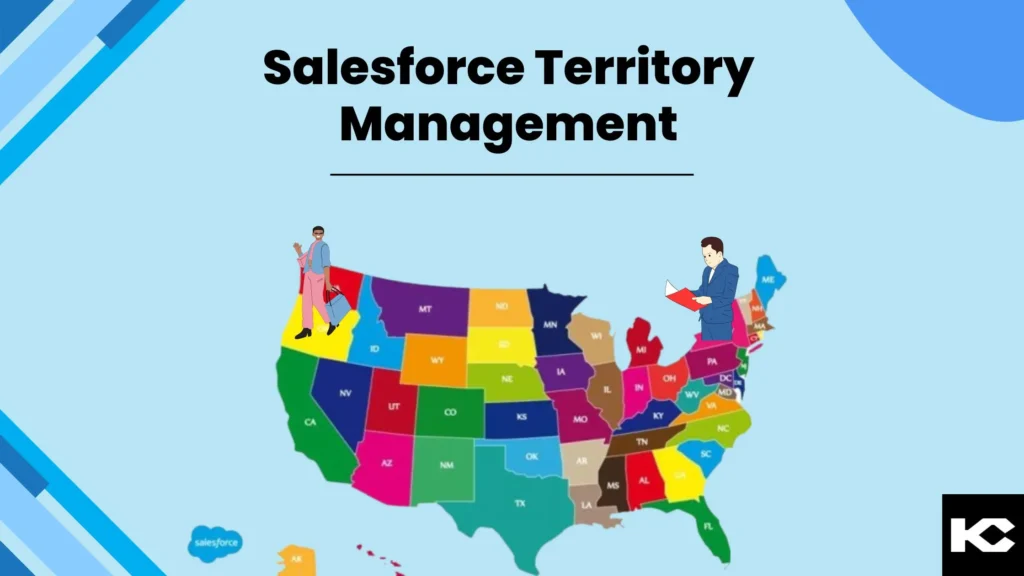
Salesforce Territory Management (2026)
⏱ 3 min read
Salesforce Territory Management helps organizations structure sales territories, assign accounts, balance workloads, and improve market coverage. By combining territory hierarchies, assignment rules, reporting, and Salesforce CRM data, businesses can build a more organized and scalable approach to sales planning and execution.
What is Salesforce Territory Management?
Salesforce Territory Management is a Salesforce capability that allows businesses to organize accounts and sales resources into territories based on their sales strategy. Organizations can create territory hierarchies, define assignment criteria, manage account access, and analyze territory performance.
What Is Salesforce Territory Management?
In a growing sales organization, simply assigning accounts to individual sales representatives can quickly become difficult to manage. Teams may need to coordinate territories based on geography, industry, account size, product specialization, customer segment, or other business criteria.
Salesforce Territory Management provides a structured framework for organizing these assignments within Salesforce. It helps sales leaders create territory models that align account coverage with business objectives while giving representatives access to the accounts and opportunities relevant to their responsibilities.
Instead of treating territory planning as a static spreadsheet exercise, organizations can connect territory structures with their Salesforce CRM, reporting, forecasting, and sales processes.
Key Features of Salesforce Territory Management
Salesforce Territory Management provides several capabilities that can help organizations design, maintain, and optimize their sales territories.
Territory Model Hierarchies
Create multi-level territory structures that reflect the organization’s sales model. Territories can be organized into parent and child relationships for easier administration and visibility.
Rule-Based Assignment
Use account criteria and territory rules to support consistent assignment of accounts based on factors such as geography, industry, account characteristics, or other business requirements.
Flexible Territory Types
Design territories around the way your business actually sells, including geographic regions, industries, products, customer segments, or combinations of multiple criteria.
Performance Reporting
Use Salesforce reports and dashboards to analyze territory activity, pipeline, account coverage, sales performance, and other relevant KPIs.
Salesforce CRM Integration
Connect territory planning with Salesforce account, opportunity, lead, forecasting, and sales-management processes for a more unified sales operation.
Account Access Management
Territory structures can help organizations manage which users and teams should have access to accounts and related sales information.
Related Salesforce Implementation Guide:
Territory planning is only one part of building a scalable Salesforce environment. Learn how Salesforce can be used to create digital experiences for customers, partners, and communities in our
Salesforce Experience Cloud Implementation Guide.
Benefits of Salesforce Territory Management
A well-designed territory model can help sales organizations improve account coverage, allocate resources more effectively, and align sales operations with changing business priorities.
Optimized Resource Allocation
Distribute accounts and sales responsibilities according to defined territory strategies and available resources.
Improved Sales Performance
Align territories with market opportunities and help sales representatives focus on the accounts within their assigned areas.
Better Customer Coverage
Establish clear ownership and coverage models so important customer and prospect segments are not overlooked.
Data-Driven Decisions
Use Salesforce reporting and sales data to evaluate territory performance and identify opportunities for refinement.
How to Design a Salesforce Sales Territory Model
Territory design should start with the organization’s sales strategy rather than the Salesforce configuration itself. Before creating territories, sales leaders should determine how the business defines markets, customers, ownership, and coverage.
Geography
Territories can be structured around countries, states, cities, postal codes, or broader geographic regions.
Industry
Organizations with industry-specialized sales teams can create territories around sectors such as healthcare, financial services, manufacturing, or retail.
Account Size
Account characteristics such as annual revenue, employee count, opportunity value, or customer tier can influence territory design.
Product or Market Segment
Some organizations organize sales coverage according to product portfolios, customer segments, or specialized solutions.
Salesforce Territory Management Best Practices
1. Define Clear Territory Management Objectives
Begin by defining what the territory model needs to achieve. Objectives may include improving market coverage, balancing workloads, increasing penetration in specific markets, clarifying account ownership, or supporting a new sales strategy.
2. Involve Key Sales Stakeholders
Territory design affects sales leaders, account executives, sales operations, customer-facing teams, and administrators. Involving stakeholders early can help identify operational requirements, exceptions, and potential conflicts before the model is deployed.
3. Use Data to Drive Territory Design
Historical sales performance, account characteristics, customer density, pipeline, revenue potential, and market trends can provide useful inputs for territory planning. Data should be reviewed regularly as markets and sales strategies change.
4. Automate Territory Assignment Where Possible
Automation can reduce repetitive administrative work and make account assignment more consistent. Rule-based assignment can be particularly useful when large numbers of accounts need to be evaluated against defined criteria.
5. Allow for Exceptions and Manual Adjustments
Not every account will fit neatly into a predefined rule. Enterprise territory models should account for strategic accounts, special ownership arrangements, acquisitions, temporary assignments, and other business exceptions.
6. Monitor Territory Performance Regularly
Territory management should be treated as an ongoing process rather than a one-time implementation. Review pipeline, revenue, account coverage, workload, conversion metrics, and other relevant KPIs to determine whether the model continues to support business objectives.
Salesforce Territory Management Implementation Process
Implementing Salesforce Territory Management successfully requires both business planning and Salesforce configuration. A structured implementation process can help reduce complexity and improve adoption.
1
Assess the Existing Sales Model
Document current territories, account ownership, sales processes, organizational structure, and existing pain points.
2
Define the Territory Model
Determine the hierarchy, territory types, assignment criteria, account access model, and ownership structure.
3
Configure Salesforce
Configure territories, rules, user assignments, account access, automation, and supporting Salesforce functionality.
4
Test Territory Assignments
Validate account assignments, user access, territory hierarchy, reporting, and exceptions before production rollout.
5
Monitor and Optimize
Track performance and refine territories as business priorities, account populations, and sales strategies evolve.
Salesforce Territory Management and Sales Cloud
Territory Management becomes particularly useful when it is integrated into a broader Sales Cloud implementation. Sales teams can connect territory structures with accounts, opportunities, forecasting, activities, and reporting to create a more consistent sales operating model.
Organizations planning a new Salesforce rollout should consider territory requirements early in the implementation process. This can help avoid rebuilding account ownership, security, automation, and reporting structures later.
Planning a Salesforce implementation?
Review the
Salesforce Implementation Services
from Kizzy Consulting to explore how CRM architecture, automation, integrations, and sales processes can be designed together.
Related Resource:
If your Salesforce environment also supports customers, partners, or external users, explore our
Salesforce Experience Cloud Implementation Guide
for additional implementation considerations.
Frequently Asked Questions About Salesforce Territory Management
What is Salesforce Territory Management?
Salesforce Territory Management is a Salesforce capability that helps organizations organize sales territories, assign accounts, manage sales resources, and support territory-based account access and reporting.
What are the benefits of Salesforce Territory Management?
Key benefits include more structured account assignment, improved sales coverage, better resource allocation, clearer ownership, and stronger territory-level reporting and analysis.
How are accounts assigned to Salesforce territories?
Accounts can be assigned using territory rules and criteria based on factors such as geography, industry, account characteristics, or other business requirements. Organizations can also account for specific exceptions and manual assignments.
Can Salesforce Territory Management support multiple territory levels?
Yes. Territory models can use hierarchical structures to represent parent territories, sub-territories, and different levels of sales organization.
How often should Salesforce territories be reviewed?
Territory models should be reviewed regularly based on business growth, sales performance, account changes, market expansion, organizational changes, and other factors that affect sales coverage.
Can Salesforce Territory Management be customized?
Salesforce Territory Management can be configured to support different territory structures, assignment criteria, user responsibilities, account access requirements, and sales processes.
Does Salesforce Territory Management work with Sales Cloud?
Territory Management can be used as part of a broader Salesforce sales environment, helping organizations connect territory structures with account management, opportunity processes, forecasting, reporting, and sales operations.
Conclusion: Build a Scalable Salesforce Territory Strategy
Salesforce Territory Management gives organizations a structured way to organize sales territories, allocate resources, manage account coverage, and connect territory planning with Salesforce CRM processes.
The most effective territory models start with clear business objectives and reliable data. From there, organizations can build territory hierarchies, define assignment rules, configure account access, automate repetitive processes, and continuously monitor performance.
As sales organizations grow, a well-designed territory model can become an important part of a scalable Salesforce architecture and broader sales operations strategy.
Need Help With Salesforce Territory Management?
Kizzy Consulting can help you design and implement a Salesforce territory strategy aligned with your sales structure, CRM architecture, automation, reporting, and business goals.
Kizzy Consulting | Salesforce, AI & Automation