Salesforce Consulting Partners in the USA: How to Compare and Choose the Right Firm
⏱ 5 min read
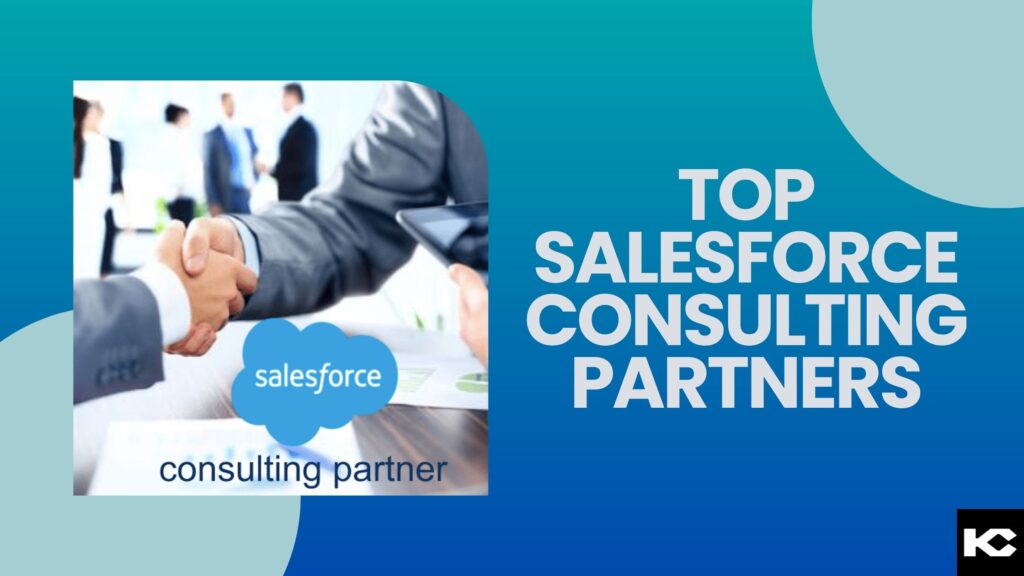
Choosing the right Salesforce consulting partner in the USA is an important decision for businesses implementing, integrating, or optimizing their CRM systems. The right partner should understand your business processes, Salesforce products, industry requirements, and long-term technology roadmap.
Whether you need a new Salesforce implementation, complex system integrations, Agentforce deployment, or ongoing managed services, this guide explains how to evaluate consulting firms, compare their capabilities, and identify the right implementation partner.
By Sanjeet Mahajan, CEO & Founder, Kizzy Consulting
Contents
hide
Executive Quick Answer
The right Salesforce consulting partner combines verified Salesforce credentials, relevant implementation experience, industry knowledge, integration expertise, technical architecture capabilities, and post-launch support.
For businesses exploring AI transformation in 2026, also evaluate the firm’s Agentforce capabilities, including use-case discovery, data readiness, agent configuration, testing, governance, and deployment experience.
120+
Projects Delivered
50+
AI Agents Built
98%
Client Satisfaction
What Does a Salesforce Consulting Partner Do?
A Salesforce consulting partner is a consulting firm that helps businesses plan, implement, customize, integrate, and optimize Salesforce products. These firms work with organizations at different stages of their CRM journey, from initial implementation to enterprise-wide transformation.
Depending on project requirements, a Salesforce consulting partner may provide:
Sales Cloud Implementation
Lead management, pipeline visibility, forecasting, sales automation, and revenue operations.
Service Cloud Implementation
Case management, customer service automation, contact center workflows, and service operations.
Experience Cloud
Customer portals, partner communities, self-service experiences, and connected digital journeys.
Marketing Cloud
Marketing automation, audience segmentation, customer journeys, and campaign management.
Salesforce CPQ and Revenue Cloud
Product configuration, pricing, quoting, contract workflows, and quote-to-cash processes.
Salesforce Integration
Connecting Salesforce with ERP platforms, data warehouses, marketing systems, and external applications.
AppExchange Development
Custom Salesforce applications, managed packages, and specialized business solutions.
Managed Services
Administration, troubleshooting, enhancements, optimization, and ongoing Salesforce support.
Types of Salesforce Consulting Partners
Not all Salesforce consulting firms operate in the same way. Their team size, delivery model, industry focus, technical capabilities, and project experience can vary significantly.
Understanding the different partner types helps businesses shortlist firms that match their implementation requirements.
Global System Integrators
Large consulting organizations with broad technology practices and enterprise delivery capabilities.
Potential fit: Large-scale, multi-region transformation programs.
Specialist Salesforce Consultancies
Firms focused on Salesforce implementation, architecture, customization, integrations, and specific Salesforce products.
Potential fit: Complex Salesforce projects requiring specialist expertise.
Boutique Consulting Firms
Smaller specialist teams that may offer more focused delivery and direct access to technical consultants.
Potential fit: Defined implementations, integrations, and targeted improvements.
The right choice depends on project complexity, budget, required expertise, internal resources, and the level of ongoing support your organization needs. A larger firm is not automatically the better choice for every Salesforce project.
How to Choose a Salesforce Consulting Partner
Before selecting a Salesforce consulting partner, evaluate more than its certifications or website claims. Look for relevant project experience, technical expertise, delivery transparency, and a support model that matches your business requirements.
1
Verify Salesforce Partner Credentials
Check the firm’s current Salesforce partner listing, credentials, expertise, and available customer project information. Do not rely only on a badge or partner-tier statement displayed on its website.
2
Evaluate Relevant Implementation Experience
Ask for examples involving the Salesforce products, business processes, and industry requirements relevant to your organization. A Sales Cloud implementation and a complex multi-system Service Cloud transformation require different capabilities.
3
Assess AI and Agentforce Capabilities
If AI is part of your roadmap, ask about use-case design, data readiness, agent configuration, testing, security, human escalation, and production monitoring. Distinguish actual Agentforce delivery experience from general AI agent development.
4
Check Integration and Architecture Expertise
Evaluate whether the partner can integrate Salesforce with your ERP, data warehouse, marketing platform, identity provider, and other business applications. Ask who owns the architecture and how integrations are tested and monitored.
5
Understand the Delivery Team and Methodology
Ask who will manage discovery, solution architecture, development, testing, deployment, documentation, and knowledge transfer. Confirm that the proposed delivery team has the skills required for your project.
6
Review Post-Launch Support
Confirm whether the partner offers ongoing Salesforce managed services, release management, troubleshooting, enhancements, and optimization after go-live.
7
Compare Scope, Pricing, and Contract Terms
Compare project deliverables, assumptions, exclusions, payment milestones, change-request processes, ownership, and support commitments. The lowest initial estimate may not represent the lowest overall project cost.
Salesforce Consulting Partner Comparison: What Should You Look For?
When comparing Salesforce consulting firms, use consistent evaluation criteria instead of relying on marketing claims or partner rankings. The following table provides a practical framework for evaluating potential providers.
| Evaluation Area | What to Compare | Evidence to Request |
|---|---|---|
| Partner Credentials | Current partner status and relevant expertise | Official Partner Finder listing |
| Product Expertise | Sales, Service, Experience, Marketing, CPQ, Revenue Cloud | Relevant project examples and team experience |
| Agentforce | Agent design, deployment, testing and governance | Demonstrations and relevant implementation evidence |
| Integration | ERP, APIs, middleware and data architecture | Architecture examples and integration documentation |
| Industry Experience | Experience with similar business processes | Relevant case studies and references |
| Delivery Model | Team structure, communication and project governance | Project plan and proposed team |
| Ongoing Support | Maintenance, releases, enhancements and SLAs | Documented support scope and contract terms |
This is an evaluation framework, not a ranking of individual Salesforce consulting companies. Always validate provider claims independently.
What to Look for in an Agentforce Implementation Partner
As organizations explore autonomous AI workflows, selecting an experienced Agentforce implementation partner requires evaluating more than the ability to configure an AI agent.
A capable implementation partner should understand the complete lifecycle of an Agentforce solution, from business discovery and data readiness to deployment, monitoring, and continuous improvement.
1. Use-Case Discovery
Identify repetitive workflows, business objectives, suitable agent tasks, and processes that require human approval.
2. Data Readiness
Assess CRM records, knowledge sources, data access, permissions, and information quality.
3. Agent Design and Actions
Configure agent topics, instructions, actions, business logic, and connections to Salesforce workflows.
4. Integration
Connect agents to approved internal and external systems through suitable APIs and integration mechanisms.
5. Testing and Governance
Evaluate agent responses, action accuracy, permissions, guardrails, failure scenarios, and human escalation.
6. Deployment and Monitoring
Monitor production behavior, adoption, business outcomes, errors, and opportunities for improvement.
Questions to Ask an Agentforce Consulting Partner
- Have you implemented Agentforce for a production business workflow?
- How do you assess whether our data is ready for Agentforce?
- How do you test agent responses and actions before deployment?
- How do you manage permissions, sensitive data, and human escalation?
- How will you measure the business outcomes of the implementation?
- What ongoing monitoring and optimization support do you provide?
Explore Kizzy’s Agentforce consulting services to understand how Agentforce can fit into your Salesforce transformation roadmap.
Salesforce Integration Partners: Capabilities to Compare
Salesforce rarely operates in isolation. Businesses often need to connect their CRM with ERP platforms, marketing automation systems, payment applications, data warehouses, customer portals, and custom business software.
A Salesforce integration partner should understand both the Salesforce environment and the systems exchanging information with it.
Common Salesforce Integration Requirements
ERP Integration
Synchronize orders, inventory, invoices, customer records, and financial information.
Marketing Integration
Connect customer data, campaign activity, lead information, and engagement workflows.
Data Warehouse Integration
Connect Salesforce data with analytics and enterprise reporting environments.
Custom Application Integration
Connect business applications through APIs, middleware, and custom integration services.
Technical Areas to Evaluate
- Integration architecture: Understand whether the project requires direct API integrations, middleware, or an iPaaS approach.
- Data mapping and migration: Review field mapping, data transformation, deduplication, validation, and reconciliation.
- Security and access: Check authentication, authorization, credential management, and data access controls.
- Error handling: Understand retries, exception handling, error queues, and recovery procedures.
- Monitoring: Establish how integration failures, data delays, and synchronization issues will be detected.
- Documentation: Confirm that architecture, APIs, dependencies, and operational ownership are documented.
A strong integration partner should be able to explain not only how two systems connect, but also how the integration will remain secure, reliable, maintainable, and scalable.
Learn more about Salesforce integration services and how connected systems can improve business operations.
Salesforce Managed Services: What Happens After Go-Live?
Salesforce implementation is not the end of a CRM transformation. Organizations need ongoing administration, enhancements, troubleshooting, release readiness, and optimization to keep their environments aligned with changing business requirements.
When comparing Salesforce managed services partners, evaluate the actual scope of their ongoing support.
Before signing a managed services agreement, confirm response targets, support hours, escalation procedures, included work, exclusions, and reporting responsibilities.
Explore Salesforce managed services for ongoing platform support and optimization.
How to Verify Salesforce Consulting Partner Credentials
Salesforce partner credentials provide useful information when evaluating consulting firms, but businesses should verify current status rather than relying only on website badges or historical partner-tier terminology.
Use the Official Salesforce Partner Finder
Salesforce provides an official directory that helps businesses discover consulting partners and evaluate their capabilities.
When reviewing a potential provider, look for:
- The firm’s current public partner listing.
- Relevant consulting expertise and specializations.
- Customer project experience and available project information.
- Relevant Salesforce product and industry capabilities.
- Public customer reviews and other available evidence.
Official Salesforce Resource
Use Salesforce’s official directory to search for consulting partners and evaluate their available expertise.
Understand Current Partner Program Terminology
Salesforce has updated its partner program structure. The FY27 consulting partner program uses Select and Summit designations. Businesses researching historical partner terminology should distinguish previous program tiers from current designations.
Always confirm a consulting firm’s current designation directly through Salesforce’s official partner resources before treating it as an active credential.
Planning a Salesforce Implementation?
Tell us about your Salesforce requirements. Our team can help you explore implementation, integration, architecture, and optimization options.
Why Consider Kizzy Consulting for Salesforce Services?
Kizzy Consulting provides Salesforce consulting, implementation, integration, managed services, and AI transformation capabilities for businesses across the USA and international markets.
Our experience spans Salesforce implementation and optimization, custom application development, system integrations, and AI-powered business solutions.
Kizzy has delivered more than 120 projects across industries including Financial Services, Insurance, Retail, Manufacturing, Real Estate, Logistics, and Healthcare.
120+
Projects Delivered
50+
AI Agents Built
98%
Client Satisfaction
Salesforce and AI Capabilities
Salesforce Implementation
CRM implementation, customization, and business process automation.
Salesforce Integration
Connect Salesforce with business applications and enterprise systems.
Agentforce Consulting
Agentforce implementation and AI-powered Salesforce workflows.
Managed Services
Ongoing administration, support, enhancements, and optimization.
Our Approach to Salesforce Projects
- Discovery: Understand business goals, existing systems, and technical requirements.
- Solution Design: Define architecture, implementation scope, integrations, and delivery milestones.
- Implementation: Configure, develop, and integrate the required Salesforce capabilities.
- Testing: Validate functionality, integrations, permissions, and business workflows.
- Deployment: Support release planning, documentation, and knowledge transfer.
- Optimization: Identify opportunities for improvements and ongoing support.
Our focus is on aligning Salesforce technology with practical business requirements rather than adding complexity without a clear purpose.
Where We Work
Kizzy Consulting serves businesses across the USA, including clients in Florida and the Miami metropolitan area.
We also work with enterprise clients across Europe, Australia, and India, supporting Salesforce implementation, integration, managed services, and AI transformation initiatives.
For organizations evaluating an international consulting partner, confirm delivery-team availability, project communication arrangements, working-hour overlap, and support expectations during the evaluation process.
Salesforce Consulting Partner Evaluation Checklist
Use this checklist when comparing Salesforce consulting firms. Ask each provider the same questions so that you can make an informed decision.
- Can the firm demonstrate its current Salesforce partner credentials?
- Has it completed projects similar to ours?
- Does it understand our industry and business processes?
- Can it support our required Salesforce products?
- Does it have the integration and architecture expertise we need?
- Can it demonstrate relevant Agentforce experience if AI is in scope?
- Are the delivery team and project responsibilities clearly defined?
- Are project scope, pricing, assumptions, and exclusions documented?
- Does it provide post-launch support and optimization?
- Can it provide relevant references, project evidence, and documentation?
Conclusion: Choosing the Right Salesforce Consulting Partner
Choosing a Salesforce consulting partner requires more than comparing certifications, company size, or service descriptions. Businesses should evaluate technical expertise, implementation experience, integration capabilities, delivery methodology, Agentforce readiness, and ongoing support.
Use a consistent evaluation framework, verify partner credentials, request relevant project evidence, and ensure that the proposed team understands your business requirements.
If you’re looking for a Salesforce consulting partner in the USA, Kizzy Consulting can help you explore Salesforce implementation, integration, managed services, and Agentforce opportunities based on your business needs.
Frequently Asked Questions
1. What does a Salesforce consulting partner do?
A Salesforce consulting partner helps businesses plan, implement, customize, integrate, and optimize Salesforce environments. Services can include Sales Cloud, Service Cloud, Experience Cloud, Marketing Cloud, CPQ, integration, custom development, and managed services.
2. How do I find a certified Salesforce consulting partner in the USA?
Start with the official Salesforce Partner Finder. Review the firm’s current public listing, relevant expertise, available project information, and customer evidence. Also evaluate its proposed delivery team and experience with your specific requirements.
3. What is the difference between a Salesforce consulting partner and an implementation partner?
A Salesforce consulting partner can provide advisory, implementation, integration, customization, and ongoing support services. An implementation partner generally focuses on planning, configuring, developing, testing, and deploying Salesforce solutions. Many consulting firms provide both types of services.
4. How do I choose the best Agentforce implementation partner?
Evaluate the firm’s experience with Agentforce use-case design, Salesforce data readiness, agent configuration, actions, integrations, testing, security, governance, and production monitoring. Ask for evidence of relevant implementations rather than relying only on general AI development experience.
5. What should I look for in a Salesforce integration partner?
Look for experience with API integrations, middleware, ERP systems, data migration, security, error handling, and monitoring. The partner should be able to explain the proposed integration architecture and how it will be maintained after deployment.
6. Do Salesforce consulting partners offer managed services?
Many consulting firms offer ongoing managed services, although the scope differs. Services may include Salesforce administration, troubleshooting, enhancements, release management, integration support, and platform optimization. Always confirm the service scope and support commitments.
7. How can I verify a Salesforce consulting firm’s partner status?
Use Salesforce’s official Partner Finder to review its available public listing and credentials. Confirm current program designations directly rather than relying on historical partner-tier terminology or unverified website claims.
8. Does Kizzy Consulting offer Agentforce implementation?
Kizzy Consulting offers Agentforce consulting services, alongside AI agent development, Salesforce implementation, and Salesforce AI integration capabilities. Contact the team to discuss your specific requirements and implementation scope.
Looking for a Salesforce Consulting Partner in the USA?
Whether you’re planning a Salesforce implementation, integrating enterprise systems, optimizing your CRM, or exploring Agentforce, connect with Kizzy Consulting to discuss your requirements.