How to Choose the Right Salesforce Consulting Partner (2026)
⏱ 3 min read
SALESFORCE CONSULTING
A practical guide to evaluating Salesforce consulting partners based on expertise, experience, services, business alignment, support, scalability, and long-term value.
How to Choose the Right Salesforce Consulting Partner
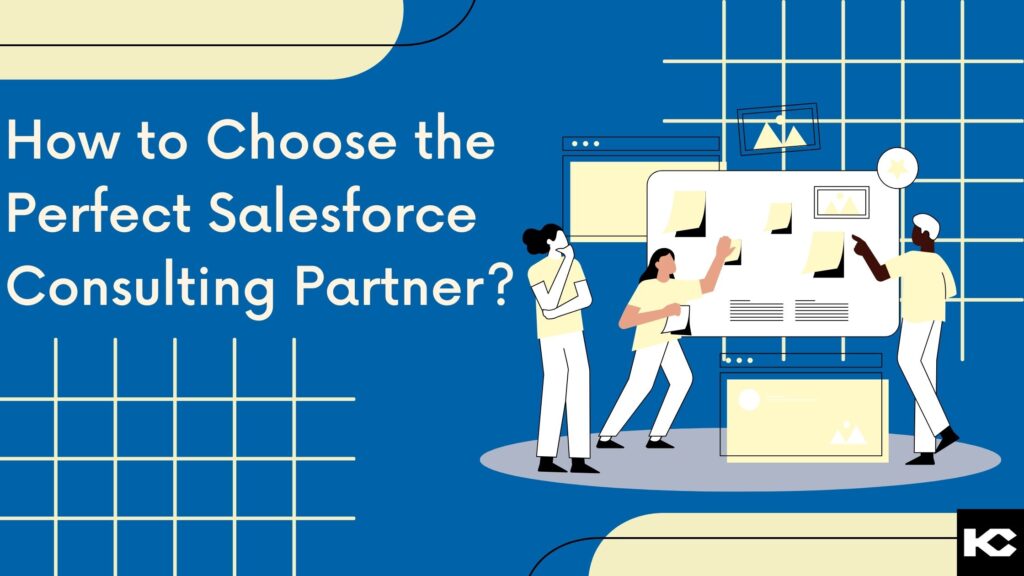
Choosing the right Salesforce consulting partner is a critical decision that can directly influence the success of your Salesforce implementation, adoption, integrations, and long-term CRM strategy. The right partner can help your organization configure Salesforce around real business processes, avoid unnecessary complexity, and create a foundation that can scale as your needs evolve.
However, not every Salesforce consulting company offers the same level of expertise, implementation experience, industry knowledge, communication, or post-launch support. Before selecting a partner, it is important to evaluate more than certifications and project cost.
Executive Quick Answer
When choosing a Salesforce consulting partner, evaluate Salesforce expertise, certifications, implementation experience, client references, service coverage, business understanding, integration capabilities, communication, support, scalability, and pricing transparency. The strongest fit is the partner whose capabilities and delivery approach match your organization’s requirements and long-term Salesforce roadmap.
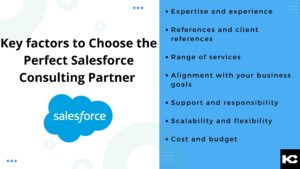
Key Factors to Choose the Right Salesforce Consulting Partner
01 · EXPERTISE
Salesforce Expertise and Certifications
Look for a Salesforce consulting partner with certified consultants and demonstrated experience across the Salesforce products relevant to your organization. Certifications can indicate platform knowledge, while completed projects demonstrate practical implementation experience.
02 · EXPERIENCE
Salesforce Implementation Experience
Ask about the partner’s experience delivering projects similar in size, complexity, industry, and Salesforce cloud requirements. Experience with data migration, automation, integrations, custom development, and user adoption can be particularly important for complex implementations.
03 · REFERENCES
Client References and Case Studies
Request relevant case studies, client references, and examples of completed Salesforce projects. Speaking with previous clients can provide useful insight into project communication, delivery quality, problem-solving, and post-implementation support.
04 · SERVICES
Range of Salesforce Consulting Services
Evaluate whether the partner can support your Salesforce lifecycle beyond the initial implementation. Depending on your requirements, this may include Salesforce consulting, implementation, integration, migration, administration, custom development, managed services, training, and optimization.
05 · BUSINESS FIT
Alignment With Your Business Goals
A Salesforce consulting partner should understand your business objectives before proposing a technical solution. Discuss your processes, users, customer journey, reporting requirements, integrations, data model, and future roadmap to determine whether the partner’s approach fits your organization.
06 · CULTURE
Cultural Fit and Communication
Salesforce projects require ongoing collaboration between business stakeholders, technical teams, administrators, and consultants. Consider communication style, meeting practices, documentation, escalation processes, transparency, and the partner’s ability to work with your internal teams.
07 · SUPPORT
Salesforce Support and Accountability
Understand what happens after go-live. Ask about support models, response times, issue escalation, documentation, maintenance, Salesforce releases, and Service Level Agreements (SLAs). Clear accountability can help reduce operational uncertainty after implementation.
08 · SCALABILITY
Scalability and Flexibility
Your Salesforce environment may grow as your organization adds users, products, business units, integrations, automation, and new clouds. Choose a partner that can support changing requirements rather than designing only for today’s needs.
09 · COST
Cost, Budget, and Pricing Transparency
Cost should be evaluated alongside scope, expertise, delivery model, support, and expected business value. Ask for a clear breakdown of implementation costs, integrations, custom development, data migration, training, support, and potential future expenses.
Questions to Ask a Salesforce Consulting Partner
Before signing a Salesforce consulting agreement, use a structured evaluation process. The following questions can help you compare proposals and understand how each partner approaches delivery.
Experience: How many Salesforce implementations similar to ours have you delivered?
Industry: Have you worked with organizations in our industry or business model?
Architecture: How will you design Salesforce to support our current and future requirements?
Integration: What systems and third-party platforms can you integrate with Salesforce?
Migration: How will you approach data cleansing, mapping, migration, and validation?
Adoption: What is your approach to Salesforce training and user adoption?
Support: What support is available after Salesforce implementation and what are the SLAs?
Scalability: How will the Salesforce solution accommodate future business growth?
Pricing: What is included in the proposal and which costs are outside the stated scope?
RELATED KIZZY CONSULTING RESOURCE
Salesforce Consulting Experience and Recognition
Learn more about Kizzy Consulting’s Salesforce consulting work and the recognition highlighted in its earlier company announcement.
Looking for a Salesforce Consulting Partner in the USA?
Discuss your Salesforce implementation, integration, migration, customization, administration, or optimization requirements with the Kizzy Consulting team.
Conclusion: Choosing a Salesforce Consulting Partner
Choosing a Salesforce consulting partner requires more than comparing hourly rates or certification counts. Organizations should evaluate the partner’s implementation experience, technical capabilities, understanding of business requirements, communication approach, support model, scalability, and pricing transparency.
A well-aligned Salesforce consulting partner can help turn Salesforce into a scalable business platform rather than simply implementing a collection of CRM features. A structured evaluation process can help your organization select a partner that fits its current requirements while supporting future Salesforce initiatives.
Frequently Asked Questions About Salesforce Consulting Partners
What should I look for in a Salesforce consulting partner?
Look for Salesforce certifications, relevant implementation experience, client references, technical capabilities, industry understanding, communication, support, scalability, and transparent pricing.
Why are Salesforce certifications important when choosing a consulting partner?
Salesforce certifications demonstrate knowledge of specific Salesforce products and capabilities. They are useful when evaluating expertise, but should be considered alongside actual project experience and relevant client outcomes.
Should a Salesforce consulting partner provide post-implementation support?
Post-implementation support can help organizations manage enhancements, issues, Salesforce releases, administration, integrations, optimization, and evolving business requirements after go-live.
How do I evaluate Salesforce consulting partner pricing?
Compare pricing against the complete scope of work, implementation methodology, consultant expertise, integrations, data migration, customization, training, support, and potential future costs rather than choosing solely on the lowest initial quote.
How important is industry experience when selecting a Salesforce consulting company?
Industry experience can help a consulting partner understand common workflows, compliance requirements, terminology, customer journeys, reporting needs, and operational challenges relevant to your organization.
What questions should I ask before hiring a Salesforce consulting partner?
Ask about similar projects, certifications, implementation methodology, integrations, data migration, customization, user adoption, project timelines, communication, support SLAs, scalability, references, and pricing.
Plan Your Salesforce Consulting Strategy
Whether you are planning a new Salesforce implementation or optimizing an existing Salesforce org, Kizzy Consulting can help you evaluate the technical and business requirements involved.