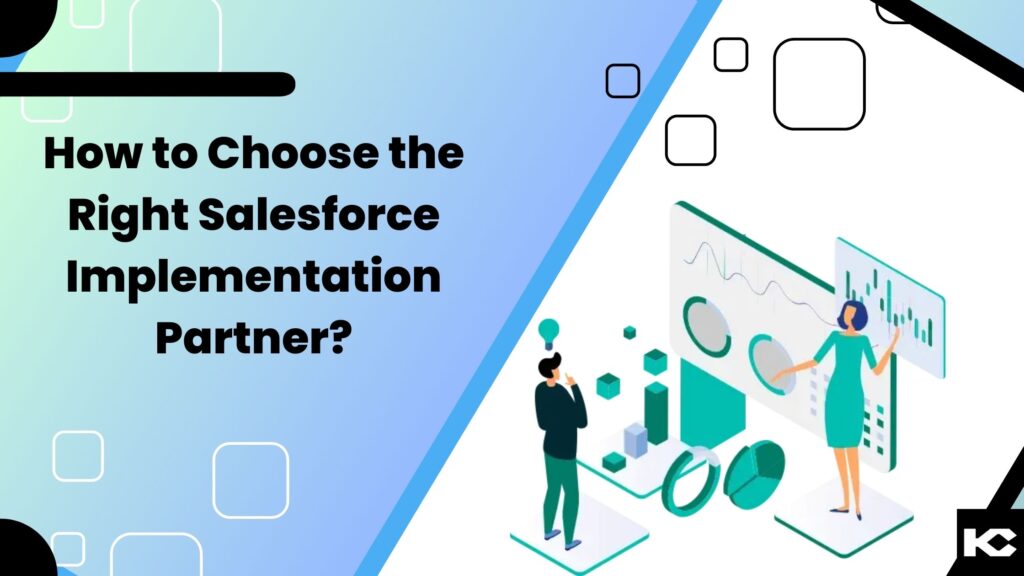
Salesforce Implementation Partner in the USA: How to Choose the Right Partner in 2026
⏱ 4 min read
SALESFORCE IMPLEMENTATION PARTNER USA
Learn why Salesforce implementation partners matter, what to look for, which questions to ask, and how to evaluate a Salesforce implementation partner for your business.
Partnering with the right Salesforce Implementation Partner in the USA is an important step toward successfully adopting and optimizing Salesforce for your business. Salesforce provides a powerful CRM platform, but configuring it around your organization’s processes, data, integrations, users, and long-term objectives requires careful planning and specialized expertise.
A Salesforce implementation partner can help translate business requirements into a scalable Salesforce solution, support data migration and integrations, configure automation, guide users through change management, and provide ongoing support after go-live. Whether you are implementing Salesforce for the first time or improving an existing Salesforce org, the right implementation approach can establish a stronger foundation for future growth.
Executive Quick Answer: What Does a Salesforce Implementation Partner Do?
A Salesforce Implementation Partner helps organizations plan, configure, customize, integrate, migrate, test, deploy, and optimize Salesforce according to their business requirements. An experienced partner can support the entire Salesforce implementation lifecycle, from discovery and solution design through data migration, user training, go-live, and post-implementation support.
Why Do You Need a Salesforce Implementation Partner?
Salesforce implementation involves much more than turning on features. Businesses need to align CRM configuration with their sales, service, marketing, finance, operations, and customer engagement processes. A Salesforce implementation partner provides the technical and strategic expertise required to turn Salesforce into a system that supports those requirements.
1. Salesforce Expertise
Implementation partners bring experience across Salesforce configuration, architecture, customization, automation, integrations, data, and deployment.
2. Business Process Alignment
A partner can translate business workflows and objectives into Salesforce processes rather than forcing teams into a generic CRM configuration.
3. Faster Implementation
Experienced implementation teams can establish implementation plans, milestones, dependencies, and deployment processes to help keep projects organized.
4. Salesforce Customization
Salesforce can be configured and extended around specific workflows, objects, automation requirements, user experiences, and reporting needs.
5. Salesforce Integration
Implementation partners can help connect Salesforce with ERP systems, marketing platforms, payment systems, legacy applications, APIs, and other business tools.
6. Data Migration
A structured implementation approach helps organizations assess, cleanse, map, transform, migrate, and validate data before and after Salesforce deployment.
7. Scalability
A well-designed Salesforce architecture provides a foundation that can evolve as business processes, users, data volumes, and technology requirements change.
8. Training & Adoption
Implementation success depends on user adoption. Partners can support training, documentation, process communication, and post-go-live assistance.
9. Risk Management
Structured discovery, testing, validation, deployment planning, and governance can help identify implementation risks before they affect users or operations.
10. Ongoing Salesforce Support
Salesforce implementation is not necessarily the end of the journey. Ongoing administration, optimization, enhancements, and support can help maintain platform value.
Planning a Salesforce Implementation?
Start with a focused Salesforce implementation engagement through Kizzy’s Salesforce Quickstart Packages.
How to Choose the Right Salesforce Implementation Partner in the USA
Selecting a Salesforce implementation partner requires more than comparing project prices. Businesses should evaluate technical expertise, Salesforce experience, communication, implementation methodology, industry knowledge, integration capabilities, support, and the partner’s ability to understand the organization’s long-term requirements.
01
Define Your Salesforce Goals
Document your business objectives, current challenges, users, workflows, systems, data requirements, and expected Salesforce outcomes.
02
Review Salesforce Experience
Assess certifications, Salesforce experience, implementation methodology, project complexity, and experience with relevant Salesforce clouds.
03
Check Relevant Case Studies
Ask for examples of projects involving similar business processes, Salesforce products, integrations, data environments, or implementation challenges.
04
Evaluate Customization
Understand how the partner approaches configuration versus customization and how they balance immediate requirements with long-term maintainability.
05
Assess Integration & Data Expertise
If Salesforce needs to connect with other systems, evaluate the partner’s API, middleware, integration architecture, and data migration experience.
06
Understand the Implementation Methodology
Ask how discovery, design, configuration, development, testing, deployment, training, and post-go-live support will be handled.
07
Review Support & Maintenance
Determine what happens after go-live and whether the partner can support enhancements, administration, troubleshooting, optimization, and future Salesforce initiatives.
08
Compare the Proposal
Compare scope, deliverables, timelines, milestones, assumptions, responsibilities, pricing, communication processes, and support commitments.
09
Evaluate Communication
Clear communication, transparent project reporting, defined responsibilities, and accessible project stakeholders can make implementation easier to manage.
10
Consider Long-Term Scalability
The Salesforce architecture should account for future users, automation, integrations, data, new Salesforce products, and evolving business processes.
Salesforce Implementation Process: What to Expect
While implementation methodologies differ between organizations and projects, a structured Salesforce implementation commonly includes several connected phases.
Discovery & Assessment
Understand business objectives, workflows, stakeholders, existing systems, pain points, and Salesforce requirements.
Solution Design
Translate requirements into Salesforce architecture, objects, automation, security, integrations, and user experiences.
Configuration & Development
Configure Salesforce and develop custom capabilities where standard platform functionality does not meet requirements.
Data Migration & Integration
Prepare data and establish connections between Salesforce and other business systems.
Testing & Validation
Validate functionality, integrations, data, automation, security, and business processes before production deployment.
Training & Go-Live
Prepare users, communicate process changes, provide training, and coordinate production deployment.
Post-Go-Live Support
Resolve early issues, monitor adoption, optimize workflows, and prioritize future enhancements.
Looking for a Faster Salesforce Implementation Start?
Kizzy’s Salesforce Quickstart Packages provide focused engagement options for organizations that need to move from Salesforce requirements to implementation and optimization.
Questions to Ask a Salesforce Implementation Partner
Before selecting a Salesforce implementation partner, ask questions that reveal their technical capabilities, project methodology, communication practices, Salesforce experience, and ability to support your long-term roadmap.
Experience & Expertise
- How many Salesforce implementations have you completed?
- What Salesforce certifications does your team hold?
- Can you share examples of similar projects?
Industry Experience
- Have you implemented Salesforce for businesses in our industry?
- Can you provide relevant case studies?
- How do you account for industry-specific workflows?
Customization & Architecture
- How do you decide between configuration and customization?
- How will the architecture support future growth?
- How do you approach Salesforce technical debt?
Data & Integration
- How will you handle data migration?
- How will Salesforce integrate with our existing systems?
- How will migrated data be validated?
Training & Adoption
- What user training do you provide?
- How do you support change management?
- What happens after go-live?
Timeline & Budget
- What is the estimated implementation timeline?
- What are the project milestones?
- What assumptions are included in the proposal?
Support & Maintenance
- What support is available after implementation?
- How are enhancement requests handled?
- Can you provide ongoing Salesforce administration?
Success Measurement
- How will implementation success be measured?
- Which adoption or operational KPIs should we track?
- How will you identify future optimization opportunities?
Why Consider Kizzy as Your Salesforce Implementation Partner?
Kizzy Consulting works across Salesforce consulting, implementation, integration, development, automation, and ongoing platform support. Our approach focuses on aligning Salesforce technology with business processes while creating a foundation that can evolve with changing requirements.
Salesforce Expertise
Support from Salesforce professionals across implementation, configuration, development, integration, and administration.
End-to-End Implementation
Support across requirements, architecture, configuration, customization, migration, integration, testing, deployment, and optimization.
Flexible Engagement
Engagement models can be structured around specific implementation requirements, timelines, and ongoing Salesforce needs.
Integration Capabilities
Connect Salesforce with business applications and data sources to create connected workflows and improve information flow.
Scalable Architecture
Implementation decisions are made with maintainability, scalability, automation, and future Salesforce requirements in mind.
Post-Implementation Support
Continue improving your Salesforce org with administration, enhancements, troubleshooting, integration, and optimization support.
Frequently Asked Questions About Salesforce Implementation Partners
What is a Salesforce Implementation Partner?
A Salesforce Implementation Partner is a consulting organization that helps businesses plan, configure, customize, integrate, migrate, test, deploy, and optimize Salesforce based on their business requirements.
Why should I hire a Salesforce Implementation Partner in the USA?
A Salesforce implementation partner can provide specialized Salesforce expertise, implementation planning, customization, integration, data migration, user training, testing, deployment, and ongoing support.
What services does a Salesforce Implementation Partner provide?
Salesforce implementation services can include discovery, solution architecture, Salesforce configuration, custom development, automation, data migration, integrations, testing, deployment, user training, change management, and post-go-live support.
How do I choose the right Salesforce Implementation Partner?
Evaluate a partner’s Salesforce expertise, certifications, relevant project experience, implementation methodology, industry knowledge, integration and data migration capabilities, communication approach, pricing, support model, and ability to accommodate future requirements.
Can a Salesforce Implementation Partner help with data migration?
Yes. Salesforce implementation partners can support data assessment, cleansing, transformation, field mapping, migration, validation, and reconciliation as part of a Salesforce implementation or migration project.
Can a Salesforce Implementation Partner integrate Salesforce with other systems?
Yes. Salesforce can be integrated with ERP platforms, marketing systems, financial applications, payment platforms, legacy systems, APIs, middleware, and other business applications depending on the organization’s architecture and requirements.
Does Salesforce implementation include user training?
User training can be included as part of Salesforce implementation to help employees understand new workflows, features, responsibilities, and processes and to support adoption after go-live.
What happens after a Salesforce implementation goes live?
Post-go-live activities can include troubleshooting, user support, administration, performance monitoring, adoption improvements, enhancements, automation updates, integration maintenance, and ongoing Salesforce optimization.
Can Kizzy help with Salesforce implementation and ongoing support?
Kizzy Consulting provides Salesforce consulting, implementation, integration, development, administration, and ongoing Salesforce support for organizations with different CRM requirements.
Build a Scalable Salesforce Foundation With the Right Implementation Partner
Choosing a Salesforce Implementation Partner is an important part of planning a successful CRM transformation. The right partner should understand your business objectives, Salesforce requirements, data environment, integrations, users, and long-term roadmap.
From Salesforce configuration and customization to data migration, integrations, automation, testing, training, deployment, and ongoing optimization, a structured implementation approach can help your organization build a Salesforce environment that supports both current operations and future growth.
Looking for a Salesforce Implementation Partner in the USA?
Discuss your Salesforce implementation requirements with Kizzy Consulting and explore an implementation approach built around your business processes, data, integrations, users, and growth plans.
Prefer email? Contact [email protected].