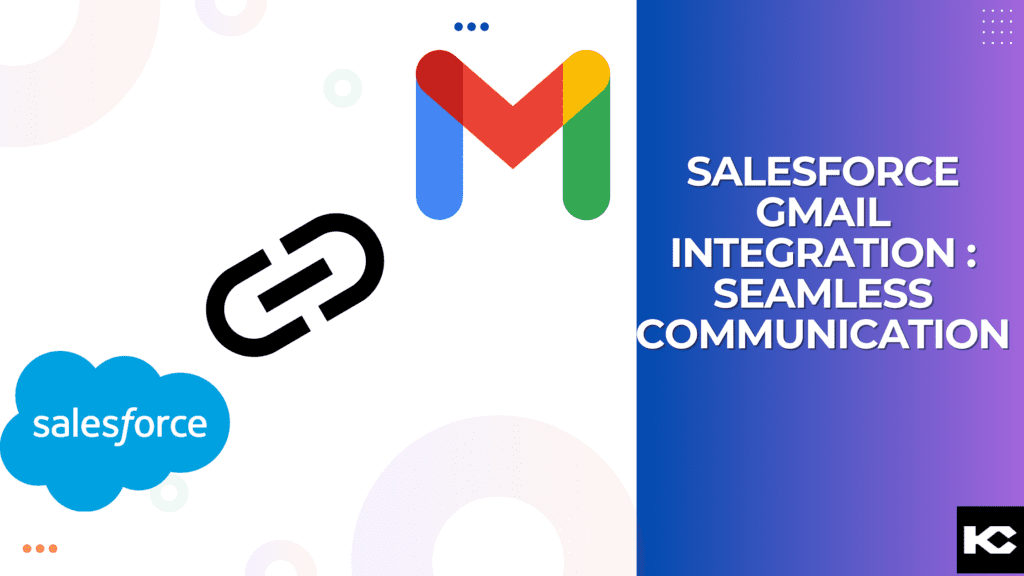
Salesforce Gmail Integration: Seamless Communication
⏱ 3 min read
Salesforce Gmail integration connects the world’s leading CRM with the world’s most-used business email platform, letting sales and support teams view, update, and log Salesforce records – leads, contacts, accounts, opportunities, and cases – directly from Gmail, without switching tabs. As a Salesforce Consulting Partner and Salesforce Ridge Partner, Kizzy Consulting has implemented Salesforce Gmail integration, Salesforce Lightning for Gmail, and Salesforce for Chrome across 120+ client projects, and this guide covers everything you need to set it up, use it well, and troubleshoot it.
Time is a resource you never get back, so it’s worth using well. One of the highest-leverage ways to save time for any revenue team is integrating Salesforce with Gmail. This article covers the benefits of Salesforce Gmail integration, how to set up the Gmail Salesforce plugin, key features of the Salesforce Chrome extension, best practices, productivity tips, common issues and fixes, and why some teams choose third-party Gmail-Salesforce integration tools over the native option.
Gmail is one of the largest email platforms in the world, with more than 1.8 billion users and roughly 53% of the U.S. email market. With that much of the workforce living in Gmail, a tight, reliable Salesforce Gmail sync isn’t a nice-to-have – it’s close to a baseline requirement for any Salesforce-using sales or support org.
Contents
hide
What Is Salesforce Gmail Integration?
Salesforce Gmail integration is the connection between Salesforce CRM and Gmail that lets users access, view, and edit Salesforce data – including leads, contacts, accounts, opportunities, and cases – from inside their Gmail inbox. It’s delivered through tools like Salesforce Lightning for Gmail, the Salesforce for Chrome extension, and Einstein Activity Capture, and it automatically logs emails and calendar events against the right Salesforce records so reps never have to manually re-enter data.
In short: Salesforce Gmail integration turns your inbox into a lightweight CRM window, without ever leaving Gmail.
Check our Salesforce Integration Services
Benefits of Integrating Salesforce with Gmail
Integrating Salesforce with Gmail brings measurable productivity, data quality, and visibility gains to sales, service, and marketing teams alike.
Faster, Easier Working Process
The biggest win from Salesforce Gmail integration is increased productivity. With the Gmail Salesforce plugin active, reps access and manage Salesforce data directly inside Gmail – no app-switching, no lost context, no duplicate data entry.
Increased Data Accuracy
Salesforce Gmail sync improves data accuracy by automatically logging emails and activities against Salesforce records in real time, so customer interaction history stays complete and current without manual logging.
Synced Calendars
An integrated Salesforce Gmail system gives reps a single, synchronized view of their Salesforce and Gmail calendars, and lets them create Salesforce Tasks directly from Gmail – a small feature with a big compounding productivity effect.
360° Customer Visibility
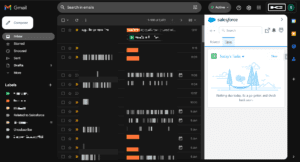
Salesforce Gmail integration gives reps a comprehensive, real-time view of the customer – leads, contacts, accounts, and opportunities – directly from the Gmail inbox, so every email is sent with full context on the relationship.
How to Integrate Salesforce with Gmail (Step-by-Step)
Setting up Salesforce Gmail integration is a straightforward, no-code process:
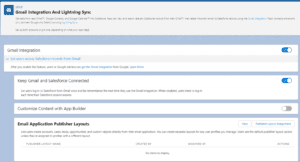
- Search for Gmail Integration in the Quick Find Box in Salesforce Setup.
- Enable the integration and configure any customized email panes to match your workflow.

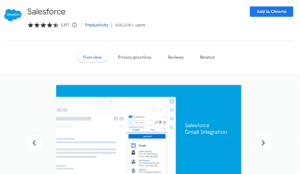
- Install the Salesforce for Chrome extension.

- Open Gmail and refresh the page – a new Salesforce side panel appears.
- Click the Salesforce panel and log in with your Salesforce credentials.
- You’re now connected – Salesforce records are live inside Gmail.
To discover the best practices for seamless Salesforce integration and unlock the full potential of your business processes, check out our comprehensive guide on Salesforce integration best practices.
Features of a Gmail Salesforce Extension/Plugin
A Gmail Salesforce extension or plugin lets you access and manage Salesforce data directly from Gmail. Core features include:
- Automatic email and activity logging: Every email and activity is logged against the right Salesforce record automatically.
- View and update Salesforce records: Edit leads, contacts, accounts, and opportunities directly from your Gmail inbox.
- Create new leads or contacts: Add new Salesforce records without leaving Gmail.
- Calendar sync: Keep Gmail and Salesforce calendar events aligned automatically.
Salesforce Lightning for Gmail vs. Salesforce for Chrome
Two tools power most Salesforce Gmail integrations: Salesforce Lightning for Gmail (Google Workspace add-on, works across Gmail web and mobile) and the Salesforce for Chrome extension (browser-based, desktop only). Lightning for Gmail is generally the better long-term choice for teams standardizing on Google Workspace, while the Chrome extension is a fast way to pilot Salesforce Gmail sync on individual desktops before a wider rollout.
Best Practices for Using Salesforce Gmail Integration
- Customize your setup: Choose which Salesforce objects display in your Gmail sidebar to match your team’s workflow.
- Keep data current: Regularly review and update Salesforce records so the Gmail sidebar stays accurate.
- Train your team: Ensure reps know how to log emails, create records, and sync calendars from Gmail.
- Automate where possible: Use automated email responses, reminders, and Einstein Activity Capture rules to reduce manual work.
Tips for Maximizing Productivity with Gmail Salesforce Integration
- Use email templates: Save time on repetitive emails like follow-ups and thank-you notes.
- Use filters: Auto-label or archive emails by criteria to keep your inbox prioritized.
- Use the Salesforce mobile app: Stay productive and keep Salesforce Gmail sync current even away from your desk.
Common Issues and Solutions for Salesforce Gmail Integration
- Syncing issues: Disconnect and reconnect your Salesforce and Gmail accounts.
- Extension/plugin not working: Reinstall or update the Salesforce for Chrome extension to the latest version.
- Data accuracy issues: Confirm your underlying Salesforce data is clean and current.
- Adoption/training issues: Provide additional hands-on training and documentation for reps.
Advantages of Using a Third-Party Gmail Salesforce Integration Tool
- More features: Third-party Gmail-Salesforce tools often sync tasks and notes that native integration doesn’t cover.
- Deeper customizability: Tailor the integration precisely to your sales process.
- Broader app integration: Connect Salesforce and Gmail data with tools like Slack or Trello for a fully unified workflow.
FAQs: Salesforce Gmail Integration
What is Salesforce Gmail integration?
Salesforce Gmail integration connects Salesforce CRM with Gmail so users can view, edit, and log Salesforce records – leads, contacts, accounts, opportunities, and cases – directly from their Gmail inbox, without switching applications.
Is Salesforce Gmail integration free?
The native Salesforce Lightning for Gmail and Salesforce for Chrome tools are included with most Salesforce editions at no extra cost, though Einstein Activity Capture and some advanced sync features may require specific Salesforce licenses.
Does Salesforce Gmail integration work on mobile?
Yes – Salesforce Lightning for Gmail works as a Google Workspace add-on across Gmail web and the Gmail mobile app, while the Salesforce for Chrome extension is desktop-browser only.
How long does it take to set up Salesforce Gmail integration?
For most orgs, enabling Gmail Integration in Salesforce Setup and installing the Chrome extension or Lightning for Gmail add-on takes under 30 minutes per user, though org-wide rollout and Einstein Activity Capture configuration can take longer.
What is Einstein Activity Capture used for in Salesforce Gmail integration?
Einstein Activity Capture (EAC) automatically captures email and event activity related to Salesforce Accounts, Contacts, Opportunities, and Leads, and syncs it between Salesforce and Gmail without manual logging.
Get in touch to integrate Salesforce with Gmail?
Conclusion
Salesforce Gmail integration increases productivity, improves data accuracy, and gives reps a more complete view of every customer relationship. To get the most from it, follow the best practices above, lean on automation and Einstein Activity Capture, and consider a third-party Gmail-Salesforce integration tool if your workflow needs go beyond the native feature set. With the right setup, Salesforce Gmail sync lets your team spend less time on data entry and more time on what actually grows the business.
Contact us for consultation services or for demonstrations.
Kizzy Consulting
Kizzy Consulting is a Salesforce Ridge Partner in the USA, India, and Australia, and has successfully implemented 120+ Salesforce and AI projects for clients across Financial Services, Insurance, Retail, Sales, Manufacturing, Real Estate, Logistics, and Healthcare in the US, Europe, and Australia. Get a free consultation now by emailing us at [email protected] or Contact us.