Salesforce AppExchange Strategy: Key Factors for App Success (2026)
⏱ 3 min read
SALESFORCE APPEXCHANGE STRATEGY
A practical guide to building, positioning, launching, marketing, and continuously improving a Salesforce AppExchange application.
What Is a Salesforce AppExchange Strategy?
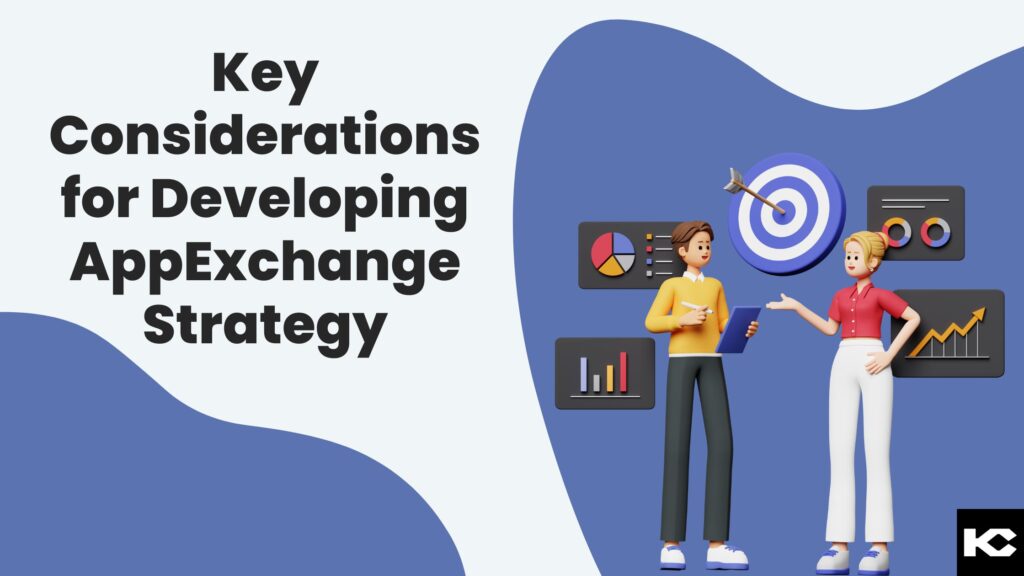
Developing a successful Salesforce AppExchange application requires more than building useful functionality. An effective Salesforce AppExchange strategy connects product development, customer needs, security, user experience, pricing, positioning, marketing, support, and continuous improvement.
AppExchange is a competitive Salesforce marketplace, so developers and ISV teams need to understand who their application serves, what problem it solves, how it differs from alternatives, and how customers will discover and evaluate it.
The right strategy can help an app establish a clear market position, improve customer adoption, build trust, and create a sustainable presence within the Salesforce ecosystem.
Executive Quick Answer
A strong Salesforce AppExchange strategy should define the target audience, use cases, competitive positioning, value proposition, user experience, security, performance, pricing, marketing, documentation, customer support, developer expertise, reviews, and product roadmap. These elements should work together from development through launch and ongoing product growth.
Key Elements of a Successful Salesforce AppExchange Strategy
01 · MARKET
Define Your Salesforce App Target Audience
Identify exactly who the application is designed for. Understand your users’ roles, workflows, pain points, technical environment, Salesforce edition, and business objectives. A clearly defined audience makes product decisions and marketplace positioning more focused.
02 · COMPETITION
Conduct Salesforce AppExchange Competitive Analysis
Research applications that address similar problems. Compare functionality, pricing, positioning, user experience, reviews, integrations, documentation, and marketplace messaging. Look for customer needs that existing solutions do not address effectively.
03 · POSITIONING
Build a Clear AppExchange Value Proposition
Clearly explain the problem your application solves and the value it provides. Focus on measurable business benefits, workflow improvements, automation, productivity, risk reduction, visibility, or other outcomes relevant to your target customer.
04 · UX
Prioritize Salesforce App User Experience
Design the application around intuitive workflows and a consistent user experience. Reduce unnecessary steps, make important actions easy to find, and align the experience with the Salesforce environment wherever appropriate.
05 · SECURITY
Make Salesforce AppExchange Security a Priority
Security should be incorporated from the beginning of application development. Review authentication, authorization, permissions, data handling, integrations, secure coding, vulnerability testing, and applicable Salesforce security requirements before submitting the application.
06 · PERFORMANCE
Optimize App Performance and Stability
Test the application across realistic usage scenarios. Review performance, error handling, scalability, integrations, resource consumption, and reliability. Customers expect marketplace applications to behave consistently as usage increases.
07 · PRICING
Define AppExchange Pricing and Licensing
Select a pricing and licensing model that fits your target market and application value. Consider subscription structures, user-based pricing, usage-based models, packages, trials, and other appropriate approaches while keeping pricing easy for prospective customers to understand.
08 · MARKETING
Build a Salesforce AppExchange Marketing Strategy
AppExchange visibility should be supported by a broader marketing strategy. Use relevant content, search optimization, social media, webinars, demonstrations, partnerships, events, and educational resources to reach potential customers beyond the marketplace listing.
09 · SUPPORT
Provide App Documentation and Customer Support
Create clear documentation covering installation, configuration, administration, common workflows, troubleshooting, and frequently asked questions. Responsive customer support can also help customers adopt the application and resolve issues efficiently.
10 · EXPERTISE
Invest in Salesforce Development Expertise
Your development and consulting team should understand Salesforce architecture, Apex, Lightning Web Components, APIs, integrations, security, testing, packaging, and the technical requirements relevant to your application. Relevant Salesforce certifications can also demonstrate platform knowledge.
11 · FEEDBACK
Monitor AppExchange Reviews and Customer Feedback
Customer feedback can reveal usability issues, missing functionality, documentation gaps, and opportunities for improvement. Encourage customers to share genuine feedback and use recurring themes to inform the product roadmap.
12 · ROADMAP
Continuously Improve Your Salesforce App
A Salesforce AppExchange strategy should evolve after launch. Use customer feedback, product analytics, Salesforce platform changes, market trends, and emerging customer requirements to prioritize future improvements and releases.
Salesforce AppExchange Strategy Framework
A practical way to structure your AppExchange strategy is to think about the application across five connected stages: research, build, secure, launch, and improve.
01
Research
Audience, pain points, competitors, use cases
02
Build
UX, functionality, integrations, performance
03
Secure
Security testing, access controls, review preparation
04
Launch
Listing, pricing, marketing, sales enablement
05
Improve
Reviews, feedback, updates, roadmap
RELATED APPEXCHANGE RESOURCE
Planning to Publish an App on Salesforce AppExchange?
Your marketplace strategy should also account for the publishing process, application preparation, listing requirements, security considerations, and launch planning. Explore our guide on
Read the AppExchange Publishing Guide →
Include Salesforce AppExchange Security in Your Strategy
Security should be incorporated into your AppExchange roadmap well before marketplace submission. Application teams should review secure coding practices, authentication, authorization, API integrations, credentials, vulnerability testing, and applicable security review requirements.
This is particularly important for applications that process sensitive business data or connect Salesforce with external systems.
Want Help With Salesforce AppExchange App Development?
From application architecture and Salesforce development to integrations, security preparation, and AppExchange readiness, a structured development approach can help turn an app concept into a marketplace-ready Salesforce solution.
Conclusion: Building a Salesforce AppExchange Strategy
A successful Salesforce AppExchange strategy requires more than developing an application and creating a marketplace listing. Teams need to understand their target customers, analyze competing solutions, communicate a clear value proposition, build an intuitive product, prioritize security and performance, define appropriate pricing, and establish a reliable support and marketing strategy.
After launch, customer reviews, feedback, product usage, Salesforce platform changes, and market requirements should continuously inform the product roadmap. Treating AppExchange as an ongoing product and go-to-market channel can help your application remain relevant as customer expectations evolve.
Frequently Asked Questions About Salesforce AppExchange Strategy
What is a Salesforce AppExchange strategy?
A Salesforce AppExchange strategy is a coordinated plan covering application development, target customers, competitive positioning, security, pricing, marketplace positioning, marketing, support, and continuous product improvement.
How do I make my Salesforce AppExchange app stand out?
Start with a clearly defined target audience and specific customer problem. A differentiated value proposition, intuitive user experience, strong documentation, reliable performance, appropriate pricing, and relevant marketing can help communicate the application’s value.
Why is competitive analysis important for an AppExchange app?
Competitive analysis helps developers understand existing solutions, customer expectations, pricing approaches, feature gaps, positioning, and areas where their application can provide differentiated value.
How important is security in a Salesforce AppExchange strategy?
Security is a core consideration for Salesforce applications, particularly applications that access customer data or connect with external systems. Security should be incorporated into application architecture, development, testing, and marketplace preparation.
What should I consider when pricing a Salesforce AppExchange app?
Consider your target customers, application value, usage patterns, competitive landscape, delivery costs, support requirements, and licensing structure. Pricing should be transparent and easy for prospective customers to understand.
How can customer reviews improve an AppExchange strategy?
Genuine customer feedback can reveal opportunities to improve functionality, usability, documentation, onboarding, and support. Product teams can use recurring feedback themes to prioritize roadmap improvements.
Can Kizzy Consulting help develop a Salesforce AppExchange application?
Kizzy Consulting provides
Salesforce AppExchange App Development
services for organizations developing applications within the Salesforce ecosystem.