Salesforce Cloud Solutions: Which One is Right for You?
⏱ 3 min read
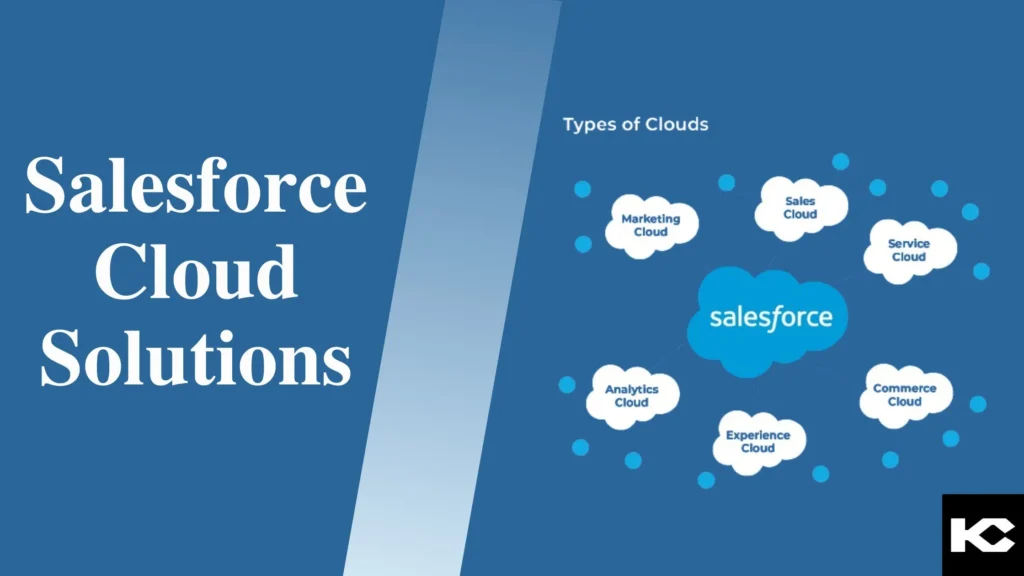
Salesforce is a leading CRM platform with a broad portfolio of cloud solutions designed for sales, customer service, marketing, commerce, analytics, and digital engagement. Because each Salesforce Cloud addresses a different business function, selecting the right solution starts with understanding your goals, processes, data, and growth plans.
In this guide, we explore the major Salesforce Cloud solutions, their use cases, key capabilities, and the factors businesses should consider when deciding which Salesforce solution fits their needs.
Salesforce Sales Cloud for Sales Management
Ideal for: Sales teams looking to improve productivity and manage the sales process.
Salesforce Sales Cloud helps organizations manage the customer acquisition and sales lifecycle from lead generation through opportunity management and closing. Sales teams can centralize customer information, track activities, manage pipelines, and use forecasting and reporting to make more informed decisions.
Sales Cloud can also connect with email, calendars, automation tools, and other business systems, helping sales representatives spend less time managing disconnected information and more time engaging with customers.
Salesforce Service Cloud for Customer Service
Ideal for: Businesses focused on customer support and service operations.
Salesforce Service Cloud is built to help organizations manage customer service interactions across channels. Capabilities such as case management, knowledge management, workflow automation, and omnichannel engagement can help service teams organize requests and resolve customer issues more efficiently.
Service Cloud also provides reporting and analytics capabilities that help organizations monitor service performance, identify recurring issues, and improve customer support processes.
Salesforce Marketing Cloud for Customer Engagement
Ideal for: Marketing teams managing customer journeys and engagement.
Salesforce Marketing Cloud provides tools for creating and managing personalized customer experiences across digital channels. Depending on the Salesforce Marketing Cloud products used, organizations can support email marketing, mobile engagement, customer journeys, audience management, and campaign analytics.
By bringing customer data and marketing activities together, businesses can create more relevant interactions while measuring campaign performance and customer engagement.
Salesforce Commerce Cloud for E-Commerce
Ideal for: B2B and B2C businesses building digital commerce experiences.
Salesforce Commerce Cloud helps businesses create digital shopping experiences while connecting commerce processes with customer and business data. It can support product discovery, personalized experiences, order management, promotions, and other commerce workflows.
For organizations already using Salesforce, Commerce Cloud can also help connect commerce experiences with broader CRM, service, marketing, and customer data processes.
Salesforce Experience Cloud for Digital Communities
Ideal for: Organizations building branded customer, partner, or employee experiences.
Salesforce Experience Cloud enables organizations to create digital experiences and portals for customers, partners, employees, and other audiences. Businesses can use these experiences to share information, provide self-service resources, facilitate collaboration, and connect users with Salesforce data and processes.
Experience Cloud can be particularly useful when organizations want to extend Salesforce beyond internal users and create connected digital experiences for external audiences.
Salesforce Analytics and Tableau for Data-Driven Decisions
Ideal for: Businesses that need deeper insights from customer and operational data.
Salesforce’s analytics ecosystem helps organizations turn business data into actionable insights. With Salesforce CRM Analytics and Tableau capabilities, teams can explore trends, build dashboards, monitor performance, and analyze customer and operational information.
Analytics can become particularly valuable when connected to a broader Salesforce data strategy, allowing decision-makers to work from consistent information rather than isolated spreadsheets and systems.
How to Choose the Right Salesforce Cloud Solution
The right Salesforce Cloud depends on the business problem you are trying to solve. Instead of selecting a Salesforce product based only on features, evaluate how the solution fits your existing processes, data, technology landscape, and future requirements.
1. Define Your Business Objectives
Identify the outcomes you want to achieve, such as increasing sales productivity, improving customer service, creating digital commerce experiences, or improving data visibility.
2. Evaluate Current Processes
Map your existing workflows and identify manual tasks, disconnected systems, duplicate data, and process bottlenecks that Salesforce could help address.
3. Plan for Scalability
Consider how your Salesforce environment will need to support additional users, business units, products, customers, geographies, and workflows as the organization grows.
4. Review Integration Needs
Assess the systems Salesforce needs to connect with, including ERP, marketing platforms, e-commerce systems, data platforms, communication tools, and other business applications.
Salesforce Cloud Solutions at a Glance
| Salesforce Cloud | Primary Use | Typical Business Goal |
|---|---|---|
| Sales Cloud | Sales management | Improve pipeline and sales productivity |
| Service Cloud | Customer service | Improve support and case resolution |
| Marketing Cloud | Marketing and journeys | Increase engagement and personalization |
| Commerce Cloud | Digital commerce | Create connected shopping experiences |
| Experience Cloud | Digital experiences | Connect customers, partners, or employees |
| Analytics / Tableau | Data and analytics | Improve reporting and decision-making |
Need Help Choosing the Right Salesforce Cloud?
A Salesforce consultation can help you map your business requirements to the right Salesforce products, architecture, integrations, and implementation approach.
Salesforce Cloud Solutions FAQs
What is Salesforce Cloud?
Salesforce Cloud refers to the platform’s range of cloud-based products and solutions designed for functions such as sales, service, marketing, commerce, digital experiences, data, and analytics.
Which Salesforce Cloud is best for sales teams?
Salesforce Sales Cloud is designed specifically for sales organizations. It supports capabilities such as lead and opportunity management, pipeline visibility, forecasting, reporting, and sales productivity.
What is Salesforce Service Cloud used for?
Salesforce Service Cloud helps organizations manage customer service operations, including cases, knowledge, workflows, omnichannel interactions, and service analytics.
What is Salesforce Marketing Cloud used for?
Salesforce Marketing Cloud provides capabilities for customer engagement, journey management, messaging, audience management, and marketing analytics across supported channels.
What is Salesforce Commerce Cloud?
Salesforce Commerce Cloud is designed to support digital commerce experiences for businesses, including B2B and B2C commerce use cases, while connecting commerce processes with customer and business data.
How do I choose the right Salesforce Cloud solution?
Start by defining your business objectives, reviewing current processes, identifying integration and data requirements, and considering scalability. A Salesforce consulting partner can help translate those requirements into a suitable Salesforce architecture.
Can multiple Salesforce Cloud solutions be used together?
Yes. Organizations can use multiple Salesforce products together to support connected business processes. The appropriate combination depends on business requirements, data architecture, integrations, licensing, and implementation scope.
Conclusion
Salesforce offers a broad ecosystem of cloud solutions covering sales, customer service, marketing, commerce, digital experiences, analytics, and more. The right solution is determined by the business processes you need to improve rather than by the number of features available.
A structured Salesforce assessment can help identify the right products, integrations, data requirements, and implementation roadmap. Kizzy Consulting helps businesses design, implement, integrate, and optimize Salesforce solutions across industries and business functions.