Salesforce Data 360 vs Snowflake: Architecture, Features, Integration & Use Cases
⏱ 4 min read
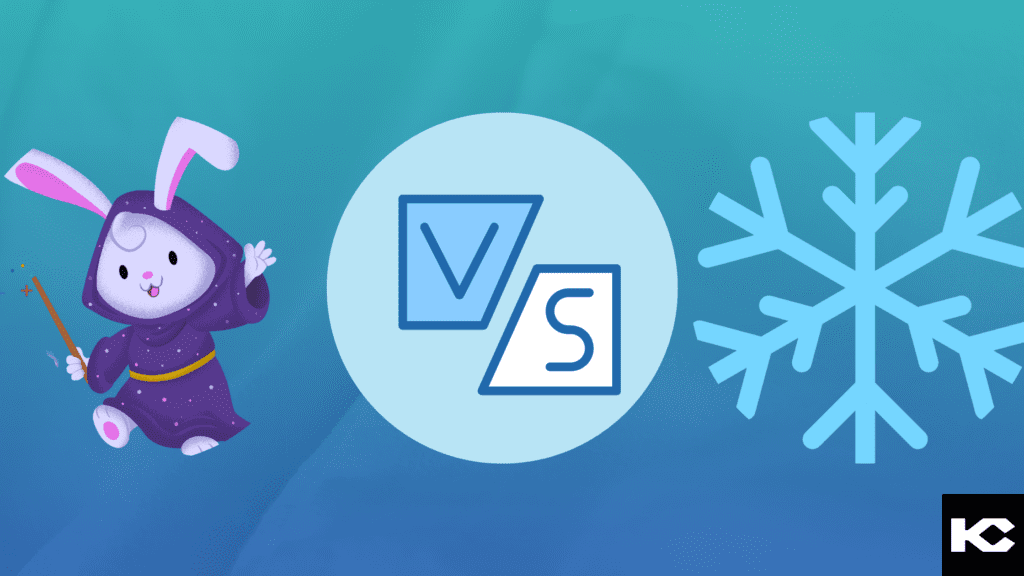
A practical comparison of Salesforce Data 360 and Snowflake, including their core focus, data architecture, analytics, AI, customer data capabilities, integration options, zero-copy connectivity, and where each platform fits in an enterprise data strategy.
Data Cloud is now Data 360: Salesforce rebranded Salesforce Data Cloud as Salesforce Data 360 on October 14, 2025. Salesforce states that the name changed while the functionality and content remained unchanged. Older articles, documentation, and implementations may therefore still use the term “Salesforce Data Cloud.”
This article uses Salesforce Data 360 as the current name while retaining “Salesforce Data Cloud” where it helps explain legacy terminology and the Salesforce-Snowflake integration.
Contents
hide
Salesforce Data 360 vs Snowflake: Quick Answer
Salesforce Data 360 and Snowflake can both play important roles in an enterprise data architecture, but they are designed around different primary needs.
Data 360 is deeply connected to the Salesforce platform and is designed to connect, harmonize, unify, analyze, and activate customer and enterprise data across Salesforce experiences. Salesforce also positions Data 360 as a data foundation for AI and Agentforce.
Snowflake is a cloud data platform focused on storing, processing, querying, sharing, and analyzing data across a broad range of enterprise workloads. For organizations using both platforms, the decision does not necessarily have to be Data 360 vs Snowflake. Their integration can allow Salesforce customer data and Snowflake enterprise data to work together.
Salesforce Data 360 vs Snowflake: What Is the Core Difference?
Salesforce
Salesforce Data 360
Data 360 is designed around connected customer and enterprise data within the Salesforce ecosystem. It can connect external data, harmonize and unify it, create insights, and activate data across Salesforce applications and supported targets.
Data Platform
Snowflake
Snowflake provides a broad cloud data platform for data engineering, analytics, applications, data sharing, AI/ML workloads, and other enterprise data use cases across many data sources.
The practical distinction: Data 360 is especially centered on making connected data useful inside Salesforce and customer-facing processes, while Snowflake is designed as a broader enterprise data platform for storage, computation, analytics, engineering, sharing, and AI workloads.
Salesforce Data 360 vs Snowflake Comparison
What Is Salesforce Data 360?
Salesforce Data 360, formerly known as Salesforce Data Cloud, is a data platform that connects and processes data from Salesforce clouds and external systems. Salesforce documentation describes capabilities for connecting and ingesting data, transforming and modeling it, unifying data, analyzing it, and taking action on it.
Data 360 can work with data from different sources and support use cases involving unified customer profiles, segmentation, analytics, activation, personalization, and AI.
Connect
Bring data together from Salesforce and external sources.
Harmonize
Transform and map data into a consistent structure.
Unify
Resolve identities and build unified customer context.
Activate
Use data in Salesforce processes, analytics, marketing, and AI.
What Is Snowflake?
Snowflake is a cloud data platform designed to support a broad range of enterprise data workloads. Organizations use Snowflake for data storage, querying, analytics, engineering, data sharing, applications, and AI-related workloads.
Unlike a platform centered primarily on CRM and customer activation, Snowflake can serve as a broader enterprise data environment where data from many applications and systems can be stored, processed, queried, and joined.
Where Snowflake fits
- Enterprise data warehousing and analytics
- Data engineering and transformation
- Data sharing and collaboration
- Machine learning and AI data workloads
- Application and data platform use cases
Where Salesforce Data 360 Fits Best
Customer 360
Organizations looking to connect customer information across Salesforce and external systems can use Data 360 to create unified customer context.
Personalization
Unified customer and engagement data can support segmentation and personalized customer experiences.
Salesforce Activation
Data can be activated into Salesforce-oriented workflows, applications, and supported activation targets.
Agentforce Context
Data 360 is positioned by Salesforce as a foundation for Agentforce and AI experiences that require business context.
Where Snowflake Fits Best
Enterprise Analytics
Snowflake can serve as a central environment for querying and analyzing data from multiple enterprise sources.
Data Engineering
Data teams can use Snowflake for ingestion, transformation, processing, and analytical workloads.
Cross-System Data
Snowflake can combine data from Salesforce, applications, databases, files, and other enterprise sources.
AI and ML Workloads
Data teams can use enterprise data within Snowflake for machine learning, AI, analytics, and application workloads.
Salesforce Data 360 and Snowflake Integration
The relationship between Salesforce Data 360 and Snowflake is important because organizations do not necessarily need to choose one platform and eliminate the other.
Salesforce and Snowflake support integration approaches that allow Salesforce data and Snowflake data to work together. Salesforce’s current Data 360 integration documentation describes Snowflake as an integration target, while Snowflake documents a zero-copy integration that allows Salesforce data products to be accessed from Snowflake without traditional ETL or data replication.
How the Salesforce-Snowflake zero-copy model works
1. Connect
A Snowflake Zerocopy Connector establishes the connection to Salesforce Data 360.
2. Share
Salesforce administrators can make selected Data 360 data products available through a Data Share.
3. Query
Shared data products can appear in Snowflake as catalog-linked databases for querying.
4. Analyze
Data teams can combine Salesforce data with other Snowflake datasets for analytics and AI workloads.
Snowflake’s documentation states that its zero-copy integration lets customers access semantically rich Salesforce data products from Snowflake without ETL pipelines or data replication, while the data remains in Salesforce.
When Should You Use Salesforce Data 360 and Snowflake Together?
For many enterprise architectures, the most useful question is not “Salesforce Data 360 or Snowflake?” but rather “Which responsibilities should each platform handle?”
Data 360 Layer
- Customer data unification
- Identity resolution
- Salesforce customer context
- Segmentation and activation
- Salesforce AI and Agentforce context
Snowflake Layer
- Enterprise data storage
- Data engineering
- SQL analytics
- Cross-domain data analysis
- Data science and AI/ML workloads
The exact division of responsibility should depend on data architecture, security requirements, existing investments, latency needs, governance, team skills, and the business processes that need to consume the data.
Salesforce Data 360 vs Snowflake: Use Cases
How to Evaluate Salesforce Data 360 vs Snowflake
Instead of treating the comparison as a simple winner-takes-all decision, evaluate both platforms against the architecture and workloads your organization actually needs.
1. Existing Technology Stack
Consider your existing Salesforce, Snowflake, data warehouse, integration, analytics, and application investments.
2. Primary Workloads
Determine whether the priority is customer data activation, CRM processes, enterprise analytics, data engineering, AI, or a combination.
3. Data Architecture
Map where source data lives, where it should be processed, and which systems need access to it.
4. AI Strategy
Identify whether AI agents, machine learning, predictive analytics, or Salesforce-native AI experiences are central to the roadmap.
5. Governance
Evaluate privacy, security, access controls, compliance, data ownership, and data residency requirements.
6. Total Architecture Cost
Evaluate licensing, compute, storage, integration, implementation, administration, and ongoing operational requirements rather than comparing product prices alone.
Building a Salesforce Data Architecture?
Data platform decisions become easier when your integration architecture, data quality, governance, and AI roadmap are defined together.
Salesforce Data 360 vs Snowflake FAQs
What is the difference between Salesforce Data 360 and Snowflake?
Salesforce Data 360 is closely aligned with customer data, Salesforce applications, data unification, activation, and Agentforce, while Snowflake is a broader cloud data platform designed for enterprise data storage, processing, analytics, sharing, and AI workloads.
Is Salesforce Data Cloud now called Data 360?
Yes. Salesforce rebranded Data Cloud as Data 360 on October 14, 2025. Salesforce states that the functionality and content remained unchanged.
Can Salesforce Data 360 and Snowflake work together?
Yes. Salesforce and Snowflake support integration patterns including zero-copy data access. Snowflake documents a Salesforce Data 360 integration that lets Snowflake users query shared Salesforce data products without traditional ETL or data replication.
What is Salesforce Data 360 zero-copy integration with Snowflake?
The zero-copy integration allows selected Salesforce Data 360 data products to be exposed in Snowflake through a secure connector. Snowflake states that the data remains in Salesforce while Snowflake can query it without traditional ETL or duplication.
Is Snowflake a replacement for Salesforce Data 360?
Not necessarily. The platforms address overlapping but different architectural needs, and Salesforce and Snowflake provide integration capabilities specifically for organizations that use both platforms.
Is Salesforce Data 360 a data warehouse?
Data 360 is a Salesforce data platform with capabilities for connecting, harmonizing, unifying, analyzing, and activating data. It should not simply be treated as interchangeable with a general-purpose enterprise data warehouse.
Which platform is better for customer 360?
The answer depends on the architecture and requirements. Data 360 is specifically designed around unified customer data and Salesforce activation, while Snowflake can provide the broader enterprise data layer in which customer data is analyzed alongside other business datasets.
How does Data 360 support Agentforce?
Salesforce positions Data 360 as a data foundation for Agentforce, allowing connected and unified enterprise data to provide context for AI experiences.
What should businesses consider when comparing Salesforce Data 360 and Snowflake?
Consider existing technology investments, primary workloads, data architecture, integration requirements, AI strategy, governance, security, team skills, implementation effort, and total architecture cost.
Need Help Designing Your Salesforce Data Architecture?
Kizzy Consulting helps organizations connect Salesforce, enterprise data platforms, integrations, automation, and AI into practical architectures built around business use cases.
Explore Data Foundation for AI Services →
.