Migration to Salesforce Agentforce: Key Considerations (2026)
⏱ 3 min read
Salesforce AI Integration
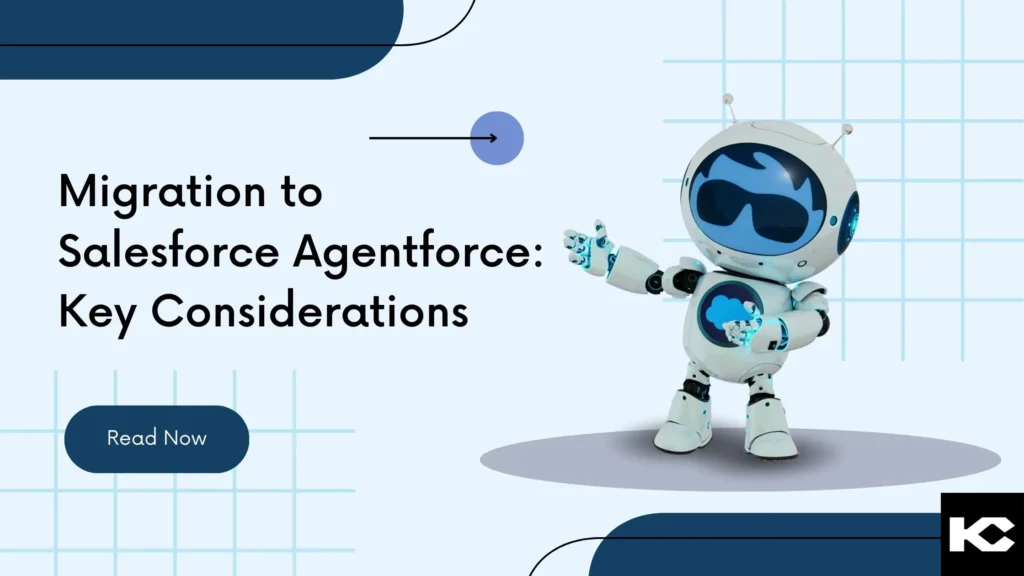
Migration to Salesforce Agentforce: Key Considerations for Success
Migration to Salesforce Agentforce can be a game-changer for organizations looking to streamline their customer service operations and empower their support teams. With its robust features, such as AI-driven insights, intelligent case management, and seamless integration with other Salesforce products, Agentforce offers immense value to modern enterprises.
However, a successful Agentforce migration requires careful planning and execution. From aligning stakeholders to evaluating data readiness, understanding the best practices will ensure a smooth transition and maximize your return on investment.
Key Considerations to Ensure a Smooth Migration to Salesforce Agentforce
01
Assess Your Current Customer Service Landscape
Before diving into the migration process, it’s essential to evaluate your existing customer service systems and workflows. Identify pain points, bottlenecks, and areas that need improvement. Understanding your current state will help you map out how Agentforce can address specific challenges and enhance operations.
Questions to Ask:
- What are the inefficiencies in your current system?
- Which features of Agentforce will bring the most value to your team?
- How does your current system handle customer data, and how will it transition to Agentforce?
02
Align Stakeholders and Define Objectives
Migration is not just a technical task; it requires buy-in from stakeholders across the organization. Clearly define your goals for adopting Agentforce and ensure alignment between customer service teams, IT, and leadership. Establishing these objectives early on will guide your implementation strategy.
Key Objectives to Consider:
- Reducing response times and improving customer satisfaction.
- Streamlining agent workflows for better productivity.
- Gaining actionable insights through Agentforce’s AI capabilities.
03
Data Migration Strategy
One of the most critical aspects of migrating to Agentforce is transferring your existing customer data. Ensuring data accuracy, consistency, and security should be a top priority during the data migration strategy.
Best Practices:
- Audit your data: Clean up duplicates, outdated records, and inaccuracies before migration.
- Map fields: Ensure your data fields in the current system align with those in Agentforce.
- Test the migration: Run tests to ensure data integrity and identify any gaps before going live.
04
Integration with Existing Systems
Agentforce is most effective when integrated seamlessly with your existing tools, such as CRMs, communication platforms, and analytics systems. Review your tech stack to identify CRM integration opportunities and potential challenges.
Questions to Address:
- How will Agentforce work with your CRM (e.g., Salesforce Sales Cloud or Service Cloud)?
- Are there any third-party applications or APIs that need to be integrated?
- What customizations are required to align Agentforce with your business processes?
Explore Further
Accelerate Your Knowledge on Salesforce Agentforce & Migrations
Looking to dive deeper into how Agentforce can transform your business, or need expert guidance on executing a flawless Salesforce migration? Explore our comprehensive guides from the Kizzy Consulting team:
Optimizing the Migration & Post-Launch Strategy
5. Training and Change Management
Introducing a new system can be overwhelming for your team, so proper training and change management are crucial. Equip your agents with the knowledge and resources they need to effectively use Agentforce.
Steps to Take:
- Provide hands-on training sessions and create user-friendly documentation.
- Highlight how Agentforce will make their day-to-day tasks easier.
- Encourage feedback and provide ongoing support to address any concerns.
6. Leverage AI and Automation
Agentforce’s AI-powered tools, such as Einstein AI, offer valuable insights and automation capabilities. Plan how you will use these features to enhance customer interactions and streamline repetitive tasks.
Automation Opportunities:
- Real-time call transcription and sentiment analysis.
- Automated case routing to the right agent.
- Predictive analytics to anticipate customer needs.
7. Monitor and Optimize Post-Migration
Migration doesn’t end once Agentforce is live. Regularly monitor performance metrics and gather feedback from your team to identify areas for improvement.
Metrics to Track:
- Average response and resolution times.
- Customer satisfaction (CSAT) scores.
- Agent productivity and system adoption rates.
8. Partner with Experts
If your team lacks the in-house expertise to handle the migration, consider partnering with a Salesforce consulting partner. They can help you navigate complexities, minimize risks, and ensure a successful implementation of your Salesforce Agentforce migration.
Frequently Asked Questions (FAQs) About Agentforce Migration
1. What is Salesforce Agentforce migration?
A Salesforce Agentforce migration is the process of transitioning your existing customer service platform and data to Agentforce. This involves assessing current workflows, mapping fields, executing a data migration strategy, and adopting AI-driven insights for automated case management.
2. How can I ensure data security during the migration?
To ensure data security, you must audit your data by cleaning up duplicates and outdated records before the move. Proper field mapping and rigorous pre-launch testing are critical best practices to maintain data accuracy, consistency, and security.
3. Why is change management important for Agentforce?
Adopting an AI-powered platform can be overwhelming for support teams. Change management ensures that agents receive hands-on training and ongoing support. Highlighting how Agentforce makes their daily tasks easier drives system adoption and improves overall productivity.
4. What role does Einstein AI play in Agentforce?
Einstein AI powers Agentforce’s automation capabilities by providing AI-driven insights, real-time call transcription, sentiment analysis, predictive analytics, and automated case routing. These tools streamline repetitive tasks and significantly enhance customer service interactions.
Conclusion: Ready to Transform Your Customer Service Strategy?
Migration to Salesforce Agentforce can revolutionize your customer service operations, but it requires careful planning and execution. By addressing these key considerations—assessing your current landscape, planning a solid data migration, training your team, and leveraging AI—you can set your organization up for a smooth transition and long-term success with Agentforce. Let’s discuss how Salesforce Agentforce can transform your customer service strategy today!
About Kizzy Consulting
Kizzy Consulting is a leading provider of Salesforce consulting and Snowflake partner in the USA and Australia. We specialize in helping businesses leverage AI and other advanced technologies to optimize their CRM processes and achieve their strategic goals.
Contact us at [email protected] to learn more about how we can support your Salesforce journey and successfully manage your Agentforce implementation.