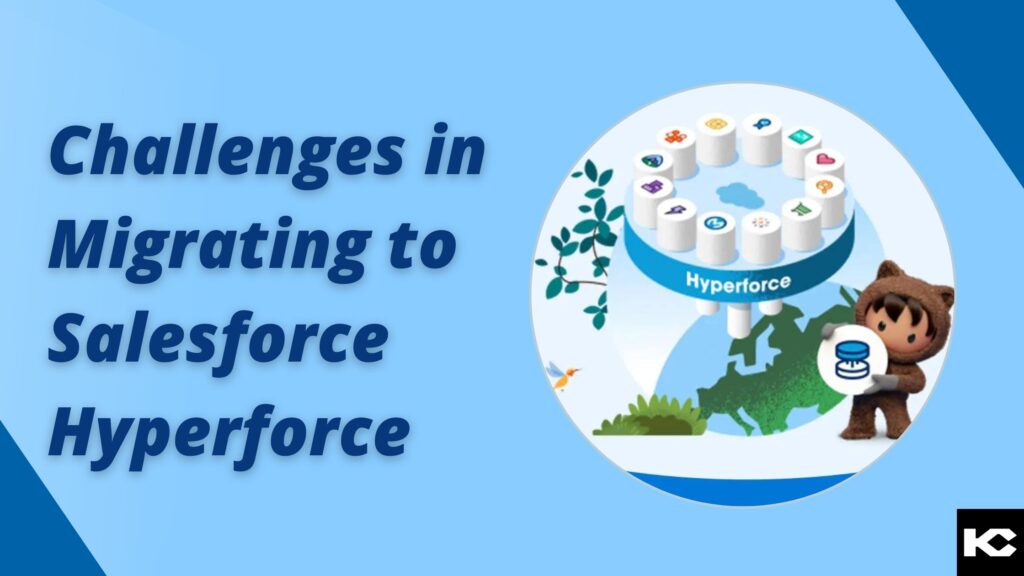
Salesforce Hyperforce Migration Challenges: Risks, Readiness & Best Practices
⏱ 3 min read
Salesforce Hyperforce is Salesforce’s modern public-cloud architecture, designed to support global scale, security, availability, compliance, and regional data residency. Learn how to identify Hyperforce, understand its benefits, prepare for migration, and address common Salesforce Hyperforce migration challenges.
Contents
hide
Salesforce Hyperforce: Quick Answer
Salesforce Hyperforce is Salesforce’s modern public-cloud architecture for running its platform and applications at global scale. It is designed to support scalability, security, availability, compliance, and regional data residency.
For organizations, Hyperforce represents an infrastructure transition that can require preparation across Salesforce configurations, integrations, network controls, security policies, custom applications, and connected systems.
For a deeper explanation of the strategic background, see our guide on why Salesforce launched Hyperforce.
What Is Salesforce Hyperforce?
Salesforce Hyperforce represents a major evolution in the infrastructure behind Salesforce. Rather than describing Hyperforce simply as another Salesforce product, it is better understood as Salesforce’s modern public-cloud architecture designed to support the company’s global platform and applications.
Hyperforce is intended to provide the infrastructure foundation required for Salesforce to scale across regions while supporting security, compliance, availability, and data residency requirements.
For businesses, the significance of Hyperforce is not limited to infrastructure. A Salesforce organization can have integrations, APIs, custom applications, network policies, authentication systems, and third-party services that depend on the Salesforce environment. Those dependencies need to be considered when preparing for a Hyperforce migration.
Why Did Salesforce Launch Hyperforce?
Salesforce introduced Hyperforce as part of the evolution of its infrastructure toward a modern public-cloud architecture capable of supporting the scale, geographic distribution, security, compliance, and data residency expectations of modern enterprises.
How to Determine if Your Salesforce Organization Is Running on Hyperforce
Before planning a Salesforce Hyperforce migration, it is useful to establish whether your Salesforce organization has already moved to Hyperforce.
- Log in to your Salesforce organization.
- Open Setup from the gear icon.
- Search for Company Information using Quick Find.
- Open the Company Information page.
- Review your organization’s infrastructure and instance information.
- Use Salesforce’s current Hyperforce guidance and migration information to confirm the status of your specific organization.
Administrators should avoid relying solely on an instance-name assumption. Salesforce infrastructure and migration guidance can change, so use Salesforce’s current org-specific information when determining migration status.
How to Migrate to Salesforce Hyperforce
Salesforce Hyperforce migration is not simply a matter of moving Salesforce data from one environment to another. Salesforce coordinates the infrastructure migration, while customers need to prepare their Salesforce org and connected technology ecosystem.
Hyperforce Assistant is an important resource for organizations preparing for migration. Administrators can access it from Salesforce Setup and review the preparation guidance applicable to their organization.
- Open Salesforce Setup.
- Search for Hyperforce Assistant.
- Review the Prepare recommendations.
- Identify integrations and external dependencies.
- Review network controls and IP allowlists.
- Check hard-coded Salesforce instance URLs.
- Review certificate and authentication dependencies.
- Test critical Salesforce integrations and business processes.
- Prepare a post-migration validation checklist.
Planning a Salesforce Hyperforce Migration?
Our dedicated guide covers the practical side of Salesforce Hyperforce migration, including readiness assessment, security, integration dependencies, testing, data considerations, and post-migration validation.
Read the Salesforce Hyperforce Migration Best Practices Guide →
What Are the Reasons for Migrating to Salesforce Hyperforce?
- Scalability: Hyperforce provides a modern infrastructure foundation designed to support Salesforce workloads at global scale.
- Global Availability: The architecture supports Salesforce’s ability to operate across geographically distributed infrastructure and regions.
- Data Residency: Hyperforce supports Salesforce’s regional infrastructure and data residency capabilities where applicable.
- Security: Hyperforce is designed around Salesforce’s security, privacy, compliance, and infrastructure controls.
- Availability: The architecture is designed to support resilient Salesforce services and global operations.
- Cloud Modernization: Hyperforce provides Salesforce with a modern public-cloud foundation for evolving platform capabilities.
- Future Platform Development: Moving to modern infrastructure gives Salesforce a foundation for continued development of its platform, applications, data services, and AI capabilities.
- Enterprise Requirements: Hyperforce supports the infrastructure requirements associated with organizations operating across regions and under different regulatory frameworks.
What Challenges Are Encountered During Salesforce Hyperforce Migration?
The infrastructure migration itself is coordinated by Salesforce, but customers can encounter challenges because their Salesforce environments are connected to many external systems and operational dependencies.
- Integration Dependencies: Third-party applications, middleware, APIs, and external systems may depend on Salesforce URLs, IP ranges, certificates, or network configurations.
- Hard-Coded URLs: Custom applications or integrations that use instance-specific Salesforce URLs can require remediation.
- IP Allowlisting: Network security systems may need to be reviewed when Salesforce infrastructure and IP ranges change.
- Certificate Dependencies: Certificate pinning or other infrastructure-specific certificate assumptions can create connectivity issues.
- Security and Compliance: Organizations need to validate their own regulatory, contractual, and security requirements.
- Integration Testing: Critical integrations need to be tested before and after migration.
- Operational Disruption: Large jobs, sandbox activities, integrations, and other operational processes need to be coordinated around the migration window.
- User and Business Process Validation: Organizations should verify that critical Salesforce workflows continue functioning correctly after migration.
Need Help With Salesforce Hyperforce Migration?
Kizzy Consulting can help assess Salesforce integrations, migration dependencies, customizations, security requirements, and post-migration validation.
Salesforce Hyperforce FAQs
What is Salesforce Hyperforce?
Salesforce Hyperforce is Salesforce’s modern public-cloud architecture designed to support global scalability, security, availability, compliance, and data residency across Salesforce services.
Why did Salesforce launch Hyperforce?
Salesforce launched Hyperforce as part of its transition toward a modern public-cloud architecture capable of supporting global scale, regional infrastructure, security, compliance, and data residency requirements. Learn more about why Salesforce launched Hyperforce.
How do I know if my Salesforce organization is on Hyperforce?
Administrators can review their Salesforce organization information in Setup and use Salesforce’s current Hyperforce guidance and Hyperforce Assistant to determine migration status and required preparation steps.
How do I prepare for Salesforce Hyperforce migration?
Review integrations, hard-coded Salesforce URLs, network and IP controls, certificates, authentication, custom applications, security requirements, data dependencies, and critical business processes. Salesforce’s Hyperforce Assistant can also provide organization-specific preparation guidance.
What are the biggest Salesforce Hyperforce migration challenges?
Common challenges include integration dependencies, hard-coded instance URLs, IP allowlisting, certificate dependencies, security and compliance requirements, testing, and post-migration validation.
Does Salesforce Hyperforce improve scalability?
Hyperforce provides Salesforce with a modern public-cloud infrastructure foundation designed to support Salesforce workloads at global scale.
Does Salesforce Hyperforce support data residency?
Hyperforce supports Salesforce’s regional infrastructure and data residency capabilities where applicable. Organizations should evaluate the specific Salesforce services, regions, contracts, and regulatory requirements relevant to their environment.
Where can I learn more about Salesforce Hyperforce migration?
See Kizzy Consulting’s detailed Salesforce Hyperforce Migration Best Practices guide for a deeper look at migration preparation, security, integrations, testing, and post-migration activities.
Where can I learn why Salesforce launched Hyperforce?
Read Kizzy Consulting’s dedicated guide on why Salesforce launched Hyperforce for the infrastructure and business context behind Salesforce’s Hyperforce strategy.
Need Help With Hyperforce Migration?
Assess your Salesforce environment, integration dependencies, security controls, and migration readiness with experienced Salesforce consultants.
Conclusion
Salesforce Hyperforce is a major evolution in the infrastructure powering Salesforce. Its public-cloud architecture is designed to support the scalability, availability, security, compliance, and regional requirements of modern Salesforce environments.
For organizations preparing for migration, the most important step is understanding the dependencies surrounding the Salesforce org. Integrations, URLs, network controls, certificates, security policies, custom applications, and critical business processes should all be reviewed and tested.
For the complete migration checklist, visit Salesforce Hyperforce Migration Best Practices. To understand the broader reason behind the architecture, read Why Salesforce Launched Hyperforce.
Kizzy Consulting
Kizzy Consulting is a Salesforce consulting partner helping organizations with Salesforce implementation, integration, migration, automation, and AI transformation.