Salesforce Managed Services: Maximize CRM Performance and ROI
⏱ 4 min read
SALESFORCE MANAGED SERVICES
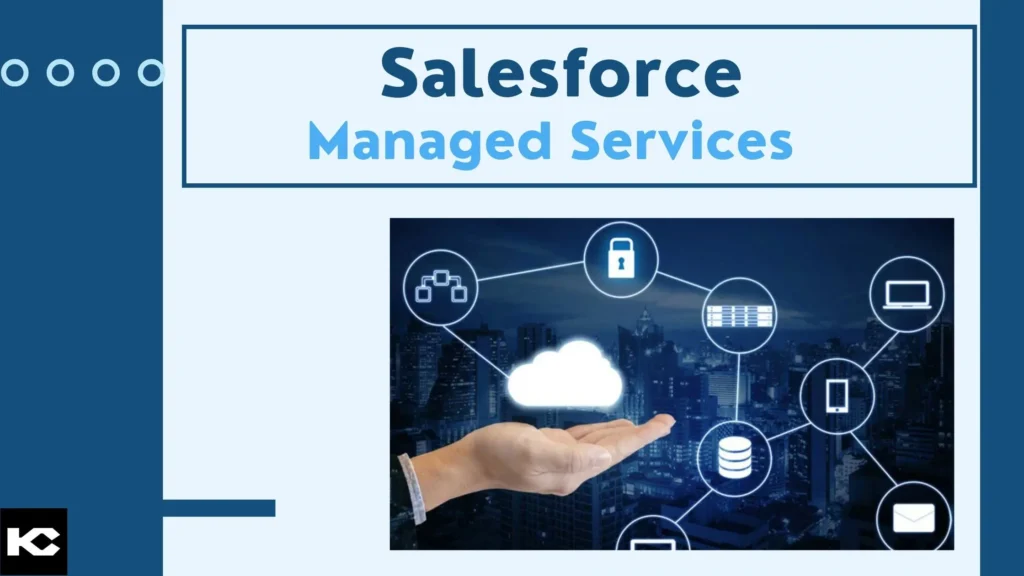
Salesforce Managed Services provide ongoing administration, optimization, development, integration, support, security, and strategic guidance to keep your CRM aligned with changing business needs. With the right managed services partner, Salesforce can continuously evolve instead of becoming another system your internal team has to maintain alone.
Contents
hide
Quick Answer: What Are Salesforce Managed Services?
Salesforce Managed Services are an ongoing support and optimization model in which a specialized Salesforce team helps administer, maintain, secure, integrate, develop, and continuously improve a Salesforce environment. Unlike reactive break-fix support, a mature managed services model can include proactive health checks, release management, technical-debt reduction, data quality, integration monitoring, analytics, user enablement, and strategic Salesforce roadmapping.
Why Salesforce Managed Services Matter
Salesforce is rarely a static CRM. As organizations grow, their Salesforce environment typically accumulates new automations, integrations, custom objects, Apex, reports, dashboards, security rules, users, and business processes.
Without continuous governance and optimization, this growth can create technical debt, inconsistent data, broken automations, integration failures, low user adoption, and increasingly complex administration.
Salesforce Managed Services provide an ongoing operating model for addressing these challenges. Kizzy Consulting’s current managed services offering spans administration, development, integrations, data management, security, release management, analytics, user enablement, and strategic roadmapping across the Salesforce ecosystem.
What Is Included in Salesforce Managed Services?
The exact scope varies by organization, but a comprehensive Salesforce Managed Services model can cover the full lifecycle of your CRM environment.
1. Salesforce Administration
Day-to-day administration can include user management, permissions, reports, dashboards, configuration changes, Flow updates, and ongoing platform support.
2. Customization and Development
When configuration is not enough, managed teams can support custom Apex, Lightning Web Components, automation, custom features, and UI enhancements.
3. Salesforce Integration Support
Monitor and maintain integrations between Salesforce and ERP, marketing, billing, legacy, data, and other enterprise platforms.
4. Data Management and Governance
Maintain data quality through deduplication, cleansing, validation, migration support, archiving, governance, and ongoing data integrity controls.
5. Release Management
Test custom functionality, flows, integrations, and critical processes against Salesforce’s regular platform releases before changes reach production.
6. Security and Compliance
Review permissions, field-level security, API access, configuration, vulnerabilities, and governance requirements as the Salesforce environment evolves.
7. Analytics and Reporting
Build and refine reports, dashboards, CRM Analytics assets, and executive reporting so business leaders continue to receive relevant insights.
8. User Training and Adoption
Provide role-based training, documentation, enablement, and ongoing support to help users adopt new Salesforce functionality.
9. Agentforce and AI Optimization
As organizations introduce AI, managed services can extend into Agentforce tuning, AI workflow optimization, integrations, governance, and continuous improvement.
Not Sure What Your Salesforce Org Needs?
A Salesforce health check can help identify technical debt, configuration issues, data concerns, security gaps, automation problems, and opportunities for optimization before they become larger operational issues.
Benefits of Salesforce Managed Services
Reduced Technical Debt
Continuous optimization can address outdated configurations, redundant automation, unused components, and legacy customizations before they become harder to maintain.
Faster Issue Resolution
A dedicated support model provides a structured way to triage user issues, configuration problems, integration failures, and development requests.
Better Release Readiness
Proactive release testing helps identify potential issues before Salesforce platform updates reach production.
Improved Data Quality
Ongoing cleansing, deduplication, validation, and governance help maintain reliable CRM data for reporting and business processes.
Access to Specialized Expertise
Instead of relying on one person for every Salesforce requirement, managed services can provide access to administrators, developers, architects, integration specialists, and consultants.
Continuous Platform Improvement
Your Salesforce environment can evolve alongside business requirements rather than remaining frozen after the original implementation.
Salesforce Managed Services vs. Reactive Support
| Area | Reactive Support | Managed Services |
|---|---|---|
| Issues | Typically addressed after they occur | Proactive monitoring and prevention |
| Releases | Handled when issues arise | Planned testing and release readiness |
| Technical Debt | May accumulate over time | Continuously identified and reduced |
| Strategy | Focused mainly on immediate tasks | Aligned with longer-term CRM objectives |
Why Choose Kizzy Consulting for Salesforce Managed Services?
Kizzy Consulting positions its managed services model as a long-term Salesforce partnership rather than a simple ticket-resolution service. Its current offering covers L1/L2/L3 support, release management, technical-debt reduction, data hygiene, integration monitoring, security audits, dashboards and analytics, custom Apex/LWC development, Agentforce tuning, training, and strategic roadmapping.
Salesforce Expertise
Support across administration, development, architecture, integrations, data, analytics, and AI.
Flexible Engagement
Support can be structured around ongoing requirements, dedicated resources, co-managed teams, or broader outsourcing models.
Proactive Optimization
The objective is not simply to fix today’s issue, but to improve the Salesforce environment continuously.
AI-Ready Support
Managed services can extend into Data Cloud and Agentforce as organizations expand their Salesforce and AI initiatives.
Your Salesforce Org Depends on Multiple Systems?
Integration failures can quickly affect sales, service, finance, marketing, and reporting. Ongoing integration monitoring is therefore an important part of a mature managed services model.
How Salesforce Managed Services Work
01
Audit
Assess the Salesforce org, architecture, automation, security, integrations, data, and technical debt.
02
Stabilize
Address critical bugs, broken integrations, automation failures, permissions, and other immediate risks.
03
Support
Provide structured support for users, administrators, developers, integrations, reports, and enhancement requests.
04
Optimize
Refactor technical debt, improve workflows, clean data, optimize the user experience, and strengthen governance.
05
Innovate
Introduce new Salesforce capabilities, automation, analytics, Data Cloud, Agentforce, and strategic improvements.
Common Salesforce Managed Services Use Cases
Technical Debt Reduction
Identify redundant automation, legacy code, unused configuration, and architecture issues that make the org harder to maintain.
Integration Monitoring
Monitor API and middleware connections and troubleshoot failed data exchanges between Salesforce and external systems.
Data Quality
Maintain cleaner CRM records through deduplication, validation, cleansing, governance, and data management processes.
Salesforce Release Readiness
Prepare custom functionality and critical business processes for Salesforce platform releases through structured testing and remediation.
User Adoption
Improve adoption through better page layouts, simplified processes, role-based training, documentation, and user enablement.
Agentforce Optimization
Continuously refine AI agents, prompts, actions, integrations, guardrails, and workflows as business requirements change.
Need More Than Salesforce Support?
If your Salesforce environment needs new clouds, major process changes, data migration, or a broader transformation, managed services can work alongside a structured implementation and optimization roadmap.
Salesforce Managed Services Engagement Models
Organizations can structure managed services around the level of internal Salesforce expertise, support requirements, technical complexity, and development backlog.
Flexible Block Hours
Useful for organizations needing occasional administration, configuration, reporting, troubleshooting, or small enhancements.
Dedicated Salesforce Resource
A dedicated Salesforce professional can work closely with internal stakeholders and become deeply familiar with the organization’s Salesforce environment.
Co-Managed Services
An external Salesforce team supplements an internal team with specialized development, architecture, integration, data, or release expertise.
Comprehensive Outsourcing
An external team manages a broader Salesforce operating model spanning support, administration, development, release management, and strategic planning.
Salesforce Managed Services for Data and Analytics
Salesforce value depends heavily on the quality of the underlying data. Managed services can support data cleansing, deduplication, migration, governance, reporting, dashboards, and analytics so teams can make decisions from more reliable information.
For organizations using Data Cloud, managed services can also extend into monitoring data streams, identity resolution, segmentation, and the ongoing optimization of the data foundation. Kizzy’s current managed services offering explicitly includes Salesforce Data Cloud support.
Related Insights : Pardot vs. Salesforce Marketing Cloud: Which platform delivers the best ROI? | How To Measure AI ROI: The 2026 Framework for Cost-Per-Outcome Reporting
Frequently Asked Questions About Salesforce Managed Services
What are Salesforce Managed Services?
Salesforce Managed Services provide ongoing Salesforce administration, support, development, optimization, integration, data management, security, release management, and strategic guidance. The scope can range from day-to-day support to complete Salesforce operations management.
How are Salesforce Managed Services different from hiring a Salesforce Administrator?
An internal administrator may be sufficient for a relatively simple Salesforce environment. As complexity increases, organizations may need additional expertise across Apex, Lightning Web Components, integrations, architecture, data, security, analytics, and AI. Managed services can provide access to a broader team of specialized Salesforce skills.
What is included in Salesforce Managed Services?
Depending on the engagement, services can include administration, user support, Flow and configuration maintenance, Apex and LWC development, integration monitoring, data quality, security reviews, dashboards and analytics, release management, training, Agentforce optimization, and strategic Salesforce roadmapping.
Can Salesforce Managed Services support integrations?
Yes. Managed services can include monitoring and maintenance of Salesforce integrations with ERP, marketing, billing, legacy, data, and other business systems. For organizations with complex integration architecture, dedicated Salesforce integration services can also be used alongside managed support.
Can a managed services team help with Salesforce releases?
Yes. Release management can include reviewing Salesforce release changes, testing critical flows and customizations, identifying potential compatibility issues, addressing problems, and preparing users for relevant changes.
Can Salesforce Managed Services include Agentforce?
Yes. As organizations adopt Agentforce, managed services can extend into agent configuration, prompt and action optimization, integrations, governance, monitoring, and continuous improvement. Kizzy’s current managed services offering includes Agentforce tuning.
How much do Salesforce Managed Services cost?
Pricing depends on factors such as the size and complexity of the Salesforce environment, support coverage, number of users, integrations, development requirements, SLA expectations, and whether the engagement uses block hours, dedicated resources, co-managed support, or comprehensive outsourcing. A tailored assessment is generally needed to determine the appropriate model.
Ready to Optimize Your Salesforce Org?
Move beyond reactive Salesforce support with a managed services model designed around platform stability, data quality, integrations, security, user adoption, continuous optimization, and long-term CRM growth.
Talk to a Salesforce Managed Services Expert
Tell us about your Salesforce environment, support requirements, technical challenges, or optimization roadmap.