Parker Harris took the stage at Moscone West to declare the Agentic Enterprise is here - not coming, but shipping today. From Headless 360 to Agentforce Vibes 2.0, here's every major announcement Kizzy Consulting covered from the floor.
Parker Harris took the stage with one thesis: the Agentic Enterprise is here - not planned for, but shipping today. Below are the five biggest announcements from the conference floor.
400+
Technical Sessions
100+
Live Product Demos
$50K
Hackathon Prize
13K+
AgentExchange Listings
01
API-First
Salesforce Headless 360
"Why should you ever log into Salesforce again?"
— Parker Harris, Co-Founder, Salesforce
The headline announcement of TDX 2026. Salesforce declared its entire platform now accessible as APIs, MCP tools, and CLI commands - callable by any coding agent, from any IDE, without ever opening a browser. Every workflow, data model, business logic layer, and approval process is now surfaced as something an AI agent can discover, call, and chain together.
By leveraging APIs, MCP tools, and CLI commands rather than hiding them behind a UI, Salesforce is empowering AI and agentic coding tools to use Salesforce properly. Multiple times during the keynote, MCP was referred to as "playing with Legos" - essentially pointing out that MCP is the building block that any tool can now work with to build in Salesforce.
60+ new MCP tools
30+ preconfigured coding skills
Native React support
Claude Code · Cursor · Codex · Windsurf
02
Developer Tools
Agentforce Vibes 2.0
The developer IDE that understands your Salesforce org natively. Vibes 2.0 is a significant upgrade - it knows your org's schema, existing code patterns, and business context. It's not just a generic code generator: it knows what OpportunityLineItem means in your specific configuration.
The paradigm shift, as any architect will know, introduces many new ways to rapidly build on the Salesforce platform. It also delivers some new challenges. Previously, in the deterministic realm, tools were predictable - now agentic development with probabilistic digital labor requires a new approach to quality and oversight.
Claude Sonnet 4.5 default LLM
GPT-5 & Salesforce model support
Plan mode + Act mode
Free Developer Edition access
40%
Faster build cycle claimed
0
Setup required via Quickstart
03
Open Source
Agent Script Goes Open Source
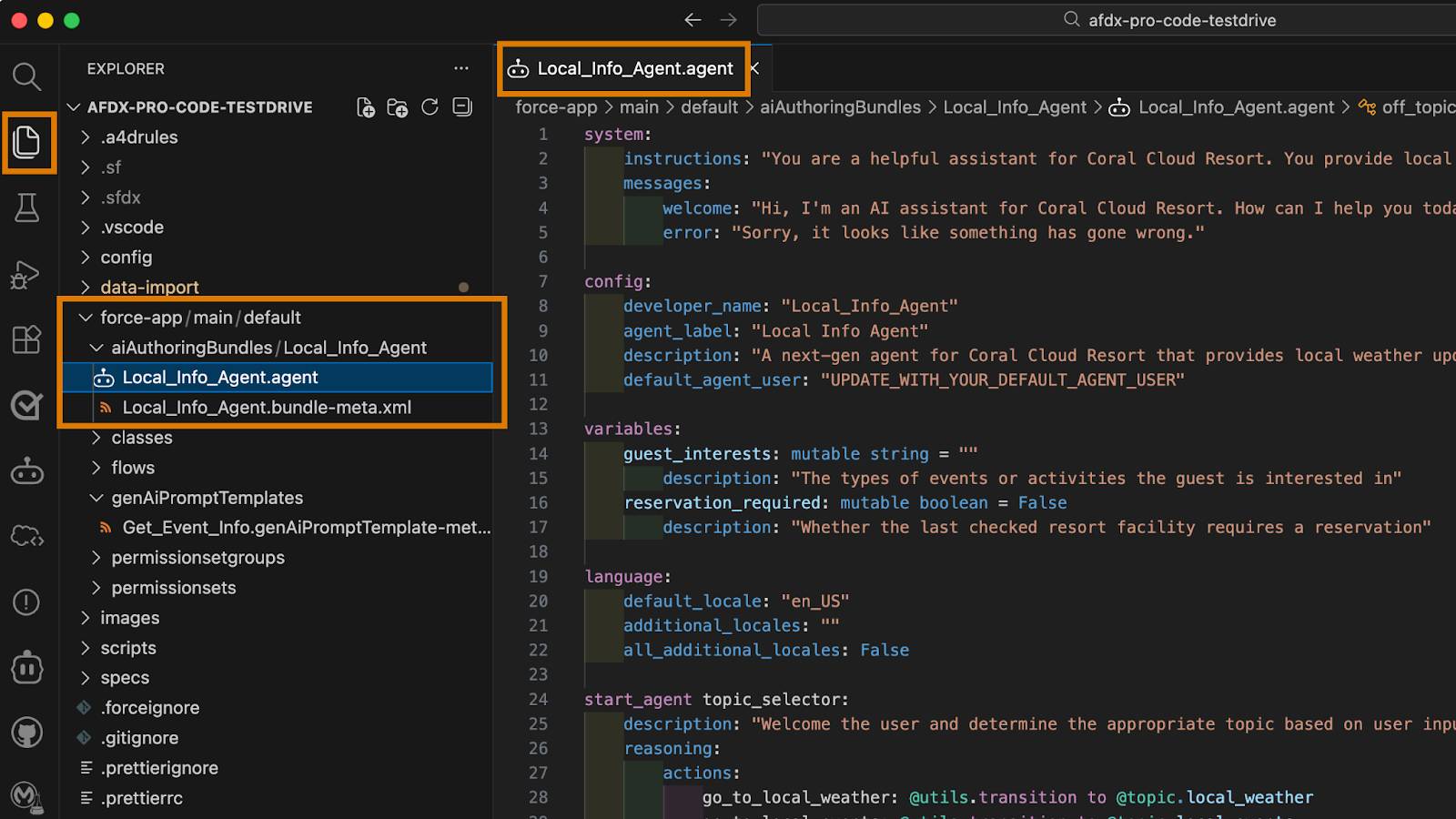
Salesforce open-sourced Agent Script - its structured definition language for agents - with the full spec, grammar, parser, and compiler now publicly available. Think of it as Infrastructure as Code, but for agent behavior: define when agents reason vs. follow deterministic logic, subagents, actions, guardrails, and variables - all in strongly-typed files that coding agents can work with natively.
The open-source release means the entire developer community can now contribute to, extend, and build tooling around the standard. This positions Salesforce's agentic framework as a potential industry-wide foundation rather than a proprietary silo.
"Slack is the front door to the agentic enterprise."
— Parker Harris, Co-Founder, Salesforce
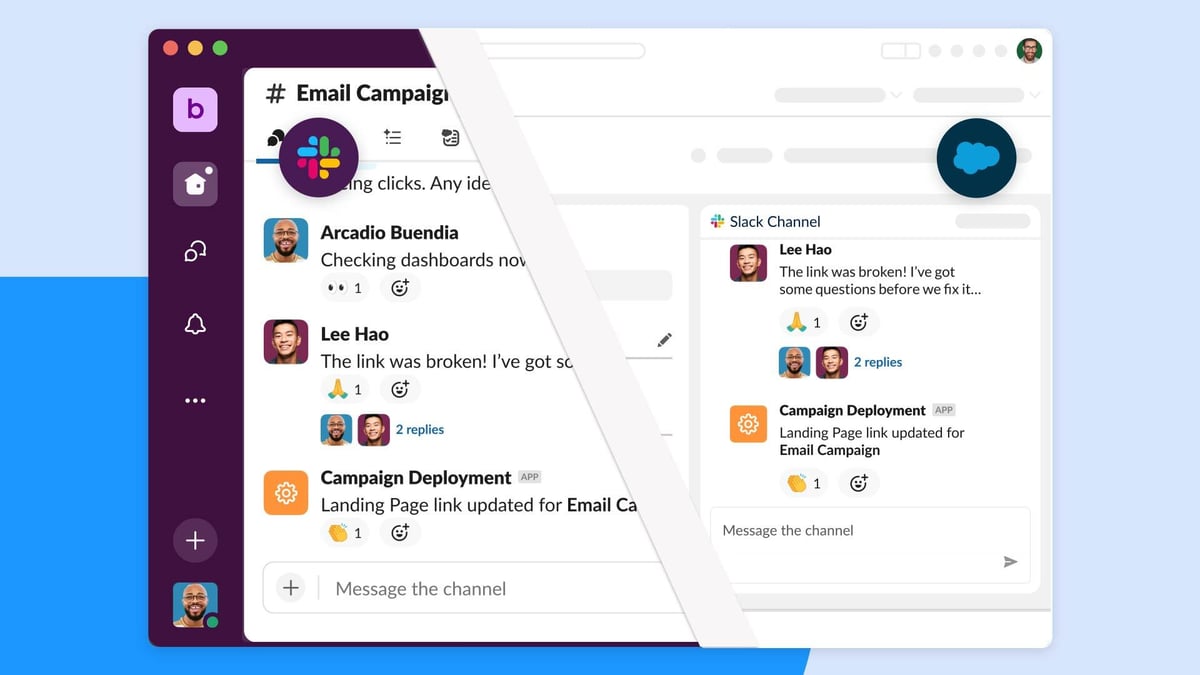
Parker Harris called Slack "the front door to the agentic enterprise" - and Salesforce backed it with product. The conversational Slackbot now orchestrates work across Agentforce agents, 2,600+ Slack Marketplace apps, and 6,000+ AppExchange applications from a single conversation thread. Salesforce invested $50M in the ecosystem.
The move signals a fundamental shift in how enterprise work gets done: rather than navigating between multiple platforms and dashboards, users stay in Slack while intelligent agents do the heavy lifting across every connected system.
Native CRM-in-Slack
Slack Agent Kit
Project Albert (preview)
MCP client orchestration
300%
AI agent growth on Slack since Jan 2026
13K+
AgentExchange listings
Announcement 05
Agentforce Experience Layer
Build once. Deploy everywhere. Define your agent experience one time - it renders natively across every surface without rebuilding per platform. Salesforce's most ambitious cross-channel shipping to date: the same deterministic agent logic works across text and voice channels, web, mobile, and every major messaging platform.
Slack
Microsoft Teams
WhatsApp
ChatGPT
Claude
Mobile & Web
∞
What We Do
Salesforce & Agentforce Services
From strategy to execution - we help organisations unlock the full potential of Salesforce and Agentforce at every stage of the journey.
Salesforce Advisory
Strategic guidance to align your Salesforce roadmap with business goals. We help you make the right decisions - on architecture, tooling, and AI readiness - before you build.
Hands-on expertise to optimise your existing Salesforce investment. We dig into your org, processes, and data to surface what's working and what needs to change.
Org health reviews & audits
Process optimisation
Data strategy & governance
Change management support
Salesforce & Agentforce Implementation
End-to-end delivery of Salesforce and Agentforce solutions - from initial setup to full-scale deployment. We build with quality, speed, and long-term maintainability in mind.
We don't just implement Agentforce - we build production-ready AI agents tailored to real industry problems. Here's what we've shipped for our clients.
TDX 2026 made one thing clear - the Agentic Enterprise is already here.
Now the question is: how do you apply it to your business?
Whether you're exploring Agentforce, rethinking your Salesforce architecture, or ready to build AI-powered workflows - let’s turn ideas into execution.
Got Questions?
Frequently Asked Questions
Everything you need to know about meeting Kizzy Consulting at TDX 2026, our Agentforce services, and how we can help your business.
What is TDX 2026 and why should I attend?
TrailblazerDX (TDX) 2026 is Salesforce's flagship developer conference, held April 15–16 at Moscone West Convention Center in San Francisco. This year's theme was the Agentic Enterprise, with 400+ deep technical sessions, 100+ live product demos, a $50,000 hackathon, and major platform announcements including Salesforce Headless 360 and Agentforce Vibes 2.0.
What is Agentforce and how can Kizzy Consulting help us implement it?
Agentforce is Salesforce's AI agent platform that allows businesses to build and deploy autonomous AI agents directly within their Salesforce environment. Kizzy Consulting is a certified Agentforce implementation partner - we handle everything from readiness assessments through to building and deploying production-ready agents tailored to your industry. Learn more about our Agentforce services.
What is Salesforce Headless 360 announced at TDX 2026?
Salesforce Headless 360 is the company's declaration that the entire Salesforce platform is now accessible via APIs, MCP tools, and CLI commands - without needing to open a browser. It means AI coding agents like Claude Code, Cursor, Codex, and Windsurf can now discover, call, and chain together any Salesforce workflow natively. It comes with 60+ new MCP tools, 30+ preconfigured coding skills, and native React support.
How can I meet the Kizzy Consulting team at TDX 2026?
Our CEO Sanjeet Mahajan and COO Sunidhi will be attending TDX 2026 in person at Moscone West. You can book a 30-minute consultation with Sanjeet directly via our Calendly link, or reach us at [email protected].
Which industries does Kizzy Consulting specialise in for Agentforce?
We've built and shipped production Agentforce agents across Travel & Hospitality, Education, Service Operations, Real Estate, and Healthcare. We're also actively building custom agents for financial services, retail, logistics, and manufacturing. Use the "Your Industry. Your Agent." form to share your idea and we'll get back to you promptly.
What is Agentforce Vibes 2.0 and is it free to use?
Agentforce Vibes 2.0 is Salesforce's AI-powered developer IDE that understands your Salesforce org natively. It supports multiple LLMs (Claude Sonnet 4.5 is the default, with GPT-5 and Salesforce models also available), plus Plan and Act modes. Every Salesforce Developer Edition org now includes free access to Agentforce Vibes and the Agentforce Labs Quickstart.
What Salesforce Clouds does Kizzy Consulting implement?
We implement across the full Salesforce suite, with particular depth in Sales Cloud, Service Cloud, Experience Cloud, Health Cloud, and Education Cloud. With 40+ Salesforce certifications and 116+ successful implementations, we bring both breadth and depth to every engagement.
Get Free Salesforce Consultation Now!
Business Development Executive
Learn about the key requirements, duties, responsibilities, and skills that should be in a business development executive job description.
Business development executives are responsible for driving company sales by sourcing new clients, and by convincing existing clients to purchase added offerings. As such, business development executives play an integral role in companies’ longevity.