Salesforce Marketing Cloud Implementation Guide 2026
⏱ 4 min read
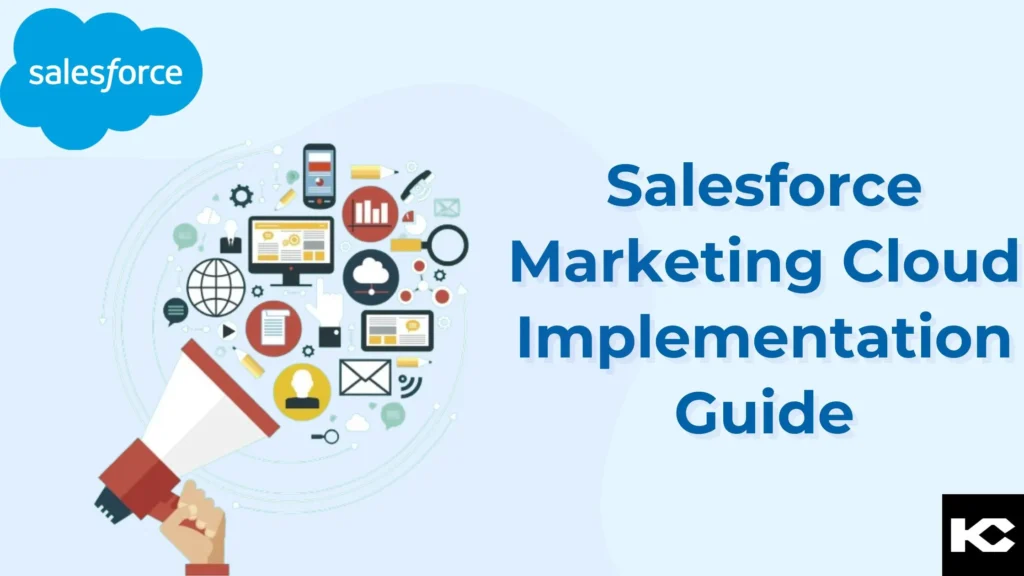
Salesforce Marketing Cloud (SFMC) is an enterprise digital marketing platform that helps businesses connect with customers across email, mobile, advertising, web, and other channels. By connecting marketing data with the broader Salesforce ecosystem, SFMC enables organizations to build personalized customer journeys, automate campaigns, segment audiences, and make data-driven marketing decisions at scale.
What is Salesforce Marketing Cloud?
Salesforce Marketing Cloud is a suite of digital marketing capabilities that helps organizations manage customer data, create personalized campaigns, automate customer journeys, and engage audiences across multiple channels. It can connect with Salesforce CRM data to provide marketers with a more unified view of customer interactions and enable more relevant engagement.
Contents
hide
What Is Salesforce Marketing Cloud (SFMC)?
Salesforce Marketing Cloud (SFMC) is an enterprise-grade digital marketing platform designed to help businesses build meaningful customer relationships across multiple channels. It brings together marketing automation, customer data, segmentation, personalization, analytics, and journey orchestration to help marketers create connected customer experiences.
One of the major advantages of Salesforce Marketing Cloud is its ability to work with the wider Salesforce ecosystem. Organizations can connect marketing activities with customer and business data from Salesforce CRM, helping marketing teams understand interactions throughout the customer lifecycle.
Whether your organization wants to automate email campaigns, create multi-step customer journeys, personalize content, coordinate mobile messaging, or improve campaign analytics, Salesforce Marketing Cloud provides capabilities for managing complex digital marketing operations.
Salesforce Marketing Cloud Features
Salesforce Marketing Cloud is not simply one marketing tool. It is a collection of capabilities that can support different parts of the customer engagement lifecycle. Depending on the Salesforce products and editions used by an organization, capabilities may include email marketing, journey orchestration, mobile engagement, advertising, content management, personalization, and analytics.
Email Marketing
Build targeted email campaigns, segment audiences, personalize messages, test content, and automate communications based on customer data and behavior.
Journey Builder
Design automated customer journeys that respond to customer activity, attributes, lifecycle stages, and engagement across supported channels.
Content & Personalization
Create reusable marketing assets and deliver more relevant experiences by using customer information and audience segmentation.
Mobile Engagement
Engage customers through supported mobile channels such as SMS and push notifications, depending on the products and services enabled in the organization.
Advertising
Use customer and CRM data to support audience activation and create more connected advertising experiences across supported platforms.
Marketing Analytics
Measure campaign engagement, customer behavior, journey performance, and other marketing indicators to support data-driven decisions.
How Salesforce Marketing Cloud Supports Omnichannel Marketing
Modern customers interact with businesses across multiple touchpoints. They may discover a brand through advertising, visit a website, receive an email, interact through mobile messaging, contact customer service, and eventually make a purchase.
Salesforce Marketing Cloud helps marketing teams coordinate these interactions by connecting audience data, content, automation, and customer journeys. Instead of treating every campaign as an isolated communication, marketers can build journeys around customer context and lifecycle stages.
Example Customer Journey
1. Awareness
Customer interacts with an advertisement.
2. Engagement
Customer receives relevant content through email or another channel.
3. Conversion
Customer takes a desired action such as requesting information or purchasing.
4. Retention
Automated communications support ongoing engagement and loyalty.
Benefits of Salesforce Marketing Cloud
Unified Customer Data
Connecting marketing activities with Salesforce data can help teams build a more complete understanding of customer interactions and lifecycle stages.
Marketing Automation
Automated journeys and triggered communications reduce repetitive manual campaign work and help teams engage customers consistently.
Personalized Experiences
Audience segmentation and customer data can be used to create more relevant messages for different customer groups and journey stages.
Cross-Channel Engagement
Marketing teams can coordinate supported email, mobile, advertising, content, and journey experiences from a connected marketing environment.
Scalable Marketing Operations
Salesforce Marketing Cloud can support organizations as their customer audiences, campaigns, business units, and marketing requirements grow.
Data-Driven Decisions
Marketing analytics and engagement data provide insights that can help teams evaluate campaign performance and refine customer journeys.
Salesforce Marketing Cloud and AI
AI is increasingly becoming part of modern marketing operations. Salesforce provides AI capabilities across its platform that can help marketers analyze customer information, automate tasks, generate content, and improve personalization.
Depending on the Salesforce products, edition, configuration, and features enabled, AI capabilities can support areas such as content generation, customer insights, personalization, segmentation, and marketing optimization.
AI + Customer Data + Automation
The value of AI becomes stronger when it works with reliable customer data and well-designed marketing processes. A clean data foundation, clear segmentation strategy, appropriate governance, and well-defined journeys are important considerations when introducing AI into marketing operations.
Salesforce Marketing Cloud Implementation Steps
A successful Salesforce Marketing Cloud implementation requires more than configuring campaigns. Data architecture, user access, sender authentication, integrations, segmentation, governance, and deliverability should be considered before launching production journeys.
1
Configure Business Units
Establish the organizational structure of your Marketing Cloud environment. Business Units can help separate brands, regions, departments, or operational teams depending on your architecture and governance requirements.
2
Add Users and Assign Roles
Create appropriate user access and permissions. Define what administrators, marketers, agencies, and other stakeholders can access so that sensitive data and marketing assets are managed responsibly.
3
Set Up Sender Authentication
Configure the required email-sending infrastructure, domains, sender profiles, and authentication mechanisms. Proper configuration is important for brand identity, email reputation, and deliverability.
4
Connect Marketing Cloud with Salesforce CRM
Where applicable, configure Marketing Cloud Connect or the appropriate Salesforce integration architecture to connect marketing capabilities with CRM data and processes.
5
Develop Your Data Model
Design Data Extensions, contact relationships, data structures, segmentation logic, and synchronization requirements. A well-planned data model supports reliable personalization, segmentation, and journey execution.
6
Create Marketing Assets
Build responsive email templates, reusable content, landing experiences, audience segments, and other assets required for your campaigns.
7
Design, Test, and Launch Customer Journeys
Use journey orchestration capabilities to create automated workflows. Test entry criteria, personalization, suppression rules, messaging, timing, and exit conditions before moving journeys into production.
Why Data Foundation Matters for Salesforce Marketing Cloud
Marketing automation is only as effective as the data powering it. Inaccurate, duplicated, incomplete, or poorly structured customer data can result in incorrect segmentation, broken journeys, irrelevant personalization, and reporting problems.
Organizations implementing SFMC should therefore consider data quality, identity resolution, synchronization, consent management, data governance, retention requirements, and access controls as part of the overall marketing architecture.
Salesforce Marketing Cloud Use Cases by Industry
Salesforce Marketing Cloud can be adapted to different customer engagement models. The specific implementation depends on an organization’s data, regulatory requirements, customer lifecycle, communication channels, and business objectives.
Retail & E-commerce
Create abandoned-cart journeys, personalized product communications, promotional campaigns, post-purchase engagement, and loyalty experiences based on customer behavior and preferences.
Financial Services
Support customer onboarding, product communications, lifecycle campaigns, educational content, and service communications while incorporating appropriate consent, security, and regulatory controls.
Healthcare
Depending on the organization’s architecture and compliance requirements, marketing automation can support appointment communications, educational outreach, reminders, and patient engagement programs.
Travel & Hospitality
Build guest journeys around bookings, travel milestones, preferences, loyalty, promotions, and post-stay engagement across supported communication channels.
Real Estate
Automate lead nurturing, property communications, viewing reminders, follow-ups, and personalized engagement based on prospect activity and preferences.
Manufacturing
Support B2B customer communications, account-based engagement, product education, partner communication, and lifecycle campaigns using connected customer data.
Salesforce Marketing Cloud Implementation Best Practices
Start With Business Goals
Define the customer journeys, campaigns, KPIs, audiences, and business outcomes before designing the technical architecture.
Design the Data Architecture First
Identify data sources, synchronization requirements, contact keys, segmentation needs, consent data, and retention policies early.
Prioritize Deliverability
Configure authentication, sender identities, suppression rules, consent processes, and sending practices before scaling campaign volume.
Build Reusable Assets
Use reusable templates, content components, data structures, journey patterns, and governance standards to improve consistency.
Test Before Production
Validate data, personalization, audience logic, journey paths, links, sender details, suppression rules, and reporting before launch.
Monitor and Optimize
Continuously review campaign engagement, journey performance, data quality, deliverability, and business KPIs to improve the implementation.
Salesforce Implementation
Build a Strong Salesforce Foundation Before Scaling Marketing Automation
Salesforce Marketing Cloud works best when CRM processes, integrations, customer data, and automation are designed as part of a connected Salesforce architecture.
Salesforce Marketing Cloud Pricing
Salesforce Marketing Cloud pricing depends on factors such as the products and capabilities required, edition, organization structure, data and contact requirements, messaging volume, integrations, and additional services or add-ons.
Because Salesforce pricing and packaging can change, businesses should evaluate their current requirements and confirm the applicable pricing directly with Salesforce before making a purchasing decision.
Tip:
Build a clear requirements list covering channels, audience size, data sources, integrations, automation, reporting, and governance before evaluating Marketing Cloud licensing.
Build a clear requirements list covering channels, audience size, data sources, integrations, automation, reporting, and governance before evaluating Marketing Cloud licensing.
Frequently Asked Questions About Salesforce Marketing Cloud
What is Salesforce Marketing Cloud used for?
Salesforce Marketing Cloud is used for digital marketing activities such as email campaigns, customer journey automation, audience segmentation, personalization, mobile engagement, advertising activation, and marketing analytics.
Is Salesforce Marketing Cloud a CRM?
Salesforce Marketing Cloud is primarily a marketing platform rather than a standalone CRM. It can integrate with Salesforce CRM products and other data sources to support connected customer engagement.
What is Journey Builder in Salesforce Marketing Cloud?
Journey Builder is a journey orchestration capability that allows marketers to design automated customer journeys based on customer information, behaviors, events, and defined journey logic.
Can Salesforce Marketing Cloud integrate with Salesforce CRM?
Yes. Salesforce Marketing Cloud can be connected with Salesforce CRM through supported integration capabilities such as Marketing Cloud Connect, depending on the products and architecture involved.
Is Salesforce Marketing Cloud suitable for large enterprises?
Salesforce Marketing Cloud is designed to support sophisticated marketing operations, including complex customer journeys, multiple business units, large audiences, integrations, governance requirements, and multi-channel engagement.
How long does a Salesforce Marketing Cloud implementation take?
Implementation timelines vary based on the number of business units, integrations, data sources, channels, journeys, compliance requirements, migration needs, and customization involved. A focused implementation can be much smaller than a global enterprise rollout.
Does Salesforce Marketing Cloud use AI?
Salesforce provides AI capabilities across its marketing ecosystem. Depending on the products and features enabled, AI can support areas such as content creation, personalization, insights, and marketing optimization.
Conclusion: Is Salesforce Marketing Cloud Right for Your Business?
Salesforce Marketing Cloud provides a broad set of capabilities for organizations looking to modernize digital marketing, automate customer journeys, connect marketing with CRM data, and deliver more personalized customer experiences.
However, the technology alone does not guarantee marketing success. A strong implementation depends on the quality of customer data, segmentation strategy, integration architecture, deliverability practices, governance, journey design, and ongoing optimization.
For organizations already using Salesforce or planning to build a connected Salesforce marketing ecosystem, a structured implementation approach can help turn Marketing Cloud into a scalable foundation for customer engagement.
Looking for a Salesforce Marketing Cloud Implementation Partner?
Kizzy Consulting helps organizations design and implement Salesforce solutions across CRM, marketing automation, AI, integrations, and data. Our team works with businesses across industries to build scalable Salesforce environments aligned with their business and customer engagement goals.
Whether you are planning a new Salesforce Marketing Cloud implementation, improving an existing environment, or connecting marketing data with your Salesforce ecosystem, we can help you evaluate the right architecture and implementation approach.
Start a Conversation
Tell us about your Salesforce Marketing Cloud goals and implementation requirements.
Email:
[email protected]
About Kizzy Consulting
Kizzy Consulting is a Salesforce and AI consulting partner helping businesses build, integrate, optimize, and scale Salesforce-powered solutions. Our work spans Salesforce implementation, AI agents, automation, integrations, data foundations, and ongoing optimization.
We combine Salesforce expertise with AI and automation to help organizations improve processes, connect data, and create practical digital transformation strategies.
Related Salesforce Resource
Salesforce Einstein Bots and Customer Engagement
Explore how Salesforce conversational AI can support customer engagement and service experiences.