


AI as a Service (AIaaS) is changing how businesses use artificial intelligence. There’s no need for an in-house data science team, no servers to buy, and no big infrastructure bill. Instead, companies simply plug into ready-built AI models, agents, and tools through the cloud and pay only for what they use.
This guide explains what AI as a Service means, how cloud-based AI services work, and what to look for when choosing a provider – covering AI agents, generative AI, machine learning as a service (MLaaS), agentic AI, and computer vision in simple terms.
By Sanjeet Mahajan – CEO and Founder of Kizzy Consulting
Quick Answer
What is AI as a Service (AIaaS)?
AI as a Service is a cloud computing model that gives businesses access to tools like machine learning, natural language processing, generative AI, computer vision, and data analytics – all through simple APIs and SDKs, without building or managing AI infrastructure in-house. Pricing is usually a monthly subscription or pay-as-you-go model, similar to how other managed AI services are billed.

How Does AI as a Service Work?
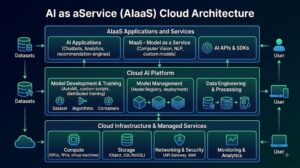
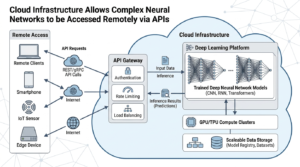
AIaaS providers own and run the heavy infrastructure – data centers, specialized chips, and the power needed to run them – so businesses don’t have to. Companies simply connect to these hosted AI models over the internet, run their tasks, and pay based on how much they use.
It works a lot like the cloud software you already use. Think of how Slack, Zoom, or Google Workspace deliver software without anyone installing servers locally. AIaaS applies that same idea to AI: pretrained, plug-and-play AI models that businesses can customize for their own needs, accessed through an API or SDK, without hiring dedicated AI infrastructure engineers.
AIaaS vs. Traditional SaaS
Traditional SaaS tools are built to manage everyday business tasks, and many now add AI-powered automation on top. AIaaS works the other way around. Instead of a finished app with a bit of AI built in, it delivers the AI itself – a model, a training pipeline, or an inference endpoint – that developers connect directly into their own products.

In-House AI vs. AIaaS
How does renting AI compare to building it yourself? Here is a breakdown of why so many companies choose the cloud route instead of maintaining physical servers.
| Feature | In-House AI Infrastructure | AI as a Service (AIaaS) |
|---|---|---|
| Upfront Cost | Extremely High (Servers, GPUs, Cooling) | Zero to Low ($0 CapEx) |
| Setup Time | Months to Years | Minutes to Days (API access) |
| Maintenance | Handled internally by dedicated IT | Fully managed by the cloud provider |
| Scalability | Limited by physical hardware constraints | Instantly scalable on demand |
First-Year Cost Comparison
Compare the estimated cost of building AI in-house vs. using AIaaS
$350,000+
$30,000
Core AIaaS Capabilities
| Capability | What It Does |
|---|---|
| Natural Language Processing (NLP) | Helps machines understand human language (NLU) and respond back in plain language (NLG). This powers chatbots, virtual agents, and voice assistants like Siri or Alexa. |
| Generative AI | Creates new text, code, images, and video on request. Tools like ChatGPT and Claude are usually delivered this way. |
| Machine Learning (ML) | Analyzes data to identify patterns, make predictions, and continuously improve business processes. |
| Data Analytics | Finds patterns in past data to support forecasting, predictions, and sentiment analysis for better decisions. |
| Computer Vision | Helps machines “see” and understand images and video, useful for object detection, identity checks, and text recognition (OCR). |
| Agentic AI | Autonomous AI agents that plan and execute multi-step tasks on their own, often built with retrieval-augmented generation (RAG) to stay grounded in real business data. |
Common AIaaS Pricing Models
AIaaS pricing varies by provider and use case. Understanding these models upfront makes it easier to budget for enterprise AI adoption and avoid surprise bills.
| Pricing Model | How It Works | Best For |
|---|---|---|
| Pay-as-you-go | Billed per API call, token, or compute second used. | Variable workloads, early-stage AI pilots. |
| Subscription | Flat monthly or annual fee for a set usage tier. | Predictable, steady AI usage across teams. |
| Per-seat | Priced per user or license, common in enterprise platforms. | Team-wide tools like AI copilots or assistants. |
| Usage-based tiers | Custom enterprise pricing based on volume, compute, or SLAs. | Large-scale enterprise AI deployments. |
Ready to Put AIaaS to Work in Your Business?
Turn AI into a practical business advantage with scalable, ready-to-use AI solutions.
Why Businesses Choose AIaaS
- Cost-effectiveness: Subscription pricing keeps costs low, so businesses can try AI without spending on expensive infrastructure.
- Operational efficiency: Automates routine work. Support bots handle simple tickets, marketers get automated data labeling, and fraud detection improves security.
- Accessibility: No need for in-house AI experts. Any team can use enterprise-grade AI tools through no-code and low-code AI integration.
- Faster time to market: Pretrained models and simple drag-and-drop tools help teams launch AI products faster.
- Scalability: Usage can grow or shrink on demand as AI needs change, making it a scalable AI solution for growing businesses.
How to Choose an AIaaS Provider
Not all AIaaS platforms are the same. Before choosing a third-party AI provider, think through these six factors:
- Use case suitability: Does the provider actually support what you need, whether that’s workflow automation, customer experience AI, or agentic RAG?
- Tech stack compatibility: Will it fit smoothly with the tools you already use?
- Ability to scale: Can the provider handle your future growth, not just today’s needs?
- Pricing model: Some providers charge per API call or token, others per seat or by compute used. Compare these clearly against your budget.
- Security, privacy, and compliance: Check that the provider follows standards like GDPR or HIPAA, especially if personal data (PII) is involved.
- Vendor lock-in risk: Make sure switching providers later won’t be difficult or costly.
Frequently Asked Questions
What is AI as a Service in simple terms?
It means renting AI instead of building it. Businesses connect to ready-made AI models over the cloud through an API or SDK and pay only for what they use, instead of buying servers or hiring a full AI team.
Is AIaaS the same as SaaS?
Not exactly. SaaS delivers finished software, and some of it includes AI features. AIaaS delivers the AI itself, such as models and inference endpoints, so developers can build it into their own products.
What are examples of AIaaS?
Cloud AI platforms like Amazon SageMaker and Bedrock, Microsoft Azure AI, and Google Cloud AI are all AIaaS offerings. Generative AI tools like ChatGPT and Claude, also fall under AIaaS.
How much does AIaaS pricing typically cost?
It depends on the pricing model. Pay-as-you-go plans charge per API call or token, subscriptions charge a flat monthly fee, and large enterprise deployments often use custom usage-based tiers negotiated directly with the provider.
Ready to Put AIaaS to Work in Your Business?
Discover where AIaaS can reduce costs, automate processes, and help your business scale AI faster.